
Tools
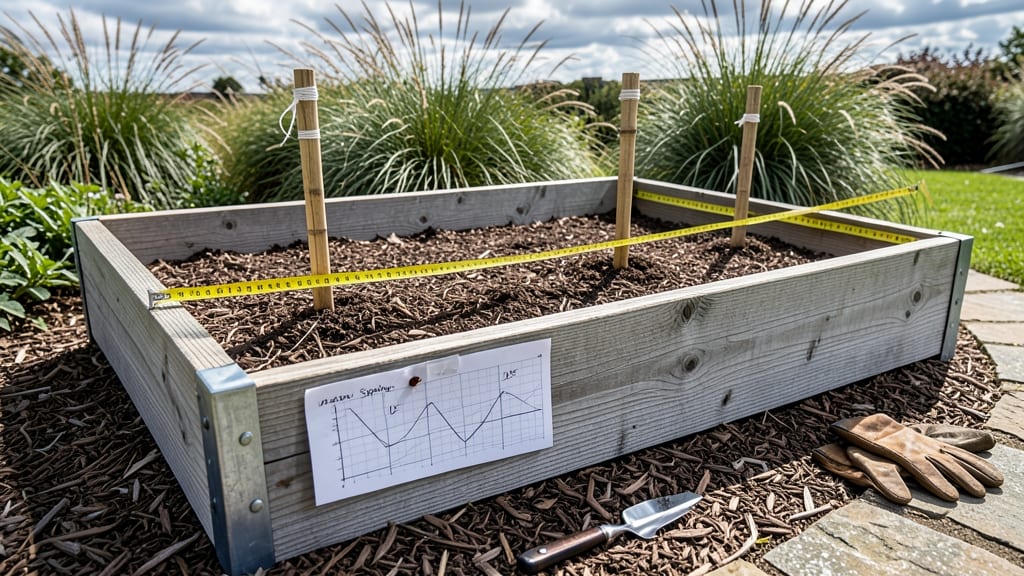
Garden bed measurements should be 3 to 4 feet wide for easy reach, with lengths customized to your available space, and depths of 6-12 inches to support healthy root systems and proper soil aeration. These dimensions optimize accessibility, plant spacing, and watering efficiency.
Standard garden bed dimensions aren't arbitrary—they're designed to make gardening easier and more effective.
A 3-to-4-foot width lets you reach the center without stepping on the soil, while deeper beds (especially 10-12 inches) give roots room to grow and improve drainage. 🌱 Longer beds help reduce weed pressure and make watering more efficient, though you'll want to leave space for pathways between rows.
For raised beds, you can go slightly deeper (up to 18 inches) to accommodate larger root vegetables like carrots or potatoes.
When planning your layout, think about the plants you want to grow. Leafy greens like lettuce need less space than sprawling tomatoes, so adjust your bed dimensions accordingly. Using a simple measuring tape and string can help you mark out precise dimensions before planting.
For small spaces, consider vertical gardening or narrow beds—just ensure they're still wide enough for comfortable access.
💡 In This Article
- How Garden Bed Dimensions Impact Plant Growth and Maintenance
- Calculating Planting Capacity for Your Garden Bed Layout
How garden bed dimensions impact plant growth and maintenance
The 3-to-4-foot width standard for garden beds isn't just about convenience—it's rooted in ergonomics and plant biology. When you stand at the center of a 4-foot-wide bed, your arms can comfortably reach 18-24 inches outward without stepping on the soil, which prevents compaction that restricts root growth.
Studies show soil compaction reduces oxygen availability by up to 30% in heavily walked areas, stunting plant development. This width also maximizes sunlight exposure across the entire bed, as plants at the edges don't cast excessive shade over the center.
Depth plays a critical role in root health and soil structure. Most vegetables thrive in 6-12 inches of loose, well-aerated soil, which allows roots to spread freely and access nutrients.
For example, carrots need at least 10 inches of depth to grow straight, while shallow-rooted herbs like basil can thrive in just 6 inches. Raised beds can go deeper (12-18 inches), improving drainage and reducing soil compaction from weather.
The extra depth also helps retain moisture better, cutting watering time by 20-30% compared to in-ground beds.
Length affects maintenance efficiency, particularly for watering and weed control. Longer beds (8 feet or more) reduce the perimeter-to-area ratio, meaning less edge where weeds can invade.
However, beds longer than 12 feet become difficult to water evenly—you'll need to leave 2-3 feet of pathway space between beds to avoid over-saturating one side.
For raised beds, this means shorter lengths (4-8 feet) with multiple beds arranged in a grid pattern, which also improves air circulation and reduces disease spread.
Soil type interacts with these dimensions in surprising ways. In clay-heavy soil, deeper beds (12 inches) help break up compaction layers, while sandy soils benefit from wider beds (4 feet) to prevent rapid drying.
The texture of your soil also dictates how often you'll need to amend it—loamy soils retain structure better over time, while sandy or clay soils may require annual top-ups of compost.
For instance, a 4x8-foot raised bed filled with a mix of 60% topsoil, 30% compost, and 10% perlite will maintain ideal conditions for 2-3 growing seasons before needing a refresh.
Consider the sensory experience of working with these dimensions. A well-sized bed lets you kneel comfortably without straining your back, while the right depth means you're not constantly digging deeper to loosen soil.
The 4-foot width also creates a natural rhythm—you can plant two rows of most vegetables side by side, making succession planting intuitive. For example, you might plant lettuce on one side and radishes on the other, both maturing at different times but fitting neatly within the space.
For container gardening or small spaces, these principles still apply but with adjustments. A 2-foot-wide container might work for herbs, but you'll need to rotate it regularly to ensure even sunlight exposure.
The key is maintaining the width-to-depth ratio—even in small spaces, 6-12 inches of depth ensures roots have room to grow, while keeping the width manageable prevents overcrowding. 🌱