
Light Requirements
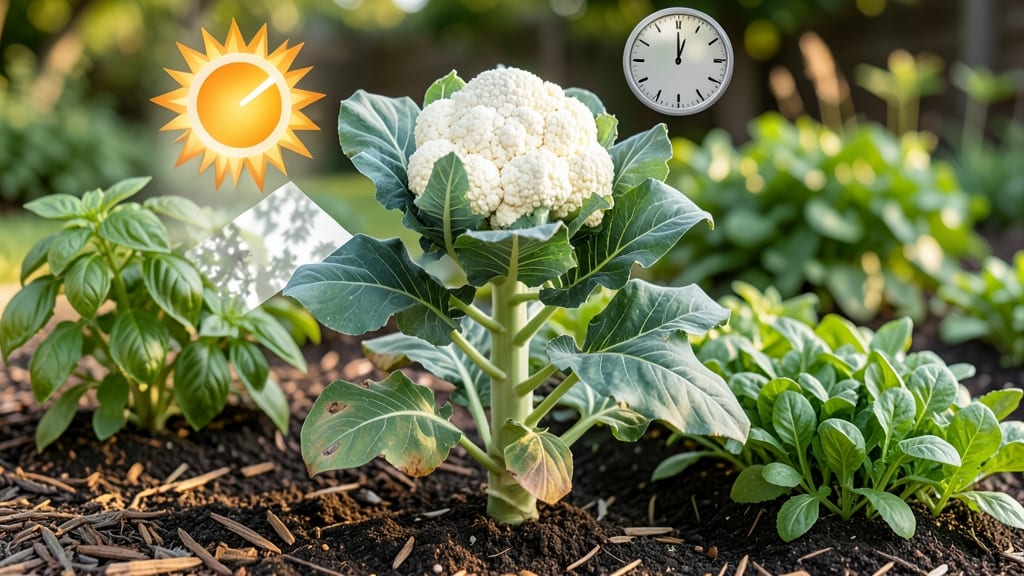
How many hours of sunlight does cauliflower need daily?
Growing perfect cauliflower heads starts with sunlight—this cool-weather crop is picky about light exposure. Too little, and your plants won’t form tight curds. Too much, and they’ll bolt prematurely. The ideal sunlight range shifts depending on your cauliflower’s growth stage, and understanding these needs will transform your harvest.
Let’s break it down by phase, including how light directly influences head formation and flavor.
Most gardeners assume cauliflower thrives in full sun, but the reality is more nuanced. While 6-8 hours of sunlight daily is the general rule, your plants’ needs change dramatically from seedling to maturity.
For example, young plants can handle partial shade to prevent overheating, while mature heads require consistent light to develop properly. Even the altitude of your garden plays a role—high-altitude gardens need slightly more sunlight due to lower UV intensity.
Sunlight directly impacts cauliflower head formation through a process called photomorphogenesis. When exposed to sufficient light, plants produce more chlorophyll and regulate hormones that promote compact head growth. Without enough light, heads stay small, loose, or even fail to form entirely. Additionally, flavor development is light-dependent—cauliflower grown in optimal conditions develops sweeter, more tender curds compared to shade-grown plants.
Here’s a quick reference for cauliflower sunlight needs by growth stage, including regional adjustments:
During the seedling stage, cauliflower needs 4-6 hours of sunlight daily to avoid legginess, but too much direct light can scorch tender leaves. I recommend using shade cloth (30-50%) during peak afternoon sun if your seedlings are in hot climates.
This balance helps them develop sturdy stems without stress. For high-altitude gardens (above 5,000 feet), extend sunlight to 5-7 hours—the thinner air reduces UV penetration, so plants need more exposure to compensate.
When transplanting, your cauliflower requires 6-7 hours of full sun to establish roots and prepare for head formation. This is where many gardeners go wrong—they assume "full sun" means all-day exposure, but afternoon shade in hot climates (like Zone 9 or 10) can prevent bolting.
In tropical regions, I’ve seen success with 5-6 hours of morning sun paired with afternoon shade cloth, which keeps temperatures ideal for head development.
The head formation stage (weeks 6-10) is the most critical for sunlight—7-8 hours of full sun is non-negotiable here. This is when your plants need maximum light to produce compact, flavorful curds. Without enough light, heads become loose, discolored, or fail to form.
In low-light gardens (like urban backyards with tall buildings), try using reflective mulch or white gravel around plant bases to bounce extra light onto the leaves. Even an extra 1-2 hours of sunlight can make a difference in head quality.
As your cauliflower nears maturity, reduce direct sunlight slightly to 6-7 hours daily, especially if temperatures exceed 80°F (27°C). Too much heat and light at this stage can trigger bolting (premature flowering), ruining your harvest.
In desert climates, I’ve had success growing cauliflower with only morning sun exposure, protecting plants from the intense afternoon heat. This adjustment prevents stress while still providing enough light for head development.
One common misconception is that cauliflower can tolerate partial shade indefinitely. While it’s true that partial shade helps in extreme heat, prolonged shade (less than 5 hours of sunlight daily) will result in small, loose, or bitter-tasting heads.
If you’re growing cauliflower in a container or shaded patio, choose dwarf varieties like ‘Snowball Y Improved’, which tolerate slightly less light than standard types. Even then, supplement with a grow light for 2-3 hours daily if natural light is limited.
For gardeners in high-altitude areas (like Colorado or the Rockies), sunlight intensity is lower, so your plants need more hours of exposure
Signs your cauliflower isn’t getting enough (or too much) sun
If your cauliflower plants are struggling, sunlight is often the culprit. Too little light leads to weak growth and poor head formation, while too much can cause bolting or leaf scorch.
Learning to spot these signs early helps you adjust care before harvest time. Start by checking your plants for yellowing leaves or stunted growth—common red flags.
For ideal cauliflower growth, aim for 6-8 hours of sunlight daily. However, even slight deviations can cause problems. Overcast days or dense foliage from nearby plants can reduce light exposure, while hot afternoons in summer may require temporary shade.
Understanding these sunlight stress symptoms helps you make quick fixes.
Sunlight Mistakes & Fixes
Too Little Sun
- ✅ Leggy stems (plants stretch toward light)
- ✅ Small, loose heads (poor curd formation)
- ✅ Pale yellow leaves (chlorosis from insufficient photosynthesis)
Fix:
Move plants to sunnier spot or use reflective mulch (e.g., white gravel). Thin nearby plants to improve airflow and light penetration.
Too Much Sun
- ❌ Bolting (premature flowering) (stems elongate rapidly)
- ❌ Crispy, brown leaf edges (sunburn)
- ❌ Bitter-tasting heads (heat stress)
Fix:
Provide afternoon shade with shade cloth (30-50%). Water deeply in early morning to reduce heat stress. Avoid planting in peak summer heat.
🌱 Pro Tip: Monitor your cauliflower’s leaf color daily—dark green means happy, while yellow or brown signals trouble.
One of the most common mistakes is assuming all sunlight is equal. While direct morning sun is ideal, harsh afternoon rays can scorch leaves, especially in hot climates.
If you notice leaf curling or white patches, your plants are likely overheating. A simple shade cloth (30% coverage) can make a dramatic difference.
Another key indicator is head formation. Healthy cauliflower heads should be firm and compact, with a smooth, creamy surface. If your heads are loose or discolored, insufficient light during the curd-development stage (typically 4-6 weeks after transplanting) is often the cause.
At this point, supplement with grow lights if natural light is lacking.
For container-grown cauliflower, position matters. Place pots on south-facing windowsills or use reflective surfaces (like mirrors) to bounce light onto leaves. If your balcony or patio only gets partial shade, opt for compact varieties like 'Purple of Sicily' or 'Snowball Y Improved,' which tolerate lower light better.
Don’t wait until harvest day to check your cauliflower’s sunlight situation. Start observing leaf health and stem strength as early as 2 weeks after transplanting. Adjust your garden layout now to ensure your plants get the ideal 6-8 hours of sun they crave—your future meals will thank you!