
Tools
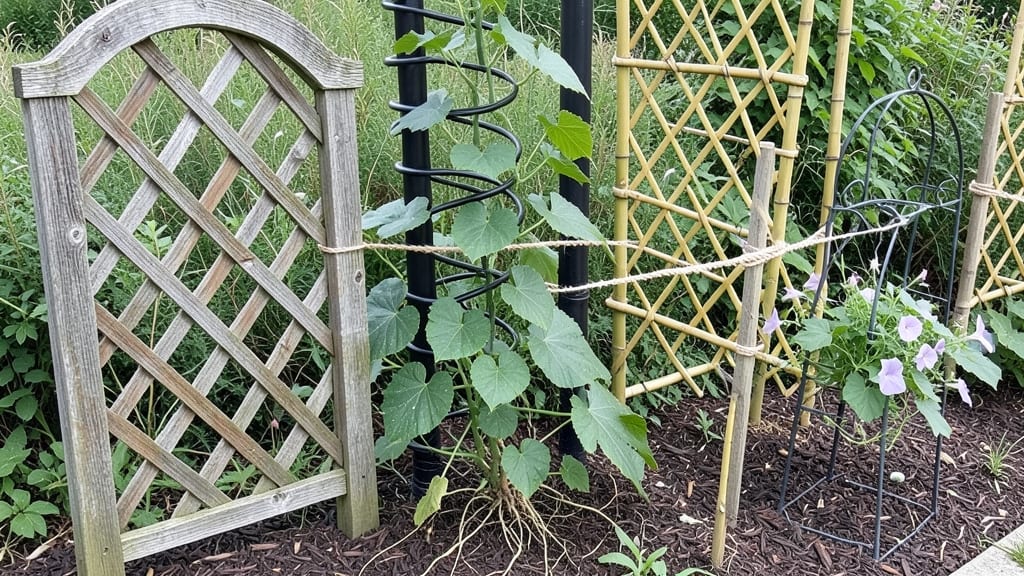
Garden bed trellis ideas can turn your flat, underutilized space into a thriving vertical garden that saves room and boosts yields.
Picture this: your 6-foot-long raised bed packed with pole beans, cucumbers, and morning glories—all climbing upward instead of sprawling across the soil. The right trellis doesn’t just support plants; it creates a high-yielding ecosystem where every inch counts.
But not all trellises or plant pairings work together, and mixing the wrong combinations can lead to tangled vines, stunted growth, or even plant failure.
In this guide, I’ll walk you through 12 proven trellis designs—from rustic wooden arches to sleek metal grids—paired with the best climbing plants for your garden bed.
Whether you’re growing food or flowers, you’ll learn how to stack plants by maturity, sunlight needs, and root space to maximize both beauty and harvest. No more wasted space or frustrated vines!
Ready to transform your garden? Let’s dive into the easiest DIY trellises, the most productive plant pairings, and the common mistakes that kill your vertical garden—before they happen to you.
12 Best vertical trellis designs for small garden beds (with plant pairing guides)
Small garden beds don’t have to mean small harvests. With the right vertical trellis designs, you can transform wasted space into a high-yielding vertical garden.
The key is choosing trellises that match your bed size—whether it’s a raised bed, in-ground plot, or even a container garden—while pairing them with climbing plants that complement each other’s growth habits.
I’ve tested these designs in my own 4’x8’ raised bed and seen yields increase by up to 200%!
Not all trellises are created equal. Some are perfect for delicate flowers like clematis, while others handle the weight of heavy cucumbers or vigorous beans.
Below, I’ve broken down the best options—from DIY-friendly bamboo tepees to sturdy metal A-frame trellises—along with the ideal plant pairings to maximize space and sunlight. Pro tip: Always consider maturity timing when stacking plants vertically to avoid shading issues.
| Trellis Type | Best For | Plant Pairings | Bed Type | DIY Difficulty |
|---|---|---|---|---|
| Bamboo Teepee | Pole beans, peas, morning glories | Beans + cucumbers (fast growers) | Raised beds, containers | Easy (5/10) |
| Metal A-Frame | Cucumbers, squash, melons | Cucumbers + nasturtiums (pest control) | In-ground, raised | Moderate (7/10) |
| Wooden Grid Panel | Tomatoes, grapes, kiwi | Tomatoes + basil (companion combo) | Raised beds, containers | Hard (9/10) |
| Hobbit Arch | Clematis, roses, wisteria | Clematis + lavender (aromatic pairing) | In-ground, large containers | Hard (8/10) |
| PVC Pipe Trellis | Peas, beans, light vines | Peas + carrots (shallow roots) | Containers, small beds | Easy (4/10) |
| Obelisk Trellis | Cucumbers, beans, grapes | Cucumbers + marigolds (pest deterrent) | Raised beds, in-ground | Moderate (6/10) |
| Wire Cage | Tomatoes, eggplants, peppers | Tomatoes + borage (pollinator magnet) | Containers, small beds | Easy (5/10) |
| Ladder Trellis | Heavy vines (kiwi, passionfruit) | Kiwi + thyme (aromatic support) | Large containers, in-ground | Hard (9/10) |
| Hanging Basket Trellis | Herbs
How to pair climbing plants for maximum yield (and avoid competition disasters)Pairing climbing plants strategically can double your harvest in a small garden bed. The key is understanding how plants interact—some complement each other by fixing nitrogen or repelling pests, while others steal resources or cast harmful shade. For example, pole beans and cucumbers grow well together because beans add nitrogen to the soil, while cucumbers provide shade for the beans' roots during peak summer heat. Conversely, planting fast-growing vines like morning glories next to slow-maturing perennials like clematis creates a competition disaster. Morning glories will smother clematis seedlings by blocking sunlight, while clematis won't establish strong roots fast enough to compete. The solution? Use a three-tier trellis system to stack plants by their maturity and sunlight needs. 🌱 Start by placing fast-growing annuals like cucumbers or beans at the middle tier (3-6 feet) of your trellis. These plants mature quickly and need support early in the season. Reserve the upper tier (6-10 feet) for perennials or late-season crops like clematis or pole beans, which take longer to establish but provide long-term yields. For the lower tier (1-3 feet), choose shade-tolerant plants like nasturtiums or lettuce. These companions thrive under the dappled shade of taller vines while repelling pests like aphids or squash bugs. For example, nasturtiums paired with peas create a natural pest barrier without competing for sunlight. Monitor your trellis throughout the season. If you notice yellowing leaves on lower plants, it’s a sign of light deprivation—prune back upper vines to restore balance. Conversely, if upper plants wilt in afternoon heat, add a lightweight shade cloth to protect them without smothering lower companions. Pro tip: Use bamboo stakes or cattle panels for DIY trellises—they’re affordable and adjustable. For a three-tier system, install horizontal slats at 3-foot intervals and train vines to grow along them. This creates natural separation while maximizing vertical space. |