
Planting
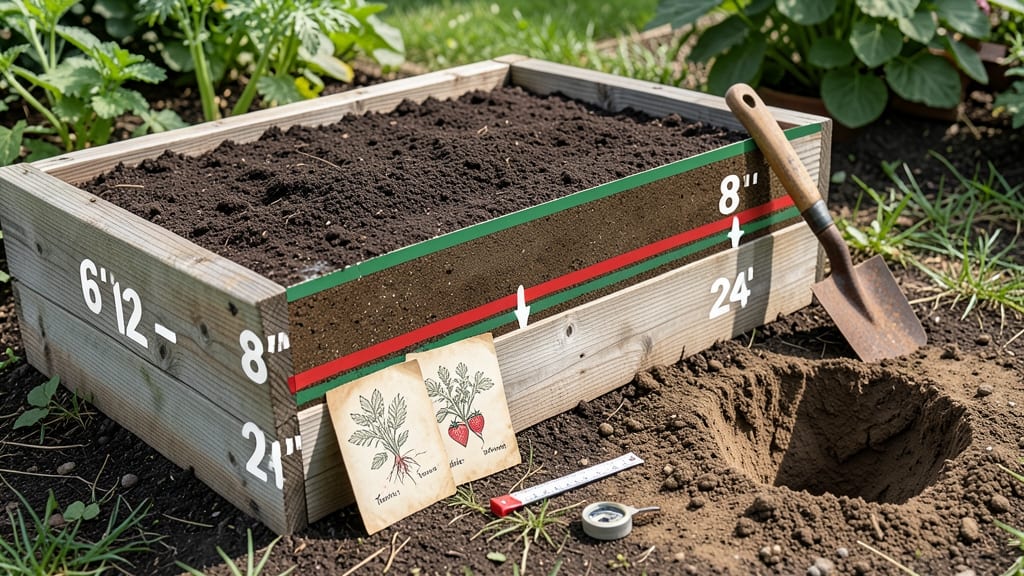
To determine how deep a raised garden bed needs to be, aim for 6 to 12 inches for most vegetables and herbs, but increase to 12 to 18 inches for deeper-rooted crops like tomatoes, carrots, or asparagus to ensure optimal root expansion and nutrient access.
Depth matters because it directly impacts root development and plant health. 🌱 Shallow-rooted plants like lettuce or basil thrive in beds just 6 inches deep, while root vegetables need extra space to grow fully.
I’ve found that adding 4-6 inches of compost-rich soil at the bottom creates the perfect foundation for roots to spread without hitting hardpan or compacted soil layers. For mixed beds, I recommend building in tiers or dedicating sections to deep-rooted plants to avoid competition.
Another key factor is drainage—deeper beds help prevent waterlogging, especially in clay-heavy soils. If you’re working with limited space, consider vertical gardening for shallow plants while reserving deeper sections for your tomatoes or carrots. The extra effort pays off in bigger harvests and healthier plants!
💡 In This Article
- Root Depth Requirements for Different Plant Types
- Designing Raised Beds for Maximum Root Space Efficiency
Root depth requirements for different plant types
Understanding how deep a raised garden bed needs to be starts with the plant's root system. Shallow-rooted plants like lettuce, spinach, and herbs (such as basil or parsley) thrive in just 6 inches of soil.
Their fibrous roots spread horizontally, absorbing nutrients from the top layers. 🌱 In contrast, root vegetables like carrots and beets need 12-18 inches to develop fully—carrots, for example, can grow 12-16 inches long if given enough space, while parsnips may need even deeper soil to reach their full potential.
Fruiting plants add another layer of complexity. Tomatoes, for instance, develop deep taproots that can extend 3-4 feet in ideal conditions, but they also produce extensive side roots that spread horizontally.
While you can't replicate a full 3-foot depth in most raised beds, providing 12-18 inches ensures strong root development and better stability. 🍅 The same goes for asparagus, which requires 12-18 inches of loose, fertile soil to establish its crowns and send up new shoots each year.
Perennial herbs like rosemary and thyme have deep taproots too, needing 12-18 inches for long-term health.
Root competition becomes a critical factor in mixed beds.
When you plant shallow-rooted plants like radishes alongside deep-rooted crops such as potatoes, the radishes may struggle to establish themselves if the soil is dominated by the potatoes' extensive root systems. 🌿 To avoid this, I recommend dedicating sections of your raised bed to plants with similar root depths.
For example, group lettuce and radishes together in a 6-inch deep section, while reserving a deeper 18-inch section for tomatoes and carrots.
Soil texture also influences how much depth you need. In heavy clay soils, roots can become restricted as they struggle to penetrate compacted layers. Adding 4-6 inches of compost or well-aged manure at the bottom of your bed creates a looser, more hospitable environment for roots to explore.
This is especially important for vegetables like Brussels sprouts, which develop a robust root system that benefits from 12-18 inches of nutrient-rich soil. 🌱 The goal is to mimic the natural soil profile, where roots can spread freely without hitting hardpan.
For fruits like strawberries, which have shallow roots but produce runners, a 6-12 inch depth works well. However, if you're growing blueberries or raspberries, their roots can extend 2-3 feet deep, making a deeper bed essential.
In these cases, consider building a raised bed with 18-24 inches of depth to accommodate their needs. The extra space allows the roots to access moisture and nutrients more efficiently, especially in containers or raised beds where soil volume is limited.
One common mistake is underestimating the depth needed for plants like squash or pumpkins, which have sprawling vines and deep roots. While their vines spread horizontally, their roots can extend 12-18 inches deep.
If you're growing these in a raised bed, ensure the soil is loose and fertile to support their growth. 🌿 For container gardening, larger varieties may require 18-inch deep pots or beds to avoid root binding, which can stunt growth and reduce yields.