
Flowers
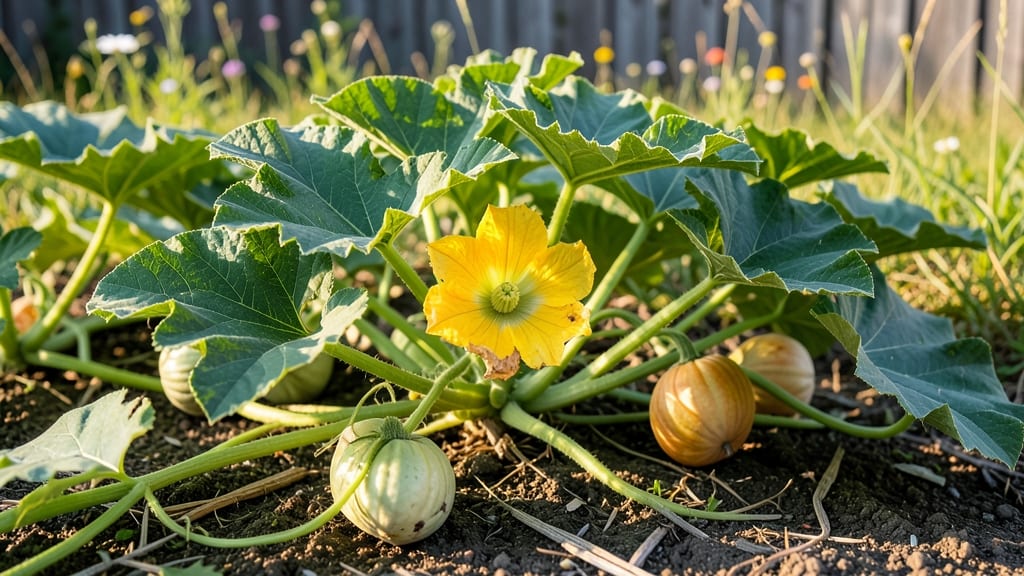
After that delicate female pumpkin flower after pollination 🎃 gets its work done, the real magic begins—but most gardeners miss the key signs that tell you whether your harvest is on track.
That tiny ovary swelling into a pumpkin is nature’s way of showing you success, and knowing what to watch for can mean the difference between a few small fruits and a vine heavy with big, healthy pumpkins.
Within 24 to 48 hours, you’ll notice the flower wilting and dropping, but don’t assume failure—this is normal! What comes next is where things get interesting: the ovary at the flower’s base starts swelling as it transforms into a fruit.
If you’ve ever wondered why some flowers just fade away while others grow into pumpkins, the answer lies in these early stages.
I’ve seen gardeners overlook these subtle clues, leading to missed opportunities for a great harvest. But once you recognize the visual cues—like the ovary thickening, the stem hardening, or even the way leaves near the fruit begin to change—you’ll never second-guess your pollination efforts again.
Let’s break down exactly what to look for and how to give your pumpkins the best shot at thriving.
Whether you’re relying on bees or giving your plants a little hand-pollination help, understanding this process is your secret weapon. From troubleshooting failed pollination to maximizing fruit set, I’ll share the practical tips that have worked for me—and could work for you too.
Ready to turn those flowers into a harvest-worthy bounty?
What happens to a female pumpkin flower after pollination: the science behind the change
When a female pumpkin flower is successfully pollinated, it kicks off a fascinating biological process that transforms it from a delicate bloom into a thriving fruit. The first visible sign is the wilting of petals, typically within 24-48 hours, as the flower redirects energy to ovary development.
This isn't failure—it's nature's way of prioritizing fruit growth over floral display.
The ovary at the flower's base begins swelling almost immediately after pollination, a process driven by plant hormones like auxin and gibberellins. These hormones trigger cell division and elongation, causing the ovary to expand into what will become your pumpkin.
Think of it as the plant's way of saying, "Let's grow something edible instead of pretty!"
Here's where things get exciting: the fruit stem thickens and develops a tougher texture, preparing to support the growing weight. Meanwhile, the flower drop usually occurs within 3-5 days, leaving behind a small, swollen bump that will grow into your pumpkin.
This drop isn't wasteful—it's the plant conserving resources for fruit development.
🌱
| Stage | Timeframe | Visible Changes | Plant Process |
|---|---|---|---|
| Immediate Post-Pollination | 0-24 hours | Petals begin wilting | Hormonal shift to ovary development |
| Early Fruit Swelling | 24-72 hours | Ovary swells slightly | Cell division in ovary tissue |
| Flower Drop | 3-5 days | Entire flower falls off | Resource conservation for fruit |
| Initial Fruit Growth | 5-10 days | Small bump appears, stem thickens | Rapid cell expansion |
| Visible Fruit Formation | 10-14 days | Fruit grows 1-2 inches | Photosynthesis fuels growth |
The first 10 days after pollination are critical for fruit establishment. During this window, the plant allocates 70% of its energy to the developing fruit, which is why you'll often see nearby flowers drop or growth slow on the vine.
This isn't a sign of stress—it's the plant's natural prioritization of resource allocation.
One fascinating detail is how the fruit stem changes from soft to woody within 7-10 days. This transformation strengthens the connection between the vine and fruit, preparing it to support the pumpkin's eventual weight.
You can test this by gently tugging on the stem—it should feel firm and slightly resistant by this stage.
As the fruit grows, you'll notice the leaf color near the developing pumpkin may darken slightly. This is the plant's way of increasing chlorophyll production to fuel the fruit's growth. The leaves act like tiny solar panels, converting sunlight into energy specifically for the pumpkin's development.
By day 14, the fruit should be visibly larger than a golf ball, with a distinct shape forming. This is when you can start monitoring for fruit set success—healthy fruits will continue growing steadily, while failed pollinations often stop growing or rot.
The key difference? Successful fruits have a thickened stem and firm texture.
Understanding these stages helps gardeners troubleshoot issues early. For example, if flowers drop without any ovary swelling, it may indicate failed pollination or environmental stress. But if you see the petals wilt and the ovary begin swelling, you're on the right track to a bountiful harvest!
🎃
How to identify a successfully pollinated female pumpkin flower (with visual cues)
Spotting a successfully pollinated female pumpkin flower starts with understanding the first 48 hours after pollination. The flower will wilt and drop—this isn’t failure, but a natural part of the process.
What you’re really waiting for is the ovary swelling at the flower’s base, where the magic of fruit formation begins. This tiny bump is your first clue that pollination worked.
Pay close attention to the stem thickening near the ovary. Within 3-5 days, a healthy ovary will start growing rapidly, while the stem will firm up. This is the plant’s way of preparing to support the developing fruit.
If you’ve ever wondered why some flowers just fade away while others grow into pumpkins, this is where the difference becomes clear.
Here’s the key: leaf color changes near the fruit. Healthy leaves will stay deep green and slightly darker than the rest of the vine, indicating strong nutrient flow.
Meanwhile, the fruit’s skin texture will shift from smooth to slightly bumpy as it matures. These visual cues are your garden’s way of saying, “Mission accomplished!”
Female Pumpkin Flower After Pollination: Success vs. Failure
- Ovary swelling within 3-5 days
- Flower wilts and drops (normal process)
- Stem thickens and firms up
- Leaves darken near fruit
- Fruit skin becomes slightly bumpy
- Flower stays open for >48 hours
- No ovary swelling after 1 week
- Stem remains thin and soft
- Leaves yellow or wilt near flower
- No fruit forms after 10+ days
Pro Tip: If you see failed signs, check for pollinator activity or try hand-pollination with a paintbrush.
One of the most reliable indicators is the fruit’s growth rate. A successfully pollinated pumpkin will grow about 1 inch per week at first, with a smooth, even expansion. Keep an eye out for uneven growth or soft spots, which could signal poor pollination or disease.
I’ve found that morning inspections work best—cool temperatures help the fruit set more firmly.
Don’t overlook the stem’s role in fruit development. A healthy stem will harden and turn slightly woody as the fruit grows, providing structural support. If the stem stays soft or mushy, it’s a red flag that the fruit isn’t getting the nutrients it needs.
This is often a sign of poor pollination or stress from environmental factors like heatwaves or drought.
Finally, trust your instincts—if the vine looks thriving overall, with new leaves and healthy vines, your pumpkins are likely on the right track.
Combine these visual cues with consistent care—like deep watering and balanced fertilization—and you’ll be well on your way to a bountiful harvest. 🎃