
Landscaping
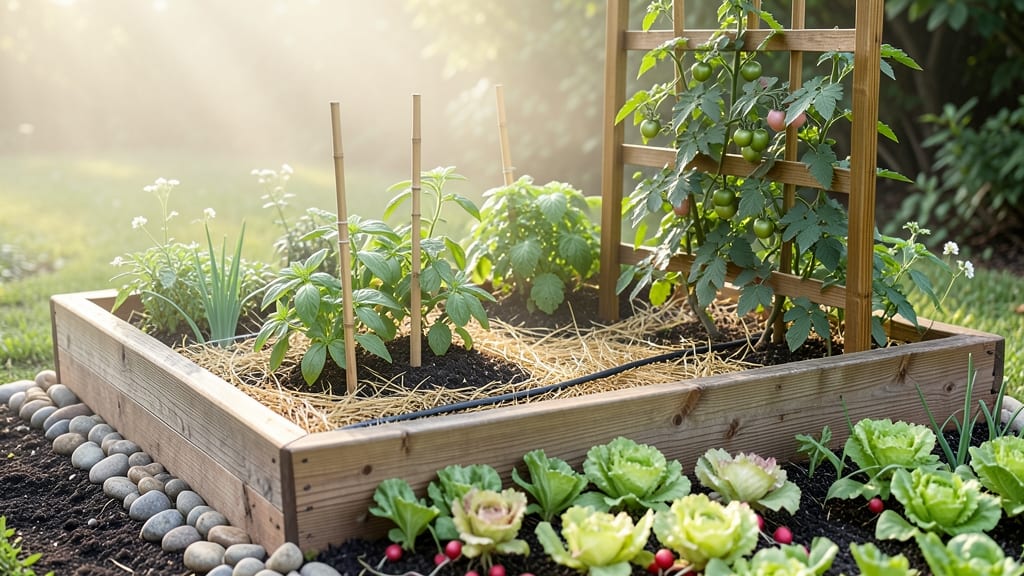
Raised bed planter ideas maximize small spaces by stacking vertically, creating tiered levels, or using modular systems to boost plant yields without expanding your footprint. Opt for spiral designs, stacked boxes, or rectangular frames to improve sunlight exposure and drainage while working with tight urban gardens or balconies.
If you're working with limited space, raised bed planters are a game-changer because they let you control soil quality and drainage while growing more in less area. 🌱 The key is layering: vertical gardens use wall space, while tiered designs stack plants upward.
For example, a spiral bed grows herbs and leafy greens in concentric circles, maximizing every inch, while modular boxes can be rearranged as your garden evolves. I’ve seen urban gardeners fit entire vegetable gardens on balconies using these methods!
Another smart move is pairing fast-growing crops like radishes with slower ones such as tomatoes—this keeps productivity high year-round. Materials matter too: cedar resists rot, while composite options last longer but may cost more upfront.
The goal is flexibility, so you can adapt layouts as your plants grow or your space changes.
💡 In This Article
- Designing High-Yield Raised Bed Layouts for Small Gardens
- 15 Space-Saving Raised Bed Planter Configurations for Any Yard
Designing high-yield raised bed layouts for small gardens
Square-foot gardening is the foundation of maximizing small spaces. This method divides your raised bed into a grid (typically 1-foot squares) and assigns specific plants to each section based on their mature size and growth habits.
For example, a 12" x 12" square can fit 16 basil plants or 1 tomato plant with its sprawling roots, while a 4" x 4" square might hold 9 radish plants.
The math ensures no space is wasted, and you can grow 16 times more in the same area compared to traditional row planting.
Companion planting takes efficiency further by pairing plants that benefit each other. Marigolds, for instance, repel pests that attack tomatoes, while lettuce grows well in the shade of taller plants like corn.
This vertical layering isn’t just about saving space—it’s about creating an ecosystem where plants support each other. 🌿 For instance, a 4-foot-wide bed can hold tall sunflowers at the back, bush beans in the middle, and radishes in the front, all thriving in the same square footage.
The key is to group plants by their sunlight needs, with the tallest in the north (to avoid shading others) and shortest in the south.
Vertical integration is where small gardens truly shine. Trellises, cages, or even simple stakes can turn sprawling plants like cucumbers or pole beans into upward-growing powerhouses. A 6-foot trellis can support 2-3 cucumber plants instead of taking up 12 square feet on the ground.
Pocket planters—small fabric or plastic pockets attached to walls or fences—are another game-changer. They’re perfect for herbs like thyme or oregano, which thrive in shallow soil and can be hung near your kitchen for easy access.
Drainage and soil depth are often overlooked but critical. Most vegetables need at least 6-12 inches of soil, but root crops like carrots or potatoes require 12-18 inches. If your space is ultra-limited, opt for shallow-rooted greens like spinach or kale, which do well in 4-6 inches of soil.
For deeper beds, consider double-layered designs: the bottom layer holds compost and larger roots, while the top layer is for shallow plants. This two-tier approach mimics natural soil stratification and boosts yields without expanding your footprint.
Light exposure is another critical factor. South-facing beds get the most sunlight, but if your space is on the north side, choose shade-tolerant plants like Swiss chard or lettuce. A partial shade cloth (30-50%) can also help protect delicate plants from harsh afternoon sun.
For balconies or rooftops, prioritize containers that can be moved to follow the sun’s arc throughout the day. This dynamic approach ensures even the smallest space gets optimal growing conditions.
Finally, think about modularity. Start with a 4' x 8' bed (the classic size) but break it into smaller sections if needed. For example, a 2' x 4' bed can be placed against a fence, while a 3' x 3' square bed fits neatly in a corner.
Modular systems let you rearrange, expand, or even stack beds vertically (with proper weight distribution) as your gardening needs evolve. The flexibility is what makes raised beds so adaptable to any small space.