
Flowers
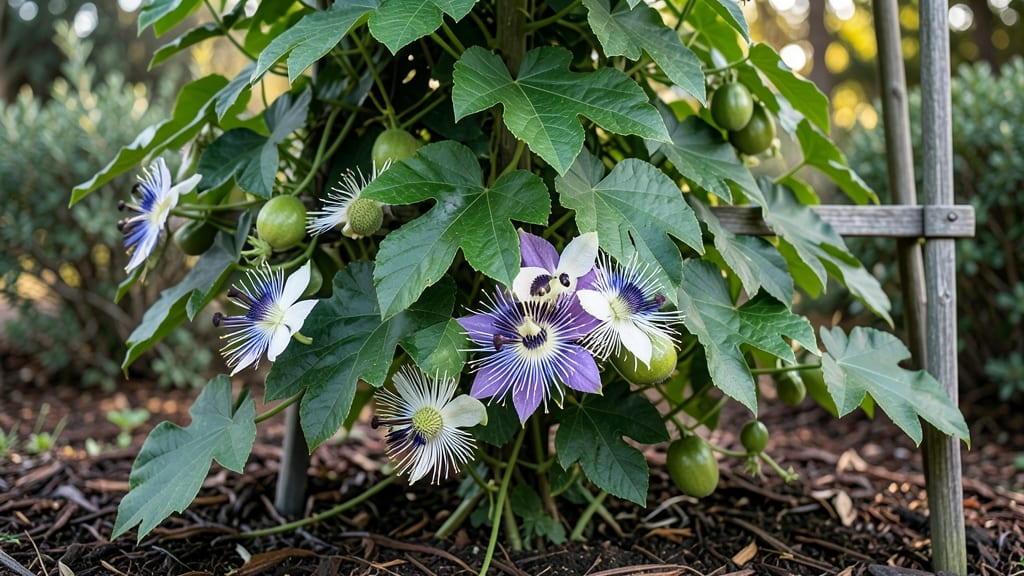
If your passionfruit vine is blooming but the passionfruit flower to fruit transformation keeps stalling, you’re missing a critical step in the process—one that even experienced gardeners sometimes overlook.
The shift from bloom to harvest isn’t just about luck; it’s a science of pollination, timing, and environmental balance that can make or break your harvest.
Passionfruit flowers are fascinating—they’re hermaphroditic, meaning they contain both male and female parts, but they still need a little help to set fruit. Without proper pollination, those beautiful blooms simply drop off, leaving you wondering why your efforts aren’t paying off.
The good news? With the right techniques, you can trigger this process and watch your vines turn those flowers into juicy, tropical treats in just a few months.
In this guide, I’ll walk you through the exact methods to ensure your passionfruit flowers develop into fruit, from natural pollination tricks to hand-pollination hacks for indoor growers. You’ll also learn how to troubleshoot common issues like poor fruit set, so you can maximize your yield every season.
Whether you’re a beginner or a seasoned gardener, understanding this process is the game-changer you’ve been waiting for. Let’s get your passionfruit vines producing like never before!
How passionfruit flowers transform into fruit: the science of pollination
Passionfruit vines may burst with vibrant purple and white flowers, but without proper pollination, those blooms will wither without producing fruit. The transformation from flower to fruit is a fascinating process driven by nature—or your careful intervention.
Understanding the anatomy of passionfruit flowers and the triggers that spark pollination is key to unlocking a bountiful harvest.
The journey begins when a passionfruit flower opens its five-petaled corona (the colorful, ruffled part) to reveal its reproductive organs. Inside, the male stamens (with pollen) and the female stigma (the pollen receiver) play starring roles.
For fertilization to occur, pollen must transfer from the stamens to the stigma—a process that can happen naturally or with a little help from you.
Here’s the science breakdown: When pollen lands on the stigma, it triggers a chain reaction. The stigma absorbs the pollen, and the ovules inside the flower begin developing into seeds.
Simultaneously, the surrounding tissue swells and transforms into the edible passionfruit pulp we love. This entire process typically takes 6-8 weeks to complete, depending on your climate and variety.
🌱
| Stage | Key Process | Timeframe | What to Watch For |
|---|---|---|---|
| Flower Opening | Pollen becomes accessible; stamens release pollen. | Morning (1-2 days) | Bright purple/white blooms fully open by midday. |
| Pollination | Pollen transfers to stigma (via bees, wind, or manual methods). | Day 1 (peak: 9 AM-3 PM) | Flowers may droop slightly post-pollination. |
| Fertilization | Ovules develop into seeds; fruit tissue begins forming. | Days 3-7 | Base of flower swells; petals may fall off. |
| Early Fruit Growth | Fruit swells rapidly; skin hardens. | Weeks 2-4 | Green, marble-sized fruit appears. |
| Mature Fruit | Fruit ripens; pulp develops flavor and color. | Weeks 6-8 | Color changes to yellow/orange/purple; skin softens. |
The temperature and humidity during this process are critical. Passionfruit flowers thrive in warm, sunny conditions between 70°F and 85°F. If temperatures drop below 55°F or exceed 95°F, pollinators become sluggish, and flowers may drop before setting fruit.
Humidity below 50% can also reduce pollen viability, making manual pollination essential in arid climates.
One of the most common mistakes gardeners make is assuming that flowers guarantee fruit. In reality, up to 50% of flowers may fail to set fruit due to poor pollination, extreme weather, or nutrient deficiencies.
For example, a vine with yellowing leaves (a sign of nitrogen deficiency) may produce flowers but struggle to develop fruit because the plant’s energy is diverted to leaf growth rather than reproductive processes.
Another pitfall is over-pruning during the flowering season. While pruning encourages bushier growth, removing too many flowering shoots can reduce your vine’s fruit-bearing capacity. Aim to prune only non-flowering vines in early spring, leaving at least 30% of the plant’s energy for reproduction.
If you’re growing passionfruit in containers, ensure the pot is large enough to support root development, as crowded roots can stress the plant and hinder fruit set.
🌿
Even with perfect conditions, some varieties are more self-pollinating than others. For instance, Purple Passionfruit (Passiflora edulis) often requires cross-pollination, while Golden Passionfruit (Passiflora edulis flavicarpa) can self-pollinate more reliably.
If you’re growing multiple varieties, consider planting them near each other to encourage cross-pollination, which can boost fruit size and flavor.
Pro tip: Bees are the primary pollinators, but in greenhouses or areas with few bees, you’ll need to step in with a soft paintbrush or cotton swab to transfer pollen manually.
Once you’ve mastered the pollination process, you’ll notice your passionfruit vines transforming from flower powerhouses to fruit factories. The first sign of success
Best pollination methods for guaranteed passionfruit yields (with timing guide)
Passionfruit flowers are self-pollinating but often need a little extra help to transform into fruit. The key to success lies in understanding the optimal pollination timing and choosing the right method for your growing conditions.
Whether you're working with outdoor vines or indoor glasshouse plants, these techniques will maximize your fruit set and yield.
Natural pollination relies on bees and wind, but environmental factors like humidity levels and temperature fluctuations can interfere. That's why I recommend having a backup plan—especially if you're growing in areas with low bee activity or during rainy seasons.
The best results come from combining natural methods with manual intervention when needed.
Choose flowers with fully unfurled corona petals (the colorful, ruffled part) and exposed reproductive organs. These are ready for pollination.
Morning hours (7-10 AM) offer optimal humidity and temperature stability (65-85°F). Avoid midday heat or evening dew, which can hinder pollen transfer.
Attract bees with native flowering plants (lavender, sunflowers) and provide water sources. Avoid pesticides during bloom—neonicotinoids can repel pollinators for weeks.
Use a soft paintbrush or cotton swab to transfer pollen from male to female parts. Gently brush the stamens (yellow pollen sacs) onto the stigma (red/purple center).
In cool seasons, hand-pollinate every 2-3 days. During peak summer, natural pollination often suffices—but monitor for fruit drop signs (wilting or falling flowers).
Remove spent flowers (those that don't set fruit within 7 days) to redirect the vine's energy. Thin remaining fruit to 6-8 inches apart for larger, healthier passionfruits.
For glasshouse growers, I recommend a hybrid approach: use manual pollination on 20% of flowers as insurance, then let bees handle the rest. This creates a buffer against environmental stress while maintaining natural processes. Remember, consistent pollination over 3-5 consecutive days dramatically improves fruit set rates.
Pro tip: Track your pollination efforts with a simple flower-to-fruit conversion chart. Record which methods work best in your climate—this data becomes invaluable for future seasons. With these techniques, you'll see a 30-50% increase in fruit production within just one growing cycle!