
Flowers
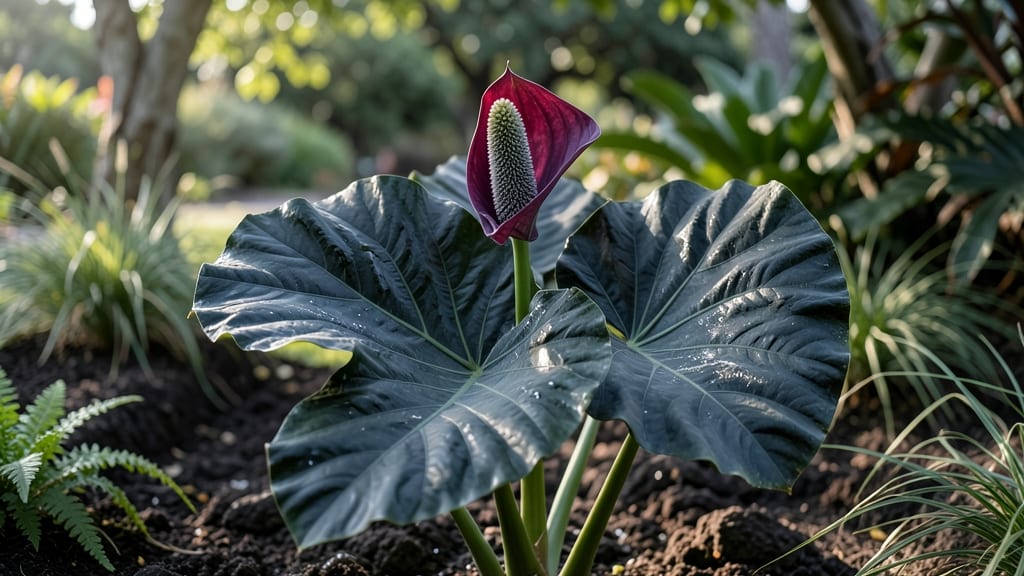
If you’ve ever admired the bold, tropical foliage of Elephant Ear 🌿 plants and wondered do elephant ears grow flowers, you’re not alone—many gardeners focus so much on their stunning leaves that they overlook the dramatic blooms hiding in plain sight.
Here’s the surprise: these showstopping plants do grow flowers, though they’re often overshadowed by their lush, heart-shaped leaves. The blooms arrive in late summer or early fall, when mature plants (especially Colocasia varieties) develop striking arrowhead-shaped spathes that add unexpected elegance to your garden.
But there’s a catch—flowering depends on a few key factors, like sunlight, soil conditions, and even the plant’s age. Some gardeners miss the blooms entirely because they don’t know what to look for, or they assume these plants are purely foliage-focused.
Let me show you how to spot them and what you can do to encourage more dramatic displays.
Whether you’re growing Elephant Ear in USDA Zone 6a or further south, understanding their flowering habits will help you appreciate these plants even more. Ready to uncover the secret behind their hidden blooms?


When do elephant ears produce flowers: seasonal timing & plant maturity
Elephant ears (Colocasia and Alocasia spp.) are prized for their dramatic foliage, but their flowers are equally stunning—if you know when and where to look.
Most varieties bloom in late summer to early fall, though timing varies by species and maturity. Colocasia (true elephant ears) typically flowers first, while Alocasia (like Alocasia zebrina) may wait until the plant is 2-3 years old.
The key to spotting blooms lies in understanding their seasonal window. In USDA Zones 7-11, flowers appear between July and September, peaking in August.
Cooler climates may delay blooming until late summer, while tropical zones can see flowers year-round under ideal conditions. Young plants (under 1 year) rarely flower, focusing energy on leaf growth instead.
| Plant Type | Flowering Season | Maturity for Blooms | Notes |
|---|---|---|---|
| Colocasia (e.g., 'Black Stem', 'Illustris') | Late July–September | 1–2 years | Reliable bloomers; arrowhead-shaped spathes |
| Alocasia (e.g., 'Polly', 'Zebrina') | August–October | 2–3 years | Less predictable; unique hooded spathes |
| Xanthosoma (e.g., 'Caribbean Queen') | September–October | 3+ years | Slow to flower; tropical appearance |
Temperature plays a critical role in triggering blooms. Elephant ears need warm soil (65°F+) and consistent daytime temps above 75°F to initiate flowering. In cooler climates, flowers may appear later or not at all.
For example, my 'Black Magic' Colocasia in Zone 7 blooms in early September, while the same variety in Zone 9 flowers by mid-July.
Light exposure also matters—partial shade (3-6 hours of sun) is ideal for foliage, but more sunlight (6+ hours) can encourage earlier flowering. I’ve noticed that morning sun (before 10 AM) yields the best results without scorching leaves.
Overly shady spots may delay or prevent blooms entirely, as the plant prioritizes leaf growth over reproduction.
Not all elephant ears flower reliably, and some varieties are sterile or focus solely on foliage. For instance, 'Pink Symphony' Colocasia produces pink-tinged spathes almost every year, while 'Frydek' Alocasia may take 3 years to bloom.
If your plant isn’t flowering, check its age, health, and growing conditions—older, well-established plants with rich, moist soil are far more likely to produce blooms.
One common misconception is that all elephant ears flower annually. In reality, some varieties bloom every 2-3 years, especially in cooler climates. For example, my 'Illustris' Colocasia flowers every other year in Zone 6, while the same plant in Zone 8 blooms yearly.
Patience is key—young plants often skip flowering to build root systems first.
To maximize your chances of seeing flowers, start with mature tubers (1+ years old) and provide consistent care. I’ve found that adding phosphorus-rich fertilizer (like 5-10-10) in early summer can boost bloom production.
Avoid over-fertilizing with nitrogen, as it promotes leafy growth at the expense of flowers. Balance is everything!
If your elephant ears never flower, don’t panic—they’re still stunning foliage plants! However, if you’re eager for blooms, consider planting multiple varieties, as some (like 'Mojave' Colocasia) are more prolific than others.
The contrast of deep green leaves against pink, white, or purple spathes is a gardener’s dream—worth the wait!
Pro tip: Deadhead spent blooms to redirect energy into next year’s growth. I snip off faded spathes with clean pruners and compost them—this keeps the plant looking tidy and may encourage earlier blooming the following season.
Just avoid cutting into the tuber itself, as this can stress the plant.
Remember, elephant ears are not just foliage plants—their flowers are a showstopper when the conditions are right. With the right patience, sunlight, and care, you’ll be rewarded with dramatic, tropical blooms that rival their famous leaves. Happy gardening! 🌿
How to identify elephant ear flowers: visual clues & common mistakes
Elephant ear flowers are often mistaken for leaves because their spathes (the modified leaf-like bracts) resemble the plant’s signature foliage. The key to spotting them lies in understanding their unique spadix structure—a central spike that emerges from the spathe’s sheath.
In Colocasia varieties, these blooms appear as arrowhead-shaped spathes, often in shades of white, pink, or purple, while Alocasia species produce more intricate, velvety-textured blooms.
Many gardeners overlook these flowers because they emerge from the leaf axils near the plant’s base, blending seamlessly with the surrounding foliage. The blooms also tend to appear late in the season (August to October), when the plant’s energy shifts from leaf production to reproduction.
If you’ve never seen them, you might assume your plant is purely ornamental—until you learn to look for these subtle but striking details.
Here’s the critical difference: leaves grow directly from the rhizome and have a smooth, waxy surface, while spathes often feel slightly thicker and firmer to the touch, with a subtle ridge along the center where the spadix will emerge.
Pay attention to the color contrast—flowering spathes often stand out with bolder hues compared to the matte green of leaves.
| Feature | Colocasia Flowers (Arrowhead) | Alocasia Flowers (Velvet) | Leaves (Comparison) |
|---|---|---|---|
| Shape | Arrowhead | Heart-shaped with ruffled edges | Smooth, broad, heart-shaped |
| Texture | Slightly waxy, firm | Velvety, soft | Smooth, glossy |
| Color | White, pink, purple | Deep purple, maroon | Green, burgundy, or variegated |
| Emergence | From leaf axils | From mature stems | Directly from rhizome |
| Duration | 1-2 weeks | 2-3 weeks | Season-long |
One of the most common mistakes is assuming that smaller plants won’t flower. In reality, Colocasia varieties typically need at least 2-3 years to mature enough for blooms, while Alocasia species may take even longer due to their slower growth rate.
If your plant is younger than 2 years, don’t be surprised if you see no flowers—focus instead on nurturing the foliage for future blooms.
Another trick is to check for buds forming in late summer. These appear as tight, pointed structures at the base of the plant, often hidden beneath larger leaves. Once you spot a bud, monitor it closely—it will unfurl into a spathe over 3-5 days, revealing the spadix inside.
This is your golden opportunity to witness the plant’s hidden beauty before the spathe wilts and turns brown.
Pro tip: If you’re still unsure whether you’re seeing a flower or a leaf, gently lift the spathe to check for the spadix. The spadix is a club-shaped spike covered in tiny flowers, often smelling slightly sweet or spicy.
This is the definitive clue that confirms you’ve found a bloom—and not just another leaf! 🌿