
Plants
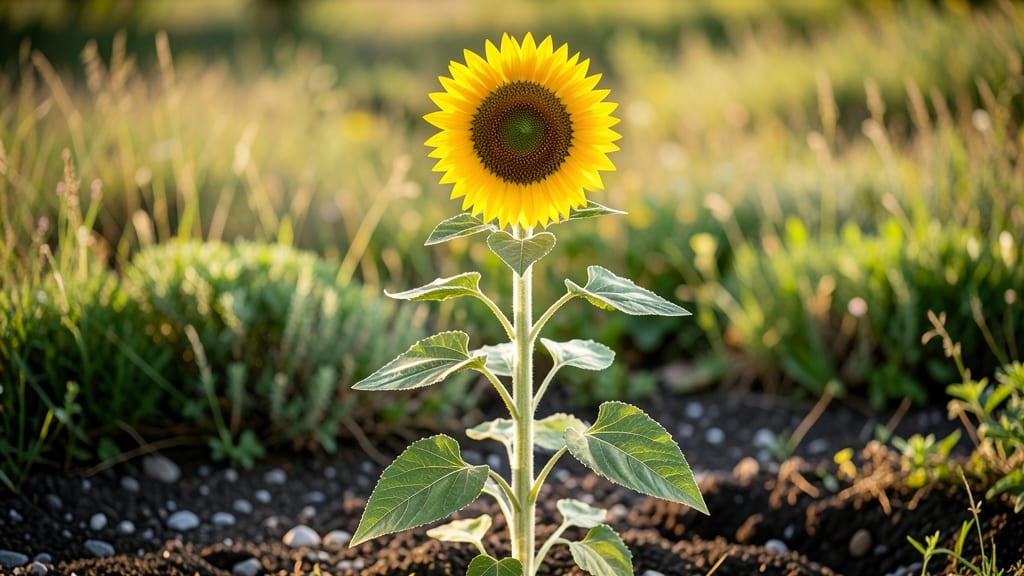
When you picture a full grown sunflower, does a towering 🌻 with a face-turning head come to mind? Those iconic giants aren't the only option—sunflowers range from compact 2-foot dwarfs to 16-foot colossuses that need serious support.
The variety you choose determines everything from your garden layout to how much staking you'll need.
If you've ever struggled with floppy stems or wondered why some sunflowers stay sturdy while others lean like drunken giants, you're not alone. The key lies in understanding each variety's natural growth habits and when to step in with support.
Whether you're growing sunflowers for cut flowers, bird feeders, or just pure joy, knowing their mature height helps you plan for success.
From the 3-foot Teddy Bear that fits in containers to the Russian Giant that outshines your house, we'll break down exactly what to expect at maturity. You'll learn which varieties thrive without staking and how to give tall sunflowers the support they need without sacrificing their natural beauty.
Ready to transform your garden into a sunflower spectacle? Let's explore how to choose the perfect variety for your space and keep those golden blooms standing tall all season long.
Sunflower height ranges by variety: dwarf to giant types explained
Choosing the right sunflower variety can transform your garden layout, from compact borders to towering focal points. The full grown sunflower height varies dramatically—some stay under 3 feet, while others reach 14+ feet.
Understanding these ranges helps you plan spacing, support needs, and even pollinator-friendly zones. Let’s break down the categories with exact measurements and growth tips.
Dwarf sunflowers (2–4 feet) are perfect for containers, window boxes, and small gardens. Medium varieties (4–8 feet) strike a balance for cut flowers and pollinator gardens. Giant types (8–16 feet) demand space and often need staking.
Even within these categories, some varieties defy expectations—like the Moulin Rouge (3.5 feet) or the Russian Giant (14+ feet).
Spacing is critical for sunflower health. Dwarf varieties need 12–18 inches apart, while giants require 3–4 feet of clearance. Poor spacing leads to competition for nutrients, stunted growth, and increased disease risk. Always check the seed packet for ideal spacing recommendations—they’re tailored to each variety’s mature size.
| Variety Category | Height Range (ft) | Spacing (inches) | Best For | Notes |
|---|---|---|---|---|
| Dwarf | 2–4 | 12–18 | Containers, borders | 'Moulin Rouge,' 'Teddy Bear' |
| Semi-Dwarf | 4–6 | 18–24 | Cut flowers, pollinators | 'Autumn Beauty,' 'ProCut' |
| Standard | 6–10 | 24–36 | Backyard focal points | 'Mammoth,' 'Russian Giant' |
| Giant | 10–16+ | 36–48+ | Large gardens, events | 'Russian Giant,' 'Mammoth' |
| Unique Exceptions | 1.5–3 | 12–16 | Terraces, small spaces | 'Little Becka,' 'Puck' |
The 'Russian Giant' sunflower is legendary for its 14+ foot height, but it’s not the only giant. The 'Mammoth' variety can reach 12 feet with proper care. These towering varieties need rich, well-draining soil and consistent moisture to support their massive stems.
Without adequate nutrients, they may develop weak stems that snap in wind or rain.
For medium-height varieties like 'Autumn Beauty' (5–6 feet), focus on balanced fertilization to encourage sturdy stems. These are ideal for cut flower arrangements because they hold up well in vases. Space them 24 inches apart to prevent overcrowding, which can lead to leggy growth and fewer blooms.
Dwarf sunflowers, such as 'Teddy Bear' (3 feet), are self-supporting and perfect for container gardening. Their compact size makes them great for balconies or patios.
Use well-draining potting mix and 1-gallon pots to prevent root rot. These varieties also bloom earlier than their taller counterparts, giving you longer enjoyment in small spaces.
When planning your sunflower garden, consider wind exposure—taller varieties may need staking or trellising, especially in open areas. Even dwarf varieties can benefit from light support if grown in high-wind zones. Always plant taller varieties at the back of beds to avoid shading smaller plants.
Pro tip: Mix heights for visual interest! Place dwarf varieties in front of medium or tall types to create a layered effect. This not only enhances your garden’s aesthetics but also supports pollinators by offering nectar at multiple levels. Just ensure each
When and how to support tall sunflowers: staking vs. natural growth
Not all full grown sunflowers need staking—it depends on their variety and growing conditions. Most dwarf varieties like 'Teddy Bear' (3-4 feet) stand proudly without support, while giant types like 'Russian Giant' (12+ feet) often require help to avoid flopping.
The key is understanding your sunflower's natural stability and environmental factors that might challenge it.
Wind exposure, soil type, and even watering habits play critical roles in determining whether your sunflowers need support. Heavy clay soil or loose, sandy soil can make stems top-heavy and prone to bending. Meanwhile, consistent moisture helps stems thicken naturally, reducing the need for staking in many cases.
If your sunflowers are approaching 6 feet tall and showing signs of leaning or bending at the stem, it's time to consider support. For varieties over 8 feet, staking is almost always recommended to prevent breakage, especially in windy climates.
The good news? You don't need expensive materials—simple DIY solutions work beautifully.
Staking a full grown sunflower too early can restrict natural stem thickening. Wait until the stem is at least 2 inches thick and shows signs of leaning before supporting. Over-tightening ties can strangle stems as they grow, while improper materials (like wire) can cut into tender bark.
For organic support, use bamboo stakes or coconut fiber ties—both allow stems to breathe while providing stability. Drive the stake 6-8 inches deep into the soil and tie the sunflower stem loosely with a figure-eight pattern, leaving room to adjust as it grows.
Avoid plastic ties that can tighten and damage stems over time.
DIY solutions like tomato cages or repurposed wire fencing work well for medium-height varieties (5-8 feet). For true giants, consider a three-stake system arranged in a triangle around the plant. This distributes weight evenly and prevents the stem from bending under its own weight.
Remember, the goal is to support without restricting. Check ties weekly to ensure they're not too tight, and adjust as your sunflowers grow. With the right approach, even your tallest varieties will stand proudly all season long, turning heads in your garden.