
Planting
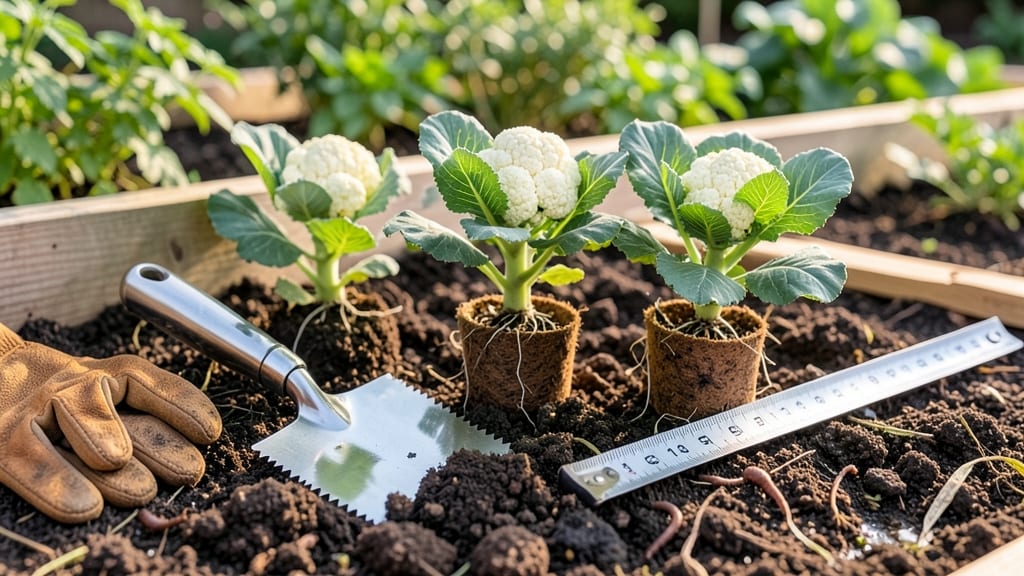
Optimal cauliflower spacing by variety and growth type
Cauliflower spacing isn’t one-size-fits-all—it depends on your variety type, growth habit, and garden setup. Get this wrong, and you’ll end up with small, misshapen heads or wasted garden space.
The key is balancing airflow, sunlight access, and root development. Let’s break down the science-backed spacing for dwarf, standard, and giant varieties, plus how to adapt for containers and small spaces.
Most gardeners focus only on in-row spacing, but row spacing matters just as much. Cauliflower plants need room to expand their leaves and develop healthy heads.
For example, standard varieties like 'Snowball Y Improved' require 18–24 inches between plants in the row, while 'Purple of Sicily' (a broccoli-style cauliflower) can handle slightly tighter spacing at 12–16 inches because its growth habit is more compact.
Here’s the golden rule: Multiply the mature plant height by 1.5 to get your in-row spacing. For a 2-foot-tall variety, that’s 30 inches apart.
This ensures proper air circulation, reducing risks of fungal diseases like downy mildew and pest infestations like cabbage worms. Row spacing should be 24–36 inches to allow for easy weeding and access to the plants.
Container gardening changes the game. Cauliflower in pots or grow bags needs more frequent watering and nutrient-rich soil, but spacing rules shift too. A 5-gallon container can fit one dwarf variety, while a 10-gallon pot might handle a standard variety if you’re okay with slightly smaller heads.
For giant varieties, you’ll need 15+ gallons and deep containers (at least 12 inches deep) to support their heavy root systems.
Pro tip: If you’re interplanting cauliflower with fast-growing crops like radishes or lettuce, stagger your planting times by 2–3 weeks. This lets you maximize space while ensuring the cauliflower gets priority access to nutrients and sunlight as it matures.
For example, plant radishes in early spring, then cauliflower seedlings 4–6 weeks later once the radishes are harvested.
For small-space gardens, consider vertical training. Some broccoli-style cauliflowers (like 'Purple Sprouting') can be lightly trellised to save space, though this isn’t ideal for heading varieties. If you’re using square foot gardening, aim for 4–9 plants per square foot, depending on the variety.
For instance, 9 dwarf plants fit in a 1-square-foot grid, while 4 giant varieties would work in the same space but with larger heads.
One common mistake is overestimating your garden’s capacity. Always
Why proper spacing prevents common cauliflower problems
Cauliflower plants may look sturdy, but they’re surprisingly sensitive to crowding. When planted too closely, they compete fiercely for nutrients, water, and sunlight. This competition triggers stress responses, like premature bolting or stunted head formation.
Even worse, crowded plants trap moisture, creating the perfect conditions for fungal diseases like downy mildew and clubroot.
I’ve seen firsthand how overcrowded cauliflower patches attract more pests like cabbage moths and aphids. Tight spacing makes it harder for airflow to circulate, leaving plants vulnerable.
Meanwhile, under-spaced plants may seem fine at first, but they’ll produce smaller, less marketable heads because they’re not getting enough resources to develop properly.
Here’s the kicker: improper spacing doesn’t just affect yield—it can ruin your entire harvest. For example, poor head formation often starts with plants fighting for space. If the crown doesn’t receive enough light, it won’t form a tight, uniform head. And once that happens, there’s no fixing it.
⚠️ Critical Spacing Rule: Never Plant Cauliflower Closer Than 18 Inches Apart
Why it matters: This distance ensures each plant gets 6-8 hours of sunlight, proper air circulation, and enough root space to access nutrients. Skimp on spacing, and you’ll invite diseases, pests, and poor growth.
Fix overcrowding now: Thin seedlings to 18-24 inches apart when they’re 4-6 inches tall. For established plants, gently transplant extras to a new spot with fresh soil.
Let’s talk about bolting, the enemy of cauliflower growers. When plants are crowded, they sense stress and bolt prematurely—sending up flower stalks instead of forming heads.
I’ve had entire batches of cauliflower bolt because they were packed too tightly in the garden bed. The fix? Give them room to breathe.
Another common issue is disease spread. Wet leaves from overcrowding create the perfect breeding ground for fungal spores. I once lost a whole row of cauliflower to downy mildew because I didn’t thin them early enough.
Proper spacing reduces humidity around the plants, keeping them healthier and more resistant to pathogens.
If you’re dealing with an already overcrowded patch, don’t panic. Start by removing the weakest seedlings first—keep the strongest, healthiest ones. For mature plants, you can carefully transplant extras to another part of the garden or into containers. Just be gentle with the roots to avoid shocking the plants.
Remember, spacing isn’t just about numbers—it’s about giving your cauliflower the best chance to thrive. When you get it right, you’ll see bigger heads, fewer pests, and a harvest that’s the envy of the neighborhood. Happy planting! 🌱