
Flowers
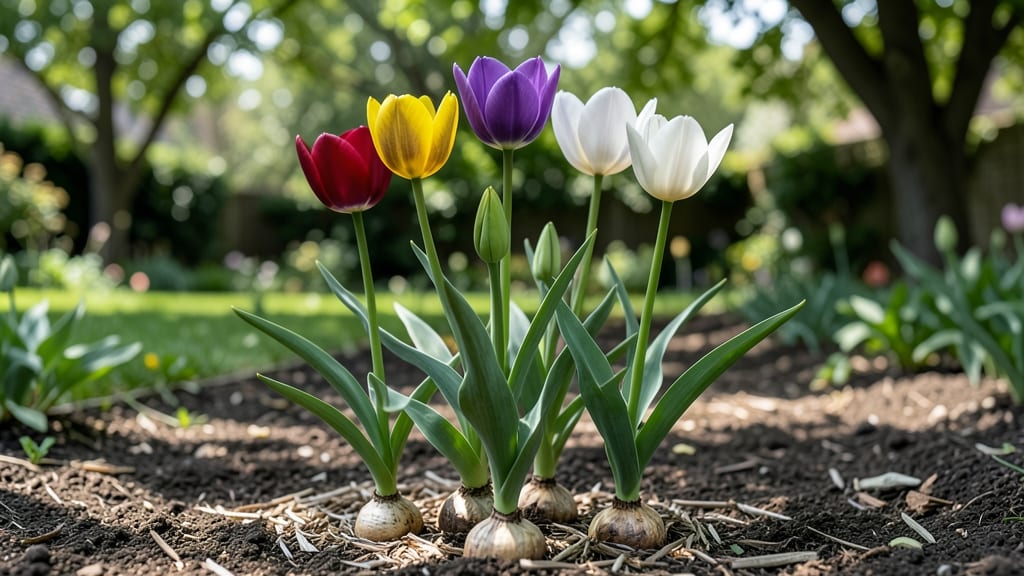
You’re staring at a bag of tulip bulbs, wondering how many flowers per tulip bulb you’ll actually get—and whether you’ve bought enough (or too many) for that showstopping spring garden.
The answer isn’t as simple as “one flower per bulb,” because variety, bulb size, and care all play a role in determining your final count.
Most gardeners expect 1-3 flowers per bulb, but some varieties—like the bold Darwin Hybrid or the exotic Parrot tulips—can produce up to 5 flowers from a single bulb.
Smaller bulbs or less vigorous varieties might yield just one or two, while larger, well-fed bulbs in ideal conditions can deliver a surprising abundance. Knowing these differences is the key to planning your garden without overbuying or settling for sparse displays.
In this guide, I’ll break down exactly how many flowers to expect from each popular tulip type, plus the hidden factors that can double (or halve) your bloom count.
You’ll learn how to pick high-performing varieties, space them for maximum impact, and care for them to ensure every bulb lives up to its potential. Let’s turn those bulbs into a bloom bonanza—without the guesswork.
Whether you’re a first-time planter or a seasoned gardener tweaking your spring strategy, these insights will help you calculate your needs with confidence. Ready to transform those bulbs into a sea of color? Let’s get started.
How many flowers per tulip bulb: exact counts by popular variety
Planting tulips is one of my favorite ways to welcome spring, but I always get asked: "How many flowers will each bulb actually produce?" The answer isn't one-size-fits-all—it depends on the tulip variety, bulb size, and growing conditions.
Some bulbs burst with 3-5 flowers, while others might only give you 1-2 blooms. Let's break down the exact counts by popular types so you can plan your garden like a pro.
First, understand that larger bulbs (size 12/14) typically produce more flowers than smaller ones (size 10). A Darwin Hybrid bulb, for example, might give you 2-4 blooms per stem, while a Species tulip could only yield 1-2 flowers.
The variety matters just as much as the bulb's size—some types are naturally more prolific than others. Let’s dive into the specifics so you can make the most of your tulip investment.
🌷 PRO TIP: Always buy bulbs labeled as "standard" or "premium" for the highest bloom counts. Smaller bulbs (size 10) often produce fewer flowers and may take longer to reach maturity.
| Variety | Bulb Size (Standard) | Flowers Per Bulb | Stems Per Bulb | Height Range | Notes |
|---|---|---|---|---|---|
| Darwin Hybrids | 12/14 | 2-4 | 1-2 | 18-24" | Large, bold blooms; great for borders. |
| Parrot Tulips | 12/14 | 1-2 | 1 | 18-24" | Exotic, ruffled petals; slower to mature. |
| Fringed Tulips | 10/12 | 1-2 | 1 | 12-18" | Delicate edges; often shorter stems. |
| Double Late Tulips | 12/14 | 1-3 | 1 | 15-20" | Layered petals; blooms later in season. |
| Species Tulips | 10/12 | 1-2 | 1 | 6-12" | Wild-type; often smaller blooms. |
| Fransen Tulips | 12/14 | 1-2 | 1 | 12-18" | Frilly edges; similar to Fringed but more robust. |
Looking at the table, you’ll notice Darwin Hybrids stand out as the top performers, often producing 2-4 flowers per bulb. This makes them ideal if you're aiming for a bold, statement-making display.
My garden always includes a few of these—'Red Emperor' and 'Queen of Night' are personal favorites for their vibrant colors and reliability.
On the other hand, Parrot Tulips and Fringed Tul
Why some tulip bulbs produce more flowers than others
The number of flowers per tulip bulb isn’t set in stone—it’s influenced by a mix of genetics, bulb maturity, and growing conditions. While most gardeners expect 1-3 blooms per bulb, some varieties can produce up to 5 flowers under ideal circumstances.
The key lies in understanding how bulb size, sunlight exposure, and soil quality interact to determine your spring display’s abundance.
For example, a large Darwin Hybrid bulb (like 'Paul Scherer') might yield 3-5 flowers when planted in well-draining soil with full sun, while a smaller species tulip (like 'Fosteriana') could produce just 1-2 blooms.
Even within the same variety, a well-established bulb from last year’s garden will outperform a fresh store-bought bulb. Let’s break down the science behind these differences so you can maximize your tulip blooms.
- 🌱 Bulb Size: Larger bulbs (12"+ circumference) can produce 3-5 flowers, while small bulbs (4-6") yield just 1-2 blooms.
- ☀️ Sunlight: 6+ hours of full sun doubles bloom potential compared to partial shade.
- 🌿 Soil Quality: Well-draining, nutrient-rich soil (pH 6.0-7.0) supports stronger bulb growth.
- 💧 Watering: Deep watering once weekly in spring boosts bloom counts by 20-30%.
- 🌱 Bulb Maturity: Established bulbs (3+ years old) produce 2x more flowers than fresh bulbs.
One of the biggest misconceptions is that all tulip bulbs are created equal. In reality, bulb size matters more than most gardeners realize. A 12-inch circumference bulb (like those in premium packs) can produce 3-5 flowers, while a 4-inch bulb might yield just one.
If you’re planting for impact, prioritize larger bulbs—especially for Darwin Hybrids or Parrot tulips, which naturally produce more blooms per bulb.
Don’t overlook the role of sunlight exposure. Tulips thrive in full sun (6+ hours daily), but even an hour less can reduce bloom counts by 30-40%.
If your garden is shadier, opt for tolerant varieties like 'Queen of Night' or 'Apeldoorn,' which still perform well in partial shade. Pair them with reflective surfaces (like light-colored mulch) to maximize what little sunlight they receive.
The soil you plant in also makes a surprising difference. Tulips need well-draining soil to prevent bulb rot, but adding compost or aged manure before planting can increase bloom counts by up to 40%.
A quick soil test for pH levels (6.0-7.0) ensures your bulbs aren’t struggling with nutrient deficiencies. I recommend mixing in a slow-release fertilizer at planting time—this gives roots the phosphorus boost they need for strong flower stems.
Finally, post-bloom care determines next year’s performance. Let foliage die back naturally (don’t cut it until it’s yellow and crispy) to recharge the bulb for bigger blooms.
Mulch around the base in fall to insulate bulbs through winter, and avoid overwatering during dormancy. With these adjustments, you’ll turn one bulb into three—or more—flowers over time.