
Plants
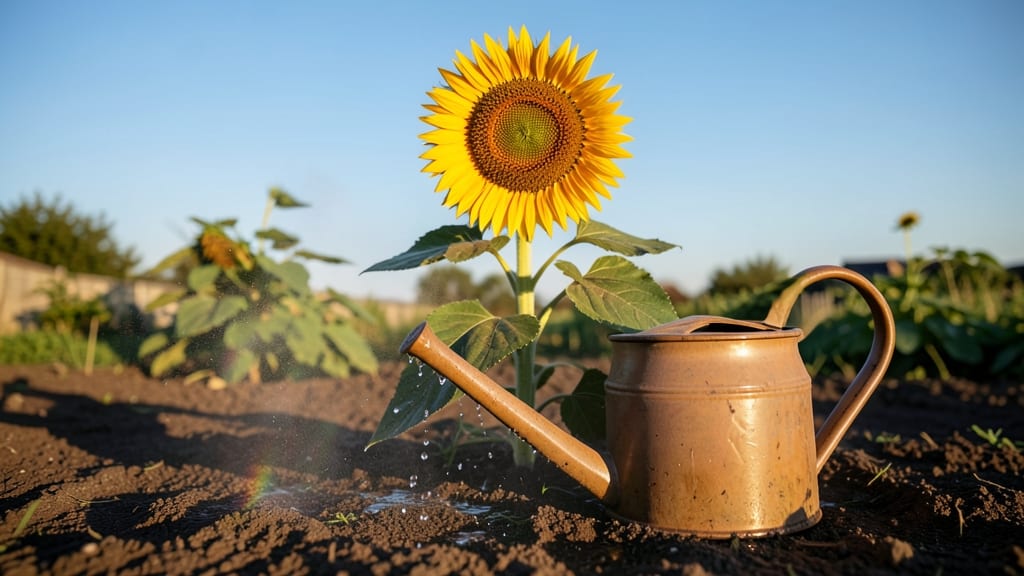
To water a sunflower plant just right, you’re basically teaching it to drink deep—because shallow sips won’t cut it for these towering giants. 🌻 Skip the daily misting, and you’ll end up with leggy, weak stalks instead of the bold, sun-loving beauties you planted.
But get the rhythm right, and you’ll watch those stalks shoot toward the sky with surprising speed.
The key isn’t just how much you water—it’s how often. Young sunflowers need frequent, gentle drinks, while mature plants prefer deep soaks that encourage roots to dive deeper. Too much water, and you’ll smother their roots; too little, and they’ll bolt before blooming.
I’ll break down the exact schedule for each growth stage so you never guess again.
Climate plays a huge role too. In Zone 6a, where spring rains can turn your soil into soup, timing matters more than ever. Should you water in the morning or evening?
How do you tell if your sunflower is thirsty—or drowning? Let’s tackle these common mistakes and turn your watering routine into a game-changer for your garden.
By the end, you’ll know exactly when to reach for the hose (or skip it entirely) to give your sunflowers the perfect balance of moisture. No more wilting stalks or sad blooms—just thriving, sun-drenched giants that make your garden the talk of the neighborhood.
Sunflower watering schedule by growth stage: from seed to bloom
Sunflowers thrive when you mimic their natural growing conditions—deep, infrequent watering that encourages strong root systems. Unlike many flowers, they hate soggy soil but won’t survive drought once established. The key is adjusting your watering routine as your sunflowers mature, from delicate seedlings to towering giants reaching for the sky.
Your watering schedule should shift dramatically between stages. Seedlings need frequent moisture to prevent drying out, while mature plants can handle longer dry spells. Even the hardiest sunflower varieties struggle if watered inconsistently. Let’s break down exactly how often to water at each critical growth phase.
Here’s a quick reference for your watering routine, tailored to each stage of sunflower development:
During the seedling stage, your sunflowers are most vulnerable. Keep the soil consistently moist but never soggy—think of a wrung-out sponge. Overwatering at this stage can cause seed rot or fungal diseases like damping-off.
A light misting with a spray bottle works well for tiny seedlings, but switch to a gentle watering can as they grow taller.
Once your sunflowers reach the vegetative stage (3-6 weeks), they’ll start growing rapidly. This is when deep watering becomes critical. Aim to water once every 3-5 days, soaking the soil to a depth of 4-6 inches.
Check moisture by sticking your finger 2 inches into the soil—if it’s dry, it’s time to water. Mulching with straw helps retain moisture and keeps roots cool.
When buds form and flowers begin to open, your sunflowers enter the flowering stage. Here, you’ll notice they need less frequent watering—every 5-7 days—but the stakes are higher.
Uneven watering can cause buds to drop before opening. Focus on watering at the base of the plant in the morning to prevent fungal issues from evening moisture.
Mature sunflowers are surprisingly drought-tolerant. Once they’ve finished blooming and seeds begin to form, you can reduce watering to every 10-14 days unless your area experiences extreme heat. The goal is to let the soil dry out between waterings, which actually improves seed quality.
Only water if you see wilting or the stems feel soft when touched.
Adjust your schedule based on your local climate. In hot, dry regions, you may need to water young plants daily until they establish deep roots.
Conversely, in humid areas, reduce frequency to prevent fungal diseases. Always water deeply and slowly—sunflowers hate shallow puddles but love moisture reaching their roots.
Pro tip: Use a moisture meter for accuracy, especially during critical stages. These $10 tools take the guesswork out of watering and help you avoid both underwatering and overwatering. For container-grown sunflowers, check soil moisture daily—they dry out faster than in-ground plants.
Remember, sunflowers are resilient once established. The key is consistency during their early growth. Master this watering schedule, and you’ll grow sunflowers that stand taller and brighter than ever before. 🌻
Signs your sunflowers are thirsty (or drowned): troubleshooting watering mistakes
Your sunflowers might look sturdy, but their leaves tell all about their water struggles.
Yellowing leaves on younger plants often mean underwatering, while drooping older leaves could signal either thirst or overwatering. 🌱 The trick is checking the soil moisture—stick your finger 2 inches deep; if it’s dry, water immediately. If it’s soggy, hold off and let it dry out.
Don’t ignore the stem’s condition either. A soft, mushy stem is a red flag for root rot from overwatering, while a brittle, dry stem means your sunflower is desperately thirsty.
Gently squeeze the stem near the base—if it feels spongy, you’ve overwatered; if it’s hard and dry, it’s time to hydrate.
Here’s the critical mistake most gardeners make: watering too frequently without checking the roots. Sunflowers need deep watering every 3-5 days, not daily light sprinkles. Shallow watering encourages weak roots that can’t support those towering stalks.
How Often Should You Water a Sunflower Plant?
Young seedlings (first 2 weeks): Water every 2-3 days—keep soil consistently moist but not soggy. Use a spray bottle or gentle watering can to avoid disturbing delicate sprouts.
Vegetative stage (3-6 weeks): Shift to deep watering every 3-4 days. Let the top 1-2 inches of soil dry between waterings to encourage root growth.
Flowering stage (6-10 weeks): Reduce to every 4-5 days unless in extreme heat. Focus on soaking the roots—avoid wetting the foliage to prevent disease.
Mature plants (10+ weeks): Water every 5-7 days unless in drought. Once established, sunflowers are drought-tolerant, but blooms need consistent moisture.
Root health is your best diagnostic tool. Gently dig around the base (be careful!) to check for grayish, mushy roots—a sure sign of overwatering.
Healthy roots should be white or tan and firm. If roots look shriveled or black, your sunflower is suffering from water stress or rot.
Correcting overwatering is simple: stop watering immediately and improve drainage. Mix compost or perlite into the soil to aerate it, and consider moving potted sunflowers to a well-draining container. For underwatering, water deeply until you see moisture 12 inches down—this mimics natural rain and encourages deep root growth.
Watch for leaf curl or wilting during heatwaves—this is your sunflower’s way of saying, “I need a drink!” But if the wilting happens after a heavy rain, it’s likely root-bound or struggling with poor soil.
Mulch around the base with straw or wood chips to retain moisture and regulate soil temperature.
Remember, sunflowers are resilient but not forgiving when it comes to water. Master these signs, and you’ll grow bold, healthy stalks that reach for the sky—no guesswork required. 🌻