
Watering
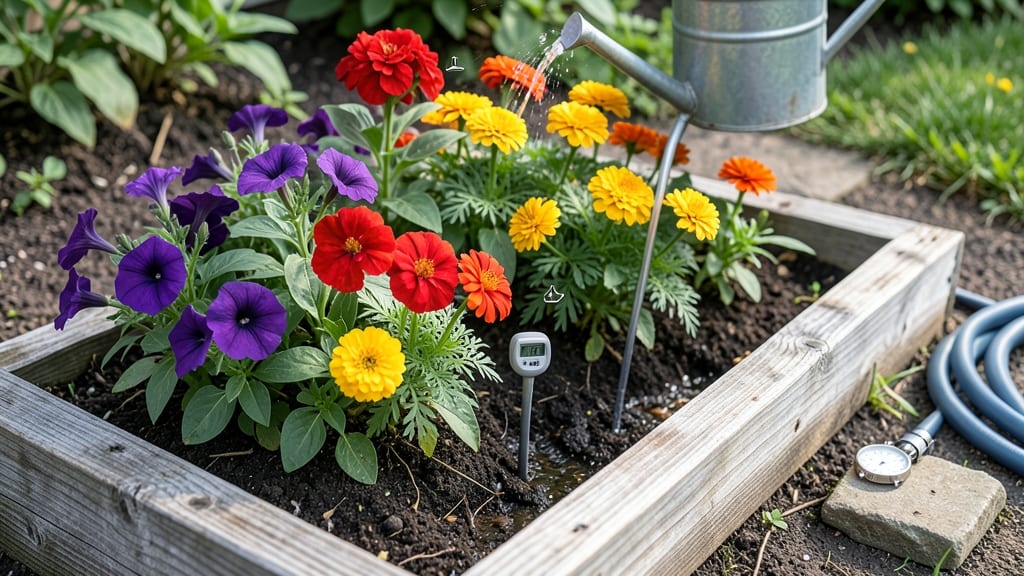
To keep your outdoor 🌸 thriving, figuring out how often to water flowers outside can feel like guessing—too much and you drown their roots, too little and they wilt faster than a forgotten houseplant.
Most gardeners overcomplicate it, but the truth is simpler than you think. Whether you're dealing with sun-loving annuals or drought-tolerant perennials, understanding your local climate and soil type is the key to nailing that perfect watering rhythm.
I'll break down exactly what your flowers need, from the first warm spring day to the dog days of summer.
You'll learn how to read your plants' signals—like drooping petals or crispy leaf edges—and adjust your schedule without second-guessing. No more guesswork, just vibrant blooms that last all season. Let's get your watering routine right the first time.
We'll also cover smart habits like morning watering, mulching tricks, and how to handle those tricky heatwaves. By the end, you'll water with confidence, saving time and keeping your garden looking its absolute best. Ready to transform your watering game?
Seasonal watering schedule for outdoor flowers by type
Watering your outdoor flowers isn't a one-size-fits-all task—it depends on the plant type, seasonal needs, and even the soil conditions in your garden. Annuals like petunias or marigolds demand more frequent watering than drought-tolerant lavender or yarrow.
Understanding these differences ensures your blooms stay vibrant without wasting water or risking root rot.
The key to a thriving garden lies in adjusting your watering routine as the seasons shift. In spring, focus on establishing roots with consistent moisture, while summer’s heat may require daily watering for moisture-loving varieties.
Fall slows growth, and winter dormancy often means minimal watering—unless you're in a mild climate. Let’s break down how to tailor your schedule for different flower types.
For annual flowers, like petunias or geraniums, spring is all about establishing roots. Water lightly but frequently—about every 1-2 days—to encourage growth. Once established, these plants can handle slightly longer intervals, but summer’s heat will demand more attention.
Aim to water early in the morning to reduce evaporation and fungal risks like powdery mildew.
Perennial flowers, such as coneflowers or black-eyed Susans, are more resilient but still need consistent care. In spring, water every 2-3 days to support new growth. During summer, deep watering every 2-3 days ensures roots reach moisture.
These plants often thrive with mulch to retain soil moisture and suppress weeds, reducing your watering workload by up to 30%.
Drought-tolerant flowers, like lavender or sedum, are the low-maintenance stars of the garden. In spring, water every 5-7 days to avoid over-saturating the soil. Once established, these plants can go 10-14 days without water in summer, making them perfect for busy gardeners or water-restricted areas. Overwatering is their biggest enemy—always check soil moisture before watering.
Moisture-loving flowers, such as hydrangeas or roses
Signs your flowers need (or don’t need) water right now
Your flowers are whispering clues about their thirst levels—you just need to know how to listen. Wilting leaves and dry soil are the most obvious signals, but subtle cues like crispy leaf edges or yellowing petals can reveal overwatering.
I’ve learned the hard way that ignoring these signs leads to stressed plants or worse, fungal diseases.
Start by pressing your finger 1 inch deep into the soil. If it feels dry, your flowers need water. If it’s damp, hold off for another day. Clay soil stays moist longer, while sandy soil drains quickly—adjust your schedule accordingly.
Don’t rely solely on a rigid watering calendar; your plants’ needs change daily with the weather.
Key-takeaway
💧 How Often to Water Flowers Outside
Morning watering (6-9 AM) is ideal—it reduces evaporation and fungal risks. Most flowers need water every 2-3 days in summer, but drought-tolerant varieties like lavender can go 5-7 days between waterings.
Check soil moisture daily during heatwaves. Mulch retains moisture and reduces watering frequency by 30-50%.
Pro Tip: Water at the base of plants, not overhead, to keep petals dry and prevent mildew.
Overwatering is just as damaging as underwatering. Look for yellowing leaves, mushy stems, or white fungal growth—these are red flags.
If your soil feels soggy even 2 inches down, cut back on watering immediately. Potted flowers dry out faster than in-ground plants, so check them daily in hot weather.
Adjust your watering based on the forecast. After a heavy rain, skip watering for 2-3 days unless the soil is still bone-dry. In high humidity, water less frequently to avoid fungal issues. I’ve saved struggling roses by monitoring the weather app and adjusting my schedule—it’s a game-changer.
Don’t forget to consider your flower types. Annuals like petunias need consistent moisture, while perennials such as coneflowers can handle brief dry spells. Group plants with similar water needs together in your garden beds to simplify care. This zoning trick has cut my watering time in half!
Trust your eyes and fingers more than a calendar. Healthy flowers have firm stems, vibrant colors, and perky petals. If yours look leggy or droopy, it’s time to reassess your watering routine. With practice, you’ll develop an intuitive rhythm that keeps your garden thriving all season long. 🌼