
Watering
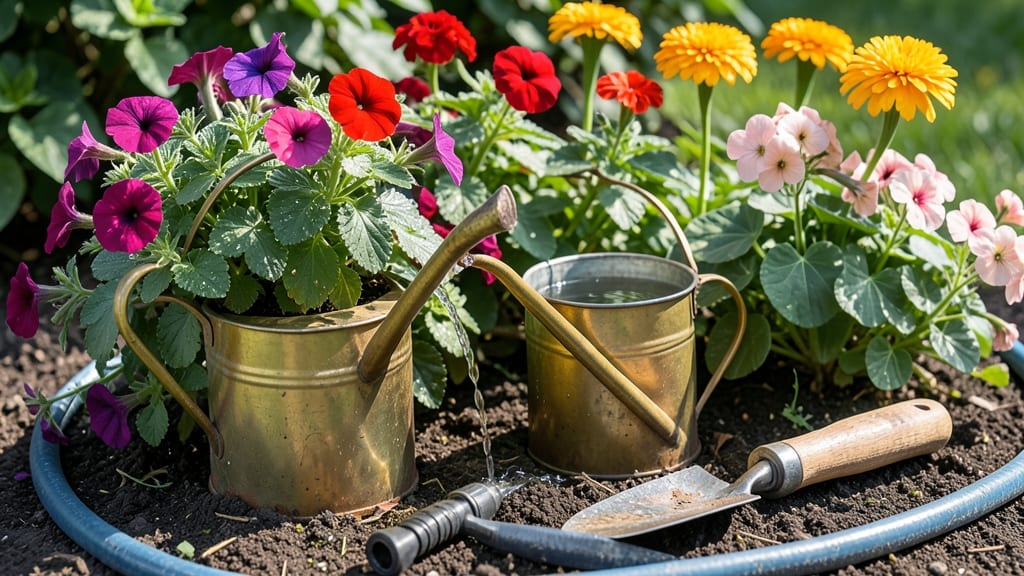
To keep your 🌸 outdoor flowers thriving, guessing how often to water them is a fast track to disappointment—too much or too little, and you’ll end up with sad, wilted blooms or worse.
The truth? Watering needs change with the season, soil type, and even the kind of flowers you’re growing, so a one-size-fits-all approach won’t cut it.
I’ve learned the hard way that overwatering can drown roots just as easily as letting them dry out, and the signs aren’t always obvious. What you think is a thirsty plant might just be begging for a break from the hose.
The key is understanding when to give your flowers a deep drink versus a light sip—and how to tell the difference.
In this guide, I’ll break down the exact watering schedule for common outdoor flowers, from sun-loving annuals to drought-tolerant perennials, so you can adjust for your climate and soil.
You’ll also discover how to spot the subtle clues that your plants are either thirsty or waterlogged, saving you time and keeping your garden vibrant all season long.
Whether you’re a beginner or a seasoned gardener, these tips will help you water like a pro—no more guesswork, just happy, healthy blooms. Let’s get started!
Optimal watering frequency for outdoor flowers by season (with plant-specific guide)
Watering outdoor flowers isn't one-size-fits-all—your petunias and lavender have completely different needs. Seasonal shifts, plant types, and even container size drastically change how often you should water. Let's break down the science-backed schedules to keep your garden thriving without wasting a drop.
First, understand that annuals like marigolds demand more frequent watering than perennials such as coneflowers. Container plants dry out 3x faster than in-ground flowers, while drought-tolerant varieties like succulents can go weeks without water. Your local climate plays a huge role too—humid regions need less frequent watering than arid zones.
Here's the golden rule: Water deeply (1-2 inches per week) rather than shallowly. This encourages roots to grow downward where they'll find moisture naturally. Always water in the early morning to prevent fungal diseases from evening dampness.
| Season | Annual Flowers (Containers) | Perennial Flowers (In-Ground) | Drought-Tolerant Varieties | Soil Moisture Test |
|---|---|---|---|---|
| Spring | Every 2-3 days (1 cup per pot) | Every 5-7 days (1-2 inches deep) | Every 10-14 days (deep soak) | Top 1-2" should feel damp |
| Summer | Daily (morning only) | Every 3-5 days (2-3 inches deep) | Every 2-3 weeks (deep watering) | Top 2-3" should be dry |
| Fall | Every 4-5 days | Every 7-10 days | Every 3-4 weeks | Top 1" slightly moist |
| Winter | Bi-weekly (light watering) | Monthly (if no snow) | Skip unless extreme drought | Check for frozen soil |
| Climate Adjustments | Add 1-2 days in humidity | Subtract 2 days in drought | Double intervals in heatwaves | Use finger test: push 1" deep |
Let's dive into seasonal specifics. In spring, your flowers are waking up from dormancy and need consistent moisture to establish roots. Petunias and geraniums in containers should get water every 2-3 days, while daylilies in the ground can wait 5-7 days between waterings.
Summer brings the biggest challenge—heat stress. Most annuals like impatiens and zinnias require daily watering, while perennials such as black-eyed Susans need deep watering every 3-5 days. Pro tip: Water at the base of plants rather than overhead to prevent evaporation and fungal spores.
Fall watering shifts to preparation mode. Reduce frequency as temperatures drop—mums and aster varieties only need water every 7-10 days. This helps harden off plants before winter. For drought-tolerant varieties like lavender or sedum, you can cut back to monthly watering once established.
Winter care is all about minimal intervention. Most perennials enter dormancy and only need water if there's a prolonged dry spell. Annuals in containers may need bi-weekly watering, but check soil moisture first—frozen ground prevents water absorption, so skip watering if the soil is icy.
Don't guess—test your soil before watering. Stick your finger 1-2 inches deep into the soil. If it feels dry, it's time to water. For container plants, lift the pot—if it's lightweight, water immediately.
Mulching with 2-3 inches of organic matter retains moisture and reduces watering frequency by 30%.
Remember these three key adjustments: Increase watering in high heat, decrease in humid conditions, and always water deeply rather than frequently. With this seasonal guide, your outdoor flowers will stay vibrant and healthy year-round.
7 Signs your flowers are overwatered or underwatered (and how to fix it)
Your outdoor flowers might be sending you SOS signals without you realizing it. Yellowing leaves, wilting stems, or moldy soil aren’t always obvious, but they’re clear signs your watering routine needs an overhaul.
I’ve seen even experienced gardeners struggle with this balance—especially when compacted soil or poor drainage hides the real issue.
Before you panic, know that both overwatering and underwatering can silently kill your plants. The difference? Overwatered flowers often show mushy stems and fungal growth, while underwatered ones develop crispy edges and droop. Let’s decode these clues so you can adjust your watering schedule—like a pro.
Most gardeners water outdoor flowers too often—especially in pots! A general rule: 1 inch of water per week (or less in humid climates). Test soil moisture by sticking your finger 1 inch deep—if it’s damp, wait. Morning watering is best to prevent fungal diseases. Adjust for rainy days and container size—small pots dry out faster!
Start with leaf color—a telltale sign of water stress. Yellow leaves with green veins often mean overwatering, while uniformly yellow or brown leaves usually signal underwatering.
I once had petunias that looked healthy until I noticed their leaves turning a sickly yellow—turns out, the pot had no drainage holes, and roots were drowning.
Next, check the soil surface. If it’s crusty or moldy, you’re overdoing it. On the flip side, dry, cracked soil or plants pulling away from the pot edges mean they’re thirsty.
Pro tip: Mulch helps retain moisture but also improves drainage—just don’t pile it against stems to avoid rot.
Wilting is another red flag, but it’s tricky. Morning wilting that recovers by afternoon? Likely thirst. Evening wilting that doesn’t bounce back? Overwatering or root rot. I learned this the hard way with my roses—they’d droop by dusk, and I’d water them again, thinking they were dry.
Turns out, their roots were suffocating.
For a quick fix, adjust your routine: water deeply but less often for underwatered plants, and let soil dry slightly between waterings. If overwatered, improve drainage by adding perlite or sand to heavy soil, and avoid watering until the top 2 inches feel dry.
Container plants may need repotting with fresh, well-draining mix.
Use this diagnostic flowchart next time you’re unsure: Yellow leaves + mold = overwatered → Fix drainage. Brown edges + crispy leaves = underwatered → Water deeply. Wilting anytime = check roots. With these signs mastered, your flowers will thrive—no more guesswork, just happy blooms all season!