
How To
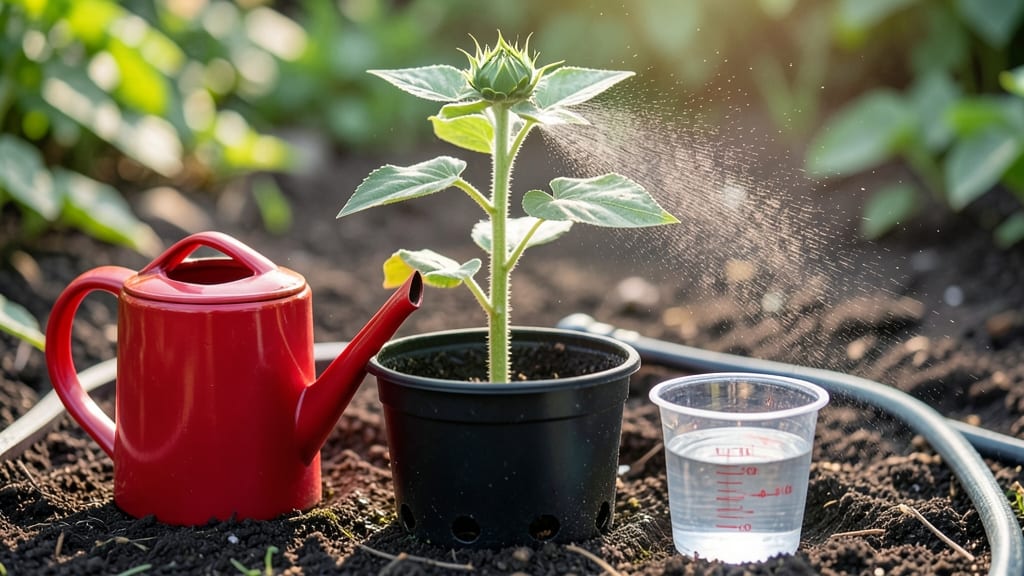
To get your sunflower seeds sprouting strong and steady, you’ve got to master how often to water sunflower seeds—because one wrong move can turn your hopeful little seeds into a sad, mushy mess.
Those tiny 🌻 seeds need just the right amount of moisture, not too much (which drowns them) and not too little (which leaves them parched). The key is consistency, especially in those first critical days when roots are just getting started.
Think of it like Goldilocks’ porridge—you want the soil to be just right: damp enough to encourage germination but never soggy. I’ve seen firsthand how easy it is to overdo it, especially when you’re eager to see those first green shoots.
But here’s the thing: sunflowers are tough once they’re up, but they’re delicate babies at the start. Let me walk you through the exact schedule you need to keep them thriving from seed to sapling.
Your climate plays a huge role too. In hot, dry zones like 6a, you might need to water more frequently, while cooler spring mornings can stretch those watering intervals. And if you’re growing in containers, forget the "every few days" rule—those pots dry out faster than you’d think.
I’ll break down how to adjust your routine so your sunflowers never guess whether it’s time to drink.
By the end of this, you’ll know exactly when to reach for that watering can—and when to hold back. No more second-guessing, no more wasted seeds. Let’s turn your sunflower dreams into a lush, towering reality, starting with the simplest (but most important) step: water.
Sunflower seed watering schedule by germination stage (with exact timing)
Getting your sunflower seeds to sprout reliably starts with understanding their hydration needs at every growth stage. Unlike mature plants, seeds and seedlings require precise moisture control—too little halts germination, while too much causes rot.
The key is maintaining consistent soil dampness without waterlogging, especially during the first 7-10 critical days when roots establish.
Sunflower seeds germinate best in soil that feels like a wrung-out sponge. This means the top 1-2 inches should stay moist but never soggy. I’ve learned the hard way that skipping this delicate balance leads to either moldy seeds or stunted sprouts.
Let’s break down the exact watering routine for each phase, including how to adjust for your local climate.
📌 Pro Tip: Use a moisture meter or the finger test—stick your index finger 1 inch deep. If it feels dry, water; if it’s cold and clumpy, wait. This simple check saves hours of guesswork.
During the pre-sprout phase (days 1-5), I recommend using a spray bottle or fine mist setting on your hose to avoid displacing seeds. The goal is to keep the soil uniformly damp without creating puddles.
I’ve found that covering the tray with plastic wrap (with small holes for airflow) helps maintain humidity, especially in dry climates. Just remember to remove it once sprouts appear to prevent fungal diseases like damping-off.
When sprouts emerge (days 6-10), reduce watering to every 24-48 hours and let the top layer dry slightly between sessions. This shift prevents root rot while still supporting rapid growth. I test soil moisture by pressing my finger into the soil—if it springs back slowly, it’s time to water.
Overwatering here is the #1 killer of young sunflowers, so I prioritize even moisture over saturation.
By the time seedlings reach 2-3 inches tall (days 11-21), they’re ready for a more structured routine. Water deeply every 3-5 days, ensuring moisture reaches 4-6 inches down.
I use a soaker hose or drip irrigation to deliver water directly to the roots, which minimizes evaporation and disease risk. At this stage, mulching with straw or grass clippings helps retain moisture and suppress weeds.
For container-grown sunflowers, increase frequency to every 2-3 days since pots dry out faster. In contrast, in-ground plants can go 5-7 days between waterings once established. Always water in the early morning to allow foliage to dry before evening, reducing the risk of powdery mildew.
If your area experiences high heat (above 90°F), switch to daily watering and focus on the root zone.
Watch for wilting leaves or yellowing stems, which signal underwatering or overwatering, respectively. Sunflowers are surprisingly resilient once past germination, but those first 14 days demand your attention. With this schedule, you’ll see consistent sprouts and healthy seedlings ready for transplanting in no time.
Common watering mistakes that kill sunflower seeds (and how to fix them)
Even the most experienced gardeners can accidentally drown or dehydrate sunflower seeds without realizing it. The biggest mistake I see is treating seeds like established plants—giving them too much water too soon.
Sunflower seeds need consistent moisture, but not a swampy environment. When seeds sit in soggy soil, they suffocate from oxygen deprivation or develop fungal diseases before they even sprout.
On the flip side, underwatering is just as deadly. Seeds need to stay hydrated for 7-14 days to germinate properly. If the soil dries out during this critical window, your seeds will simply shut down and die.
I’ve watched seeds that were perfectly planted wither away because someone thought "less water is better." The truth is, sunflowers are tough once they’re up, but their seeds are delicate.
Another silent killer is soil compaction from heavy watering. When you pour water too quickly, the soil particles pack together, creating air pockets that prevent roots from accessing moisture.
This often happens when using a hose on high pressure or watering containers without drainage holes. Even well-draining soil can become compacted if you’re not careful.
Temperature also plays a sneaky role in water retention. In hot climates, water evaporates faster, so you might think you’re watering enough—only to find the soil bone dry by afternoon.
Meanwhile, in cooler weather, the same amount of water can linger too long, leading to rot. I’ve had to adjust my watering schedule week to week just based on morning temperatures.
⚠️ How Often to Water Sunflower Seeds (Critical First 2 Weeks)
Mistake: Watering once every 3-5 days from day one. This schedule works for mature plants, but seeds need daily checks during germination.
Fix: Keep soil evenly moist (like a wrung-out sponge) by watering every 1-2 days until sprouts appear. After that, shift to every 3-4 days once seedlings have 2-3 true leaves.
Test: Stick your finger 1 inch deep—if it’s dry, water immediately. If it’s damp, wait another day.
Let me show you how to spot these problems before they kill your seeds. Overwatered seeds will look mushy and discolored, often turning gray or black. The soil around them may smell sour or have a white, cottony fungus growing.
Underwatered seeds, meanwhile, will appear shriveled and fail to sprout within 10-14 days. The soil around them will pull away from the seedling or feel dry and crusty.
For containers, the rules change slightly. Pots dry out 3x faster than in-ground soil, so check them daily during germination. Use your finger to test moisture at the seed depth (1 inch).
If you’re growing in well-draining soil mixes, you might need to water twice daily in hot weather to keep the top inch moist. Pro tip: Use a spray bottle for the first few days to avoid displacing seeds.
Here’s my foolproof fix for all these issues: Adjust your approach based on what you see. If your seeds are struggling, start with smaller, more frequent waterings in the morning. Use a moisture meter or the finger test to guide you—never guess.
And always water at the soil level, not the leaves, to prevent fungal issues. With these tweaks, your sunflower seeds will have the perfect hydration balance to grow into those towering beauties you’re dreaming of.