
How To
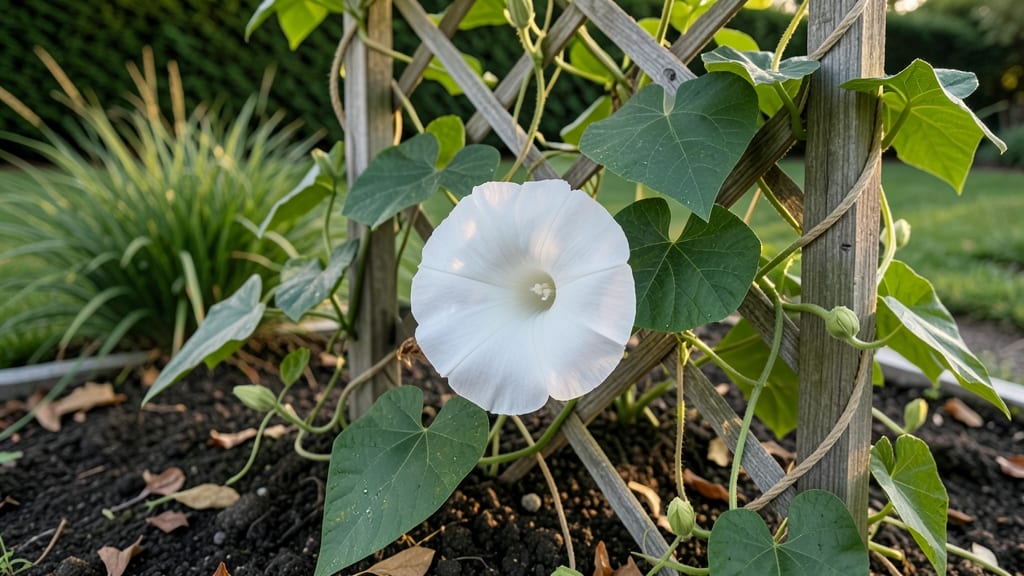
If you're wondering how tall your moonflower 🌙 will grow, get ready for a showstopper in your garden—these vines can climb up to 20 feet with the right care!
That’s taller than most basketball hoops, and they’ll transform any space into a magical nighttime retreat when their fragrant white blooms unfurl after sunset.
But here’s the catch: without proper support, those lush vines might sprawl instead of soaring. Moonflowers are aggressive climbers, and their height depends on what you provide—whether it’s a sturdy trellis, a fence, or even a pergola.
I’ll break down exactly how to encourage that vertical growth while keeping your plants healthy and thriving.
You’ll also discover how factors like sunlight, soil, and pruning can influence their height—some varieties stay compact, while others reach sky-high. Plus, I’ll share my top tips for managing their size if they get a little too ambitious for your space.
Ready to turn your garden into a moonlit wonderland? Let’s dive into everything you need to know to grow moonflowers at their full, breathtaking potential.


Moonflower growth height by variety: from compact to towering climbers
Moonflowers (Ipomoea alba) are famous for their dramatic night-blooming displays, but their growth height can vary wildly depending on the variety and growing conditions.
Some moonflowers stay compact enough for containers, while others become aggressive climbers that need sturdy trellises to reach their full potential height of 15–20 feet. Understanding these differences helps you choose the right variety for your space and support system.
Most gardeners grow Ipomoea alba (white moonflower), but Ipomoea nil (Japanese moonflower) also produces stunning night-blooms with different growth habits. Dwarf varieties are rare, but some annual moonflowers stay shorter if given limited support.
The key to maximizing height is providing full sun exposure, consistent moisture, and proper vine support from the start.
Here’s how different moonflower varieties compare in height, along with their ideal growing conditions to help you plan your garden layout:
If you’re growing moonflowers in containers, expect heights of 6–10 feet at most, as root space limits their vertical growth. In the ground, however, these vines will spiral upward relentlessly until they hit a barrier or outgrow their support.
Without proper training, they may sprawl across lawns or neighboring plants, creating a messy tangle instead of a structured climb.
Climate plays a huge role in height too. Moonflowers in USDA Zones 9–11 often grow taller and more vigorously due to longer growing seasons, while those in cooler climates (Zones 6–8) may max out at 10–12 feet unless given extra care.
I’ve seen moonflowers in Southern California reach 20 feet in a single season, while my Zone 7 garden struggles to exceed 12 feet without winter protection.
For first-year growth, expect moonflowers to reach 6–10 feet if planted in spring. By their second year, they’ll often double in height, especially if given rich, well-draining soil and regular fertilization.
Pruning isn’t necessary for height, but you can trim leggy vines in early summer to encourage bushier growth and more flowers. Just avoid cutting back more than 20% of the vine, or you’ll stunt its upward momentum.
One common mistake is assuming all moonflowers need the same support. Ipomoea alba is a powerhouse climber and will break weak trellises if not secured properly, while Ipomoea nil is slightly more forgiving.
I’ve used bamboo stakes for smaller varieties and metal trellises for the aggressive climbers. For maximum height, install support at planting time—these vines grow 3–5 inches per day in ideal conditions!
Pro tip: If you’re short on space, train moonflowers to climb vertical structures like arbors, pergolas, or even chain-link fences. They’ll cover these surfaces in weeks, creating a dramatic nighttime display that’s perfect for patios or deck areas.
Just remember: the taller the vine, the more water and nutrients it’ll need to stay healthy and keep blooming.
🌱
How to support moonflowers for maximum height without sacrificing health
Moonflowers (Ipomoea alba) are natural climbers that can reach 15-20 feet when given proper support—but without the right structure, those delicate vines can snap under their own weight. The key is providing sturdy, flexible support that encourages vertical growth while protecting your plants from damage.
I’ve learned through trial and error that tall, lightweight trellises work best, especially for varieties that love to sprawl.
You’ll want to start supporting your moonflowers early—once they reach 6-12 inches tall. Waiting too long risks tangled, weak vines that struggle to climb later. The good news? You don’t need expensive garden center setups.
A few DIY trellis options (like bamboo stakes or repurposed fencing) can work just as well as commercial structures, as long as they’re tall enough to accommodate your moonflower’s full height potential.
🌱 Top Support Systems for Moonflowers
- 🪴 Trellis Height: 10-15 ft (extendable for aggressive climbers)
- 🪣 Spacing: 3-5 ft between plants for airflow
- ✂️ Training: Gently tie vines with soft twine (avoid wire)
- 🌿 DIY Option: Use bamboo stakes or chicken wire for lightweight support
- 🌳 Pergola: Ideal for 20+ ft varieties (e.g., Ipomoea alba 'Moonlight')
When choosing a trellis, opt for flexible materials like wood or plastic mesh—they bend slightly with the vines’ weight, reducing breakage risks. Avoid rigid metal frames, which can damage tender stems as they grow.
For aggressive climbers, a freestanding arch or obelisk (like those used for clematis) gives them room to twine upward without crowding. I’ve had the best luck with 6-foot bamboo stakes driven into the ground and tied together with twine to create a pyramid shape.
Another pro tip: Prune selectively to encourage upward growth. Pinch back lateral shoots that grow horizontally to redirect energy toward the main vine. This doesn’t stunt the plant—it actually helps it reach its maximum height faster.
Just avoid heavy pruning after mid-summer, as new growth may not harden off before frost. Instead, focus on light trimming to maintain shape and airflow.
Watering plays a hidden role in vine strength. Moonflowers need consistent moisture (about 1-1.5 gallons per week during peak growth), but soggy soil weakens stems. Always water at the base and avoid wetting the leaves to prevent fungal issues that can weigh down vines.
Mulch with straw or wood chips to retain moisture while keeping roots cool—a must for tall varieties in hot climates.
Finally, monitor your moonflowers for vine breakage as they near maturity. If you notice sagging or split stems, reinforce the trellis with additional stakes or switch to a wider support structure.
With the right care, your moonflowers will climb like a dream, blanketing your garden in fragrant white blooms by nightfall.