
Planting
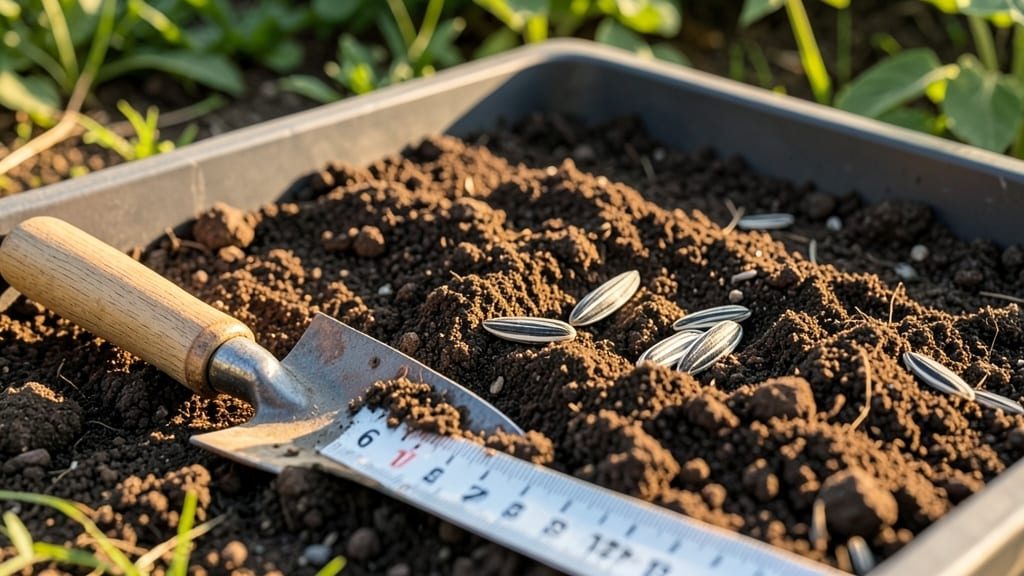
If your sunflower seed spacing is packed too closely together, you might end up with a jungle of weak stems instead of the towering beauties you imagined.
The right spacing isn’t just about fitting more plants in—it’s about giving each one room to thrive, soak up sunlight, and grow into those impressive giants you love.
Tall sunflowers need 2-3 feet between rows and 6-12 inches between seeds, while dwarf varieties can handle closer spacing. Get this wrong, and you’ll struggle with stunted growth, fewer blooms, or even disease spreading faster because of poor airflow. Trust me, a little extra space now saves headaches later.
Whether you’re planting in containers, raised beds, or a full garden, the spacing rules change based on your sunflower’s height and your goals.
I’ll walk you through the exact distances for tall varieties (up to 14 feet) versus dwarf types (just 2-5 feet), plus how to adjust for soil, climate, and even companion plants.
Ready to avoid the most common spacing mistakes? By the end, you’ll know exactly how to space your sunflowers for the healthiest stems, biggest blooms, and the easiest harvest—no guesswork required.

Optimal sunflower seed spacing by variety type (tall vs dwarf)
Sunflowers come in dramatic size variations—from towering giants reaching 14 feet to compact dwarfs staying under 3 feet.
These differences aren’t just for show; they dictate how much space each plant needs to thrive. Tall varieties require generous spacing to support their massive stems, while dwarf sunflowers can handle closer quarters.
Getting this right means stronger stems, bigger blooms, and healthier plants that won’t compete for sunlight or nutrients.
I’ve planted everything from Russian Giant sunflowers (the skyscrapers of the garden) to Teddy Bear varieties (perfect for containers).
The spacing rules I’ve learned the hard way—like the time I crammed too many giants together and ended up with a forest of weak, leaning stalks—will save you from the same mistakes.
Let’s break down the exact distances for each type, plus how to adapt for containers, raised beds, and open fields.
For tall sunflowers, the 18–24 inch in-row spacing is non-negotiable. These giants need room to develop strong taproots and sturdy stems.
I once planted Russian Giant seeds just 12 inches apart, and by midsummer, they were toppling over like drunk giants in a windstorm. Row spacing of 30–36 inches ensures airflow, reducing fungal diseases like powdery mildew, which loves crowded, humid conditions.
Dwarf varieties, like Teddy Bear or Moulin Rouge, are far more forgiving. You can snuggle them in at 6–12 inches apart with rows just 12–18 inches apart. This makes them ideal for raised beds or even container gardening.
In a 5-gallon pot, a single dwarf sunflower will thrive, while a 10-gallon pot could fit 2–3 plants. Just ensure the container has drainage—sunflowers hate soggy roots.
If you’re growing sunflowers for seed production, increase spacing to 24–30 inches in-row and 36–48 inches between rows. This gives plants enough energy to develop heavy seed heads without toppling.
For cut flowers, tighter spacing (18 inches in-row) works, but you’ll need to stake taller varieties to prevent bending.
In raised beds, adjust spacing based on bed width. For a 4-foot-wide bed, plant tall sunflowers in a single row down the center with 24-inch spacing. Dwarf varieties can be planted in double rows on either side, 12 inches apart.
This maximizes sunlight exposure for all plants. In open fields, wider row spacing (36–48 inches) allows for easier access and reduces competition for water.
Pro tip: If you’re growing multiple varieties together, plant the tallest sunflowers on the north side of your garden. This prevents them from shading shorter varieties before they get a chance to bloom.
I learned this the hard way when my Moulin Rouge sunflowers barely opened because they were smothered by Russian Giants on all sides.
For container gardening, choose compact varieties like Autumn Beauty or Sunspot. A single plant in a 5-gallon pot will reach 3–4 feet tall and still have room to grow.
If you’re using larger containers (15+ gallons), you can fit 2–3 dwarf plants, but monitor them closely—overcrowding in pots leads to faster wilting.
Remember, these are minimum spacing guidelines. If your soil is nutrient-poor or your climate is hot and dry, give plants extra room to spread their roots. And if you’re growing sunflowers for
How to adjust sunflower spacing for soil, climate, and growth goals
Your sunflower seed spacing isn’t one-size-fits-all—it shifts based on your soil quality, local climate, and whether you’re growing for showy blooms or seed production. In nutrient-poor soils, for example, wider spacing (up to 18 inches) gives roots more room to scavenge for nutrients.
Meanwhile, in high-humidity zones, tighter spacing (just 6 inches) can improve airflow and reduce fungal risks. I’ve seen gardeners double their seed yields by adjusting spacing for their specific goals.
If you’re growing sunflowers for seed production, prioritize 12-18 inches between plants to let heads mature fully without competing. For cut flowers, closer spacing (6-12 inches) works better—more blooms per square foot.
And if you’re companion planting with beans or corn, stagger your rows to maximize space efficiency while still giving sunflowers their required sunlight. Let’s break down the exact adjustments for your unique setup.
- 🌱 Nutrient-Poor Soils: Increase spacing to 18 inches between plants to allow deeper root growth and nutrient access.
- 💧 High-Humidity Climates: Reduce spacing to 6-8 inches to improve airflow and prevent mildew on leaves.
- 🌾 Seed Production Focus: Space plants 12-18 inches apart to ensure full maturation of seed heads.
- 🌻 Cut Flower Gardens: Use 6-12 inches spacing to maximize bloom density for arrangements.
- 🪴 Container Gardening: Plant 1-2 seeds per 5-gallon pot, thinning to the strongest stem.
- 🌬️ Wind-Prone Areas: Space rows 3-4 feet apart to prevent lodging (falling over) in strong winds.
For container gardening, sunflowers are surprisingly adaptable—just plant 1-2 seeds per 5-gallon pot and thin to the strongest stem. Dwarf varieties like 'Teddy Bear' can even thrive in 3-gallon pots with 4-6 inches between plants.
The key is ensuring pots have drainage holes and you’re using a lightweight potting mix to avoid root-bound issues. I’ve grown 10-foot sunflowers in containers before, and the secret was deep pots with extra compost mixed in.
When companion planting, pair sunflowers with nitrogen-fixers like beans or peas. Space sunflower rows 2-3 feet apart and interplant beans in the gaps—this improves soil fertility while keeping the sunflowers from competing for space. Avoid planting sunflowers near potatoes or tomatoes, as they share diseases like verticillium wilt.
Instead, try basil or marigolds to deter pests naturally. This setup not only saves space but also boosts your garden’s overall productivity.
Don’t forget to adjust your row spacing based on your climate’s humidity levels. In dry, arid regions, wider rows (3 feet) help reduce evaporation and improve water penetration.
In tropical or high-humidity zones, tighter rows (2 feet) work better because the extra shade from neighboring plants slows fungal growth. I once grew sunflowers in Florida’s heat and found that 18-inch spacing between plants cut down on powdery mildew by nearly 50%.
It’s all about balancing airflow and shade.
Finally, if you’re prioritizing seed production over flower size, increase spacing to 18 inches to let seed heads develop fully. For ornamental blooms, you can reduce spacing to 12 inches to encourage more flowers per plant.
Just remember: overcrowding leads to weak stems, smaller blooms, and lower yields. By tweaking your spacing based on your goals, you’ll end up with sunflowers that are healthier, taller, and more productive—no matter your growing conditions. 🌻