
Planting
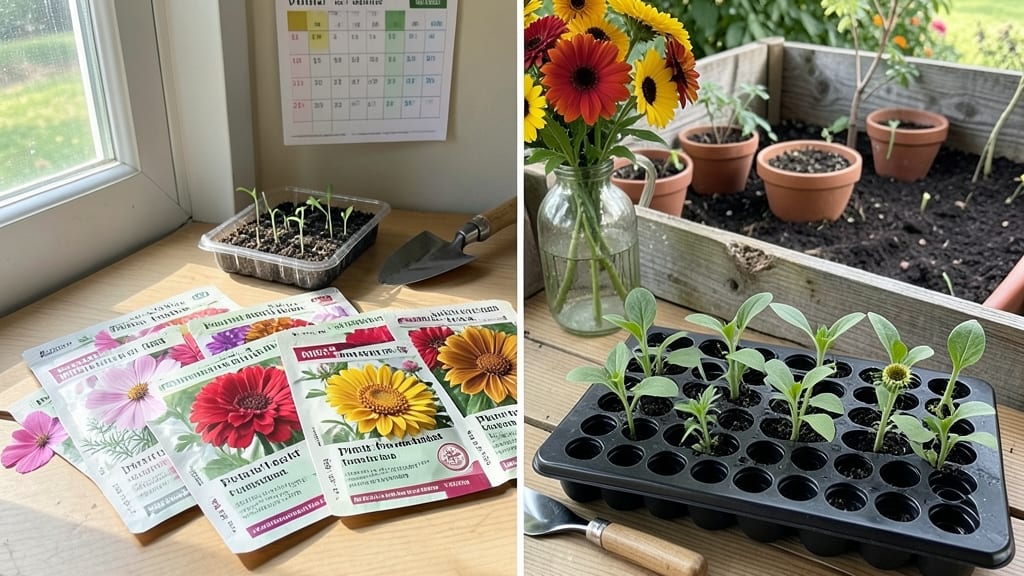
Planting your cut flower seeds at the right time means the difference between a stunning summer bouquet and a sad, wilted disappointment. The key is understanding your local last frost date—because timing these delicate 🌱 seedlings just right ensures they thrive when the weather warms up.
Too early, and frost will nip them in the bud. Too late, and you’ll miss the prime harvest window. I’ve learned the hard way that soil temperature matters just as much as the calendar, especially for heat-loving varieties like zinnias and sunflowers.
Let’s break down the exact windows you need to know for your zone.
Whether you’re a first-time gardener or a seasoned florist, getting this right saves you time, money, and frustration. You’ll discover how to adjust for cool-season blooms versus warm-season stars, plus pro tips for extending your harvest with strategic replanting.
Ready to transform your garden into a cut flower powerhouse? Let’s dive into the frost-free deadlines that will have your stems ready for cutting by midsummer—and keep the bouquets coming all season long.
Cut flower seed planting deadlines by last spring frost date
Timing your cut flower seeds based on your last spring frost date is the secret to lush, long-lasting bouquets. Miss the window, and you risk frost damage or delayed blooms.
Each cut flower variety has unique cold tolerance—some handle 30°F frosts while others need 50°F+ soil to germinate. Let's break down the exact planting deadlines for your zone.
Your last spring frost date is your gardening compass. For example, in Zone 5 (average last frost: April 15), you’d plant zinnias and cosmos 2-3 weeks before that date, while sunflowers can wait until soil warms to 60°F.
In Zone 10 (no frost), you can sow marigolds year-round—but timing still matters for peak harvests.
Here’s your frost-free planting guide for popular cut flowers, adjusted for 10°F, 20°F, and 30°F frost thresholds. Use this to calculate your local planting deadline:
For Zone 3-5 gardeners, focus on cold-hardy flowers like zinnias and cosmos. Plant them 2-4 weeks before your last frost date—even if soil isn’t warm yet. Use row covers to protect seedlings if nights dip below 32°F.
In Zone 6-8, you’ve got flexibility: sunflowers and marigolds can wait until soil hits 60°F, while snapdragons thrive with early starts indoors.
In Zone 9-10, where frosts are rare, plant warm-season flowers like celosia or gomphrena in late February for summer blooms. But don’t skip succession planting—sow new batches every 2 weeks to keep bouquets fresh all season. Pro tip: Use a soil thermometer to confirm 50°F+
How to extend your cut flower harvest with strategic planting
Once you’ve mastered the primary planting window for your cut flowers, the real magic happens when you extend that harvest. I’ve found that succession planting and smart variety choices can turn a single summer bloom into a year-round bouquet bonanza.
The trick is to overlap your plantings so that as one batch finishes, another is just starting to flower.
For example, cool-season flowers like snapdragons and sweet peas thrive in early spring and fall, while heat-loving varieties like zinnias and sunflowers take center stage in summer. By planting them in stages, you create a continuous bloom cycle that keeps your cutting garden productive from spring through frost.
Here’s how I strategically extend my harvest with staggered sowings, cold frames, and heat-tolerant varieties—plus the exact timing I use for maximum impact:
- 1 Plant cool-season flowers 4-6 weeks before your last frost date for early spring blooms. Repeat sowings every 2-3 weeks until midsummer.
- 2 Start heat-lovers indoors 6-8 weeks before your last frost, then transplant outdoors after soil warms to 60°F+. For summer-long blooms, make weekly sowings until early July.
- 3 Use cold frames to extend fall harvests. Plant hardy varieties like chrysanthemums and asters in late summer for blooms that last until first frost. A simple frame adds 2-4 weeks of growing time.
- 4 Choose long-blooming varieties like celosia or dahlias, which produce flowers over 8-12 weeks instead of just a few weeks. These are my go-to for gap-filling between plantings.
- 5 Deadhead spent blooms religiously to encourage reblooming. For zinnias and cosmos, this can add 3-4 extra weeks of harvest time per planting.
I’ve also discovered that mixed flower beds work better than single-species blocks for succession planting. For instance, I’ll interplant fast-blooming cosmos (which flower in 60 days) with slow-starting dahlias (which take 90 days). By the time the cosmos finish, the dahlias are just hitting their stride.
For gardeners in warmer climates (zones 8-10), where winters are mild, you can plant cool-season flowers in fall for winter and early spring blooms. I’ve had great success with pansies and sweet alyssum planted in October—these thrive in 50-60°F soil and keep giving until late winter.
Don’t forget to rotate your planting locations to prevent soil depletion. I divide my garden into three zones: Zone 1 gets early spring plantings, Zone 2 handles midsummer succession, and Zone 3 is reserved for late summer/fall bloomers.
This keeps my soil healthy and my harvests consistent all season.
With these strategies, I’ve turned my once-a-summer harvest into a year-round supply of cut flowers. The key is planning ahead—mark your calendar now for your next round of succession sowings and watch your bouquet game level up!