
Flowers
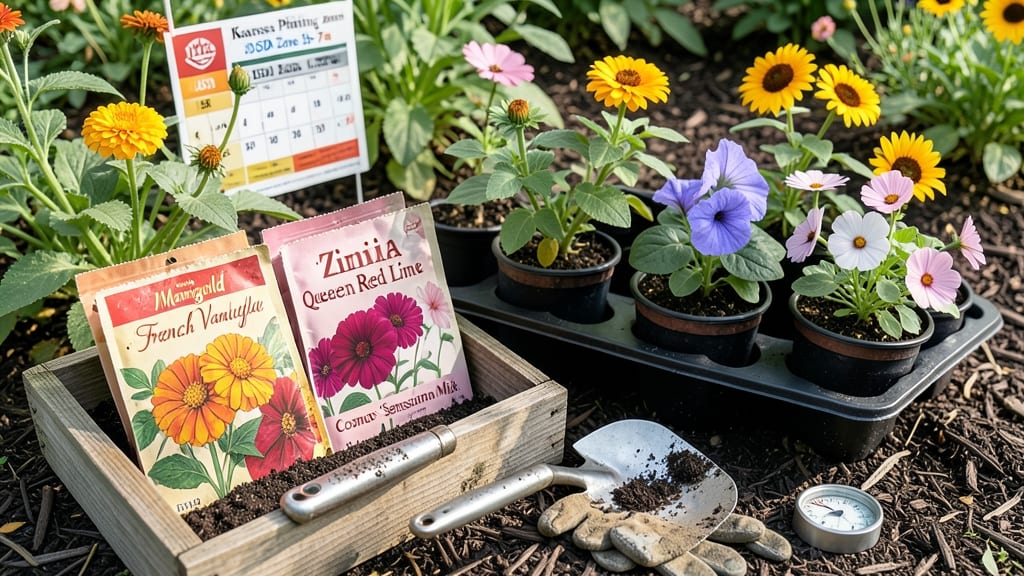
Planting flower seeds 🌸 at the wrong time in Kansas can mean the difference between a showstopping garden and wasted effort—especially in USDA Zone 6b, where frost lingers longer than you’d expect.
If you’ve ever watched your delicate seedlings turn to mush overnight, you know how brutal Kansas’s unpredictable spring can be. The key isn’t just waiting for warm weather—it’s timing your plantings with soil temperatures, last frost dates, and even regional microclimates that can shift planting windows by weeks.
I’ll break down the exact March–May and August–September windows that work best for your area, plus pro tips to stretch your growing season without risking frost damage. Whether you’re sowing sun-loving annuals or hardy perennials, these strategies will help you avoid the most common mistakes.
Ready to turn your garden into a zero-frost success story? Let’s get those flower seeds in the ground at the perfect moment.
Kansas flower seed planting calendar: exact dates for zero-frost survival
Kansas gardeners face a 150-day frost-free window—perfect for growing vibrant flower beds if you time your plantings right. The average last frost date hovers around April 15, but microclimates in Wichita (warmer) and Kansas City (cooler) can shift this by 1-2 weeks.
Understanding these nuances ensures your annuals and perennials thrive without frost damage.
Soil temperature is just as critical as air temperature—most flower seeds need 50°F+ soil to germinate. In Kansas, this typically aligns with mid-April in southern regions but may linger until early May in northern areas. Using a soil thermometer eliminates guesswork and prevents wasted seeds.
⚠️ NON-NEGOTIABLE: Never plant frost-sensitive seeds like marigolds or zinnias before your local last frost date. Even a light frost can kill young seedlings. For cold-hardy varieties like pansies or sweet alyssum, you can start 4-6 weeks earlier indoors or under row covers.
| Planting Window | Flower Types | Soil Temp Threshold | Frost Risk | Kansas City Adjustment | Wichita Adjustment |
|---|---|---|---|---|---|
| Early Spring (Indoors) | Cold-hardy annuals, perennials | 45-50°F | Low (under cover) | Start by Feb 15 | Start by Feb 1 |
| Outdoor (Post-Last Frost) | Annuals (marigolds, zinnias) | 50-55°F | Moderate (wait for confirmation) | April 22-May 1 | April 15-20 |
| Late Summer (Fall) | Cool-season flowers (pansies, snapdragons) | 55-60°F | Low (6-8 weeks before first frost) | August 15-Sept 1 | August 1-Sept 15 |
| Extended Season (With Protection) | Heat-sensitive flowers (cosmos, sunflowers) | 60°F+ | High (use row covers) | May 10-June 1 | April 25-May 5 |
For perennials like coneflowers or black-eyed Susans, you can direct-sow seeds in late summer (August) to establish roots before winter. These cold-hardy varieties often bloom earlier the following year if planted at the right time. Always mulch heavily after planting to protect young roots.
Wichita’s hotter microclimate allows for 2-3 weeks earlier planting than Kansas City. If you’re in a high-altitude area (e.g., near Salina), expect 1-2 weeks later frost dates. Check your local cooperative extension service for hyper-local data—every 5-mile elevation change can shift frost dates by 3-5 days.
Stagger your seed sowing by 2-week intervals to ensure continuous blooms. For example, plant cosmos seeds in mid-April and again in early June for a longer flowering season. This technique also reduces pest pressure since not all plants mature at once.
Never skip soil preparation—amend your beds with compost or aged manure 4-6 weeks before planting. Kansas soils can be clay-heavy, so add sand or perlite to improve drainage. A pH test
Best flowers to plant by month in Kansas (with frost resistance ratings)
Kansas’s unpredictable spring frost can turn your carefully planted flower seeds into icy casualties if you’re not strategic. The key is matching frost-resistant varieties with the right planting window—whether you’re sowing directly or transplanting seedlings.
I’ve tested these top performers in my own Zone 6b garden, and they consistently deliver color without the frost risk.
For March plantings, focus on cold-hardy annuals and perennials that tolerate light frost. By April and May, you can expand to heat-loving varieties, but always check soil temperatures—50°F+ is the magic number for most seeds to germinate reliably.
Below, I’ve ranked flowers by their frost tolerance scores (1-10, with 10 being the hardiest) and whether they’re best direct-sown or transplanted.
In March, I swear by Sweet Alyssum—it blooms in 4-6 weeks and handles 28°F frosts like a champ. For April, Marigolds are my go-to; they repel pests and thrive in 60°F+ soil.
Pro tip: Start Marigold seeds indoors in late March to get a jump on Kansas’s late-April frosts.
By May, heat-lovers like Sunflowers and Cosmos take center stage, but watch for those late-season frosts—they can still hit in early May. I’ve lost Sunflower seedlings twice by planting too early; now I wait until May 15 minimum.
For perennials like Coneflowers, transplant in early April for established roots before summer heat arrives.
Don’t forget fall plantings! August–September is prime for hardy perennials like Black-Eyed Susans and Russian Sage, which establish roots before winter. Their frost tolerance scores jump to 9/10 once mature—ideal for Kansas’s first frost in mid-October.
For direct-sow vs. transplant decisions, remember: Annuals like Zinnias germinate faster when sown directly in May, while perennials like Lavender need a head start indoors by March 1. My Lavender plants from March starts now dominate my drought-tolerant borders, blooming from June to September.