
Blooming
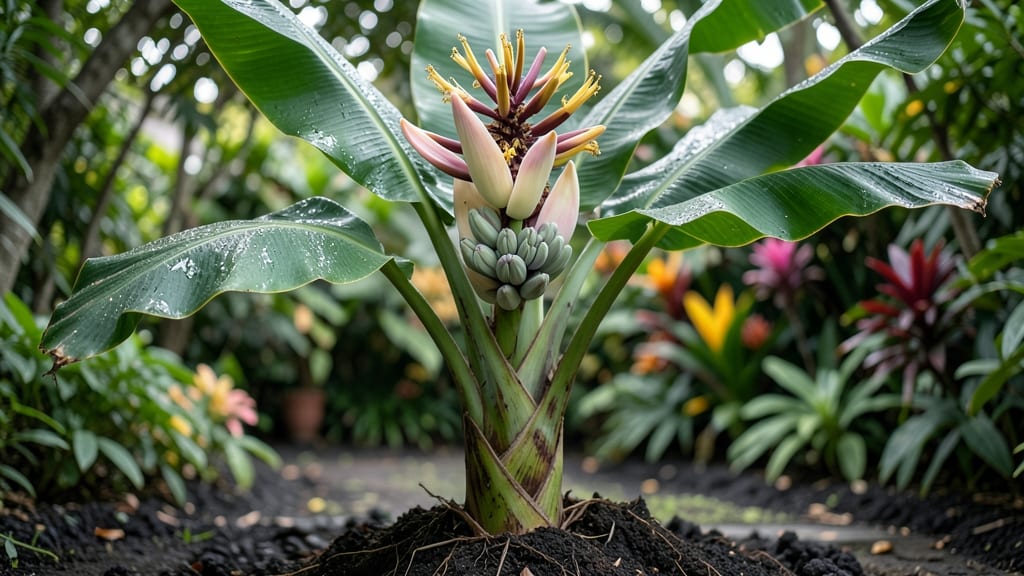
Spotting the banana flowering stage in your 🍌 plant feels like watching a tropical miracle unfold—but missing it means no fruit! This moment, when the pseudostem splits and the iconic "banana heart" emerges, signals your plant is ready to reward you with harvests.
Whether you're growing in Florida's heat or a Hawaii-inspired container garden, understanding these visual cues is your first step to success.
Most gardeners wait 9-18 months for this stage, depending on variety and care. The key? Recognizing the 3 critical triggers that force flowering—temperature shifts, precise watering, and nutrient timing—that turn your towering plant from leafy giant to fruiting powerhouse.
I’ll show you exactly what to watch for (and what to avoid) so you don’t miss a single clue.
Once that flower spike appears, the real work begins. Proper post-bloom care—like hand pollination for indoor plants or protecting outdoor blooms from pests—directly impacts your fruit’s size and sweetness. Even experienced growers make mistakes here, but these simple adjustments can double your harvest potential.
Let’s break down the science behind each step so your banana’s hard work pays off.
From tropical climates to urban balconies, every banana plant follows the same blooming rules. By the end of this guide, you’ll know when to expect flowers, how to encourage them faster, and what to do if your plant skips this stage entirely.
Ready to turn those lush leaves into a fruit-laden bounty?
How to identify the banana flowering stage in your plant
Spotting the banana flowering stage is one of the most exciting moments for any gardener growing these tropical giants. Unlike many plants, bananas don't produce flowers in the traditional sense—they develop a dramatic inflorescence that emerges from the center of the plant.
This stage marks the transition from vegetative growth to fruit production, and recognizing it early helps you prepare for harvest.
The flowering process begins with subtle changes in your banana plant's pseudostem—the thick, false trunk made of tightly packed leaf sheaths. When your plant is mature (typically 9-18 months old depending on variety), you'll notice the outer leaves starting to yellow and wither from the bottom up.
This is your first clue that the plant is preparing to flower.
Here’s what to watch for: The pseudostem will begin splitting open at the top, revealing a tight, purple or red bud pushing through. This is the banana heart, where the inflorescence will develop. Once exposed, this bud will rapidly grow into a 1-2 foot long spike covered in small, tightly packed flowers.
The banana heart isn't just visually striking—it's also a critical indicator of your plant's health. A healthy flower spike will be firm, upright, and vibrant in color. If you notice wilting, discoloration, or slow growth during this stage, it could signal nutrient deficiencies, pests, or environmental stress.
For example, yellowing leaves before flowering often means the plant lacks potassium or magnesium.
Timing matters because the flowering stage is when your banana plant shifts its energy from leaf production to fruit development. If your plant flowers too early (before reaching 6-10 feet tall), it may produce small, underdeveloped fruit.
Conversely, waiting too long can delay your harvest by months. Dwarf varieties like Cavendish typically flower faster (9-12 months), while taller varieties like Red Dacca may take 18-24 months.
Once the flower spike emerges, it will continue growing for 2-4 weeks before the first banana hands begin to form. The flowers at the base of the spike will develop into fruit first, while the upper flowers may remain sterile or produce smaller fruit.
This is why the bottom 1/3 of the spike is where you'll find the most marketable bananas.
If you're growing bananas in containers or cooler climates, the flowering stage may be delayed or even prevented. Bananas are short-day plants, meaning they flower in response to day length changes.
In tropical regions, this happens naturally, but in USDA Zones 9-11, you may need to provide warmth and consistent care to trigger blooming. For container-grown plants, moving them to a sunny, sheltered spot during winter can help.
Pay attention to the pseudostem's condition after flowering—it will dry out and collapse as the plant redirects energy to the fruit. This is normal and signals that your plant is focused solely on fruit production.
However, if the pseudostem rots or falls over prematurely, it could indicate overwatering or fungal issues, which may reduce your yield.
Recognizing the flowering stage isn't just about spotting the banana heart—it's about understanding your plant's growth cycle. By the time you see that first purple bud, your banana is already 3-6 months away from harvest, depending on the variety.
This knowledge lets you plan for support structures, pest control, and post-harvest care long before the fruit appears.
3 Critical triggers that force banana plants to flower faster
Banana plants typically take 9-18 months to reach the flowering stage, but with the right triggers, you can encourage blooms 30-50% faster. The key lies in mimicking their natural tropical conditions while strategically adjusting care routines.
These triggers don't just speed up flowering—they also improve fruit quality and yield. Let's explore the three most effective methods backed by horticultural science.
First, understand that banana plants are photoperiod-sensitive, meaning they respond to light and temperature shifts. Unlike many plants, they don't rely on day length but instead react to stress signals like nutrient changes or water adjustments.
When applied correctly, these triggers can push a mature plant into its flowering stage within just 3-6 months instead of waiting for natural progression.
🌱 Key Triggers for Banana Flowering
-
1. Temperature Shift
Drop night temps to 65-70°F for 7-10 days -
2. Water Stress
Withhold water for 10-14 days then deeply soak -
3. Nutrient Boost
Apply high-potassium fertilizer (5-10-10) at double strength
⚠️ Expert Tip: Combine all three triggers for maximum effect—this mimics natural tropical dry seasons that trigger flowering.
Let's start with the temperature trigger, which is the most reliable method. Banana plants native to tropical regions experience distinct dry seasons where nighttime temperatures drop slightly. To replicate this, reduce nighttime temperatures to 65-70°F (18-21°C) for 7-10 consecutive days.
You can achieve this by moving potted plants to a cooler location or using shade cloth during evenings. For in-ground plants, simply wait for natural cooler periods during shoulder seasons (spring/fall). This temperature shift sends a signal to the plant that conditions are right for reproduction.
The water management trigger works by creating a controlled drought stress. Banana plants are surprisingly drought-tolerant once established, and this stress actually stimulates flowering hormones.
Withhold water for 10-14 days until the soil is completely dry 2-3 inches down, then give the plant a deep soaking (1-2 gallons) in the morning. This sudden rehydration mimics the first rains after a dry season in tropical climates.
Repeat this cycle once if flowering hasn't occurred within 30 days. Warning: Never let the plant wilt completely—banana leaves should remain slightly turgid.
Finally, the nutrient adjustment trigger provides the energy boost needed for flowering. Banana plants require high potassium levels (the "K" in NPK ratios) to develop flowers and fruit. Switch to a 5-10-10 or 6-12-12 fertilizer and apply it at double strength for two consecutive feedings, spaced two weeks apart.
This potassium surge helps the plant shift from vegetative growth to reproductive growth. Pair this with a magnesium supplement (like Epsom salt) to prevent nutrient deficiencies that could delay flowering.
For best results, combine all three triggers simultaneously. Start with the temperature adjustment first, then introduce the water stress cycle, and follow up with the nutrient boost.
Monitor your plant closely—you should see the inflorescence (flower spike) emerge from the center of the plant within 4-8 weeks of applying these triggers. Remember that banana plants are heavy feeders, so maintain regular fertilization (every 4-6 weeks) with a balanced 10-10-10 fertilizer once flowering begins to support fruit development.
If your banana plant doesn't respond within 3 months, it may not be mature enough to flower. Most banana varieties require reaching 6-10 feet tall with a fully developed pseudostem before they can produce flowers.
In this case, focus on maintaining optimal growing conditions (full sun, consistent moisture, and regular feeding) and try the triggers again next season.
Patience is key—some tropical varieties like Red Dacca can take up to 2 years to flower naturally, while dwarf varieties may bloom in as little as 9 months with proper care.