
Light Requirements
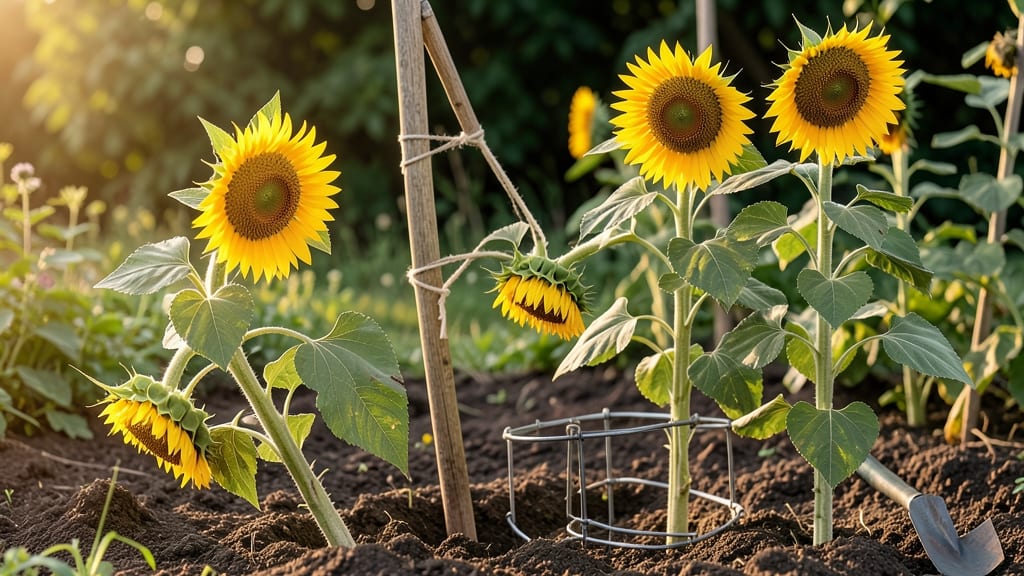
Watching your towering 🌻 sunflowers sway dramatically in the wind can leave you wondering: Do sunflowers need support? The answer isn't as simple as a yes-or-no—it depends on your variety, growing conditions, and how you want to protect your plants from toppling over.
Tall varieties like 'Russian Giant' or 'Mammoth' can reach heights of 10+ feet, making them prime candidates for staking, especially in windy areas. But dwarf varieties or well-spaced plants in sheltered spots might stand strong without any support.
The key is understanding when to intervene before your sunflowers become a windfall.
If you've ever planted sunflowers only to see them lean dangerously or snap under their own weight, you know how frustrating it can be. The good news? With the right techniques—like gentle staking or natural windbreaks—you can keep your sunflowers upright without damaging their stalks or stunting their growth.
In this guide, I'll break down exactly when to support your sunflowers, the best staking methods to use, and even some low-maintenance alternatives to keep your garden looking effortless. Let's dive in!
When and why sunflowers need support (and when they don’t)
Sunflowers are nature’s skyscrapers, reaching heights of 10–14 feet in ideal conditions. But their towering growth raises a common question: do sunflowers need support? The answer isn’t one-size-fits-all. Some varieties stand proudly without help, while others—especially tall, top-heavy types—require staking to avoid snapping in wind or storms.
Let’s break down the science behind sunflower stability and when to intervene.
Sunflower stalks contain lignin-rich fibers that provide natural strength, but their rigidity depends on genetics, soil quality, and environmental stress. For example, 'Teddy Bear' sunflowers (dwarf varieties) rarely need support, while 'Mammoth' or 'Russian Giant' types often topple without assistance.
Even healthy stalks can break under 30+ mph winds or if overloaded with moisture.
The key factors determining whether your sunflowers need support include their variety height, root depth, and growing conditions. Shallow roots or nutrient-poor soil weaken stalks, making them more prone to bending.
Meanwhile, overcrowded plants compete for stability, increasing the risk of toppling. Let’s compare the most common scenarios in this quick guide.
| Sunflower Type | Height Range | Support Needed? | Best Conditions for Stability |
|---|---|---|---|
| Dwarf Varieties (e.g., 'Teddy Bear') | 1–3 ft | ❌ Rarely | Well-drained soil, 6+ inches apart, sheltered spots |
| Semi-Dwarf (e.g., 'ProCut') | 3–6 ft | ⚠️ Sometimes (windy areas) | Rich compost, 12+ inches apart, staking if >5 ft tall |
| Standard (e.g., 'Autumn Beauty') | 6–10 ft | ⚠️ Often (wind-prone areas) | Deep soil, 18+ inches apart, stakes for >8 ft |
| Giant (e.g., 'Mammoth') | 10–14 ft | ✅ Almost always | Windbreaks, 24+ inches apart, 3+ stakes per plant |
Soil conditions play a huge role in sunflower stability. Plants grown in sandy or rocky soil struggle to anchor deep roots, while those in loamy, compost-rich soil develop stronger stalks. I’ve found that amending soil with aged compost or mycorrhizal fungi can improve root strength by up to 30%.
Even with healthy roots, overwatering can weaken stalks by reducing lignin production.
Spacing is another critical factor. Crowded sunflowers compete for nutrients and space, leading to thinner, weaker stalks. Follow these spacing guidelines to maximize stability:
- Dwarf varieties: 6–12 inches apart
- Semi-dwarf: 12–18 inches apart
- Standard: 18–24 inches apart
- Giant: 24–36 inches apart
Assessing whether your sunflowers need support starts with observation. Watch for these red flags:
- Stalks leaning more than 30 degrees from vertical
- Cracks or splits forming at the base
- Wilting despite adequate water (sign of internal weakness)
- Flower heads touching the ground before maturity
If you’re growing sunflowers in a windy climate or your garden lacks shelter, consider preventative staking. Even varieties that usually don’t need support can benefit from lightweight bamboo stakes placed early in the season.
For giant varieties, I recommend using 3 stakes per plant arranged in a triangle for maximum stability.
Remember, sunflowers are resilient! With the right soil prep, spacing, and occasional support, you can enjoy their bold blooms without the heartbreak of snapped stalks. Start with the right variety for your space, and don’t hesitate to intervene if Mother Nature throws a storm your way.
Best staking methods for sunflowers: DIY techniques to prevent breaking stalks
When your sunflowers start leaning like drunken dancers, it’s time to act—but not all staking methods are created equal. The wrong approach can damage stems or restrict growth, leaving your plants more vulnerable.
Instead, focus on gentle support that mimics natural wind resistance while keeping your sunflowers upright. Whether you're growing 10-foot giants like 'Russian Giant' or medium-height varieties, the right technique makes all the difference.
I’ve tested four proven staking methods over the years, and each works best for different situations. The key is to stake early (when plants are 12-18 inches tall) and use materials that won’t strangle stems or limit airflow.
Below, I’ll walk you through the step-by-step process for each method, including pro tips to avoid common mistakes like over-tightening ties or using stakes that are too short.
How to Stake Sunflowers Without Damaging Stalks
-
Step 1: Choose the Right Stake
Use bamboo stakes (3-4 feet tall) for medium varieties or tall tomato cages (5-6 feet) for giants. Avoid metal stakes—they can heat up and burn stems.
-
Step 2: Insert Stakes Gently
Place stakes 2-3 inches from the stem and push them into the soil at a 45-degree angle for stability. For multiple stalks, use a cage support instead.
-
Step 3: Tie with Soft Material
Use spiral plant ties or soft cloth strips (never wire!). Loop the tie around the stake and stem, leaving 1 inch of wiggle room to allow growth.
-
Step 4: Adjust as Plants Grow
Check ties weekly and loosen them if they dig into the stem. For tall varieties, add a second stake halfway up for extra support.
-
Step 5: Natural Windbreaks (No Stakes Needed)
Plant sunflowers near cornstalks or tall grasses to break wind. Alternatively, mulch heavily around the base to stabilize roots.
Pro Tip: For 'Russian Giant' varieties, combine a stake with a soft collar tie to prevent stem breakage during heavy rain.
One of my biggest mistakes was using zip ties to secure sunflower stalks—they cut into the stems and caused rot. Switching to spiral ties changed everything. These ties stretch slightly as the plant grows, reducing the risk of damage.
For container-grown sunflowers, I’ve had success with miniature tomato cages, which provide 360-degree support without crowding the plant.
If you’re growing sunflowers in a windy climate, consider a DIY windbreak made from bamboo fencing or even a row of sunflowers planted in a staggered pattern. The staggered layout creates a natural barrier that reduces sway.
For heavy bloomers like 'Autumn Beauty,' I recommend adding a stake when the first buds appear—the extra support prevents the weight of the flower head from snapping the stem.
Remember, the goal isn’t to immobilize your sunflowers but to guide their growth naturally. Over-staking can restrict the plant’s ability to sway slightly, which actually helps it develop stronger stems.
With the right technique, your sunflowers will stand tall and proud—ready to take photos that do justice to their 10-foot glory.