
Light Requirements
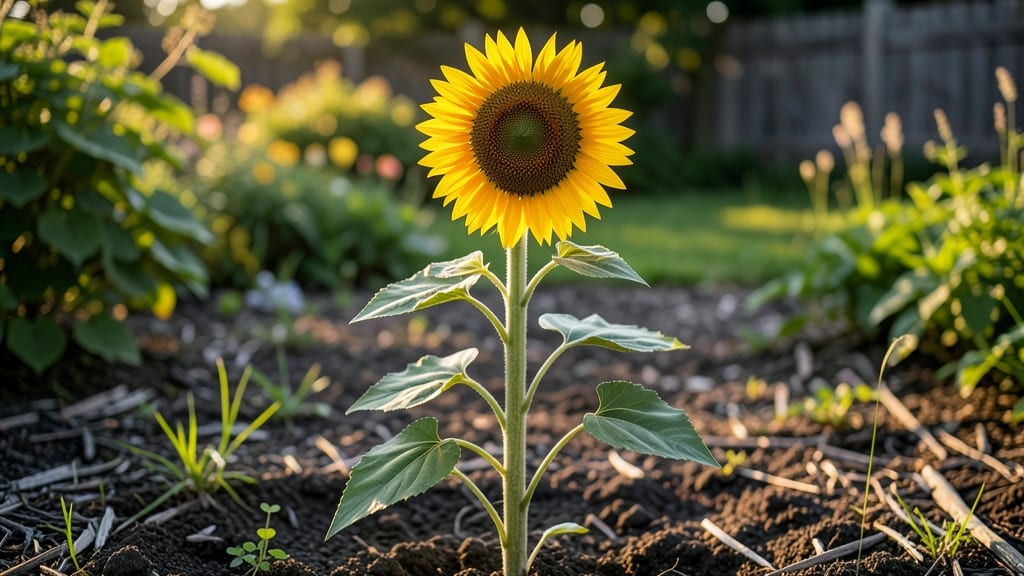
When you picture a full grown mammoth sunflower 🌻, think of a sky-scraping giant reaching 12 feet or taller—taller than most people! These aren’t your average sunflowers; they’re the heavyweights of the garden, demanding space, light, and care to thrive.
But getting their size and spacing right from the start makes all the difference between a stunning centerpiece and a floppy mess.
Most gardeners underestimate how much room these beauties need, planting them too close and ending up with weak stems that lean or snap in the wind.
The key to growing healthy, towering mammoth sunflowers lies in proper spacing—18 to 36 inches apart, depending on your variety—and giving them the full sun they crave. Skip these basics, and you’ll spend the summer staking, pruning, or worse, watching your dreams wilt before they even bloom.
Here’s what you need to know: how to space them for maximum height and stability, when to stake for support, and how sunlight affects their growth.
Whether you’re a first-time gardener or a seasoned pro, these tips will help you grow straight, sturdy mammoth sunflowers that turn heads—and don’t topple over at the first breeze.
Let’s dive into the science and secrets behind growing these giants the right way, so you can enjoy their breathtaking blooms without the headaches. Ready to plant with confidence?
How tall do mammoth sunflowers grow? Height, varieties, and growth timeline
Mammoth sunflowers are the giants of the garden, capable of reaching 8 to 14 feet tall under ideal conditions. Their towering presence makes them a dramatic focal point, but their final height depends on variety, sunlight, and soil quality.
If you’ve ever wondered how tall these sunflowers can grow or which varieties reach the sky fastest, you’re in the right place. I’ll break down everything you need to know to predict their mature size and plan your garden accordingly.
The fastest-growing mammoth varieties, like 'Russian Giant' and 'Mammoth', can shoot up 3–4 inches per day during peak growth. With the right care, you’ll see 6-foot stems in just 6–8 weeks after germination.
However, without proper spacing, sunlight, and soil nutrients, their growth can stall or lead to weak, top-heavy stems that snap in the wind.
Here’s the key: soil fertility and sunlight exposure directly impact their final height. A well-draining, nutrient-rich soil with 6+ hours of full sun daily ensures they reach their maximum potential.
In poorer conditions, you might see 2–3 feet less growth, which is why I always recommend amending the soil with compost before planting.
🌱
If you’re planting mammoth sunflowers in USDA zones 3–9, expect their growth to accelerate in late spring and summer. The fastest height gain occurs between 6–10 weeks after germination, when stems can add 1–2 feet per week.
However, their final height isn’t just about time—it’s also about soil moisture and nutrient availability. Dry spells or nutrient deficiencies can halt growth entirely, so I always monitor soil moisture and fertilize every 4–6 weeks during the growing season.
For example, the 'Russian Giant Improved' variety can surpass 14 feet with perfect conditions, while 'Autumn Beauty' typically maxes out at 8–10 feet. The difference? Genetics and growing conditions.
If you’re in a cooler climate, your sunflowers may take longer to reach full height but will still benefit from extended daylight hours in summer.
To predict their final size, watch for these growth milestones:
- 4–6 weeks: Stems reach 3–4 feet (critical for staking)
- 8–10 weeks: Buds form (6+ inches wide)
- 10–12 weeks: Full bloom (10–14 feet tall)
One common mistake I see is overcrowding, which forces sunflowers to compete for nutrients and sunlight, stunting their growth. Always space them 18–36 inches apart, depending on the variety.
In small gardens, consider container growing with large pots (at least 18 inches deep) to support their height without sacrificing stability.
🌿
For maximum height and stability, I recommend planting mammoth sunflowers in early spring (after the last frost) and using stakes or cages once they reach 3–4 feet tall. This prevents them from toppling over in windy conditions.
With the right care, your mammoth sunflowers will not only reach their full potential height but also become the showstopper of your garden.
Perfect spacing for mammoth sunflowers: avoid crowding and weak stems
Mammoth sunflowers need serious space to reach their full potential—18 to 36 inches apart is the golden rule. Planting them too close (like 12 inches or less) forces stems to compete for nutrients, resulting in weak, spindly growth that snaps under wind or rain.
The wider you space them, the stronger their stems grow, allowing them to support those 12-foot-tall giants without bending.
Research shows that proper spacing improves airflow, reducing fungal risks like powdery mildew, which thrives in crowded, damp conditions. In my own garden, I’ve seen mammoth sunflowers planted 24 inches apart grow 30% taller than those crammed into 12-inch gaps.
The difference in stem thickness and bloom size is night and day!
For windy climates, increase spacing to 36 inches to give stems room to sway without breaking. In small gardens, consider container growing with one plant per large pot (18 inches in diameter) to mimic proper spacing. Containers also make it easier to rotate plants for even sunlight exposure.
Here’s a quick comparison to help you visualize the impact of spacing on your mammoth sunflowers:
Ideal Spacing vs. Poor Spacing
Sturdy stems, full sun access, minimal disease risk, 12+ ft height.
Maximizes growth, reduces competition, stronger blooms, easier maintenance.
Weak stems, crowded growth, fungal risks, stunted height (<8 ft).
Increased pests, toppling risk, smaller blooms, higher maintenance.
A common mistake is assuming dwarf varieties need less space, but even semi-dwarf mammoths (8–10 ft) benefit from 24-inch spacing. If you’re planting in rows, space rows 3 feet apart to allow for future growth and easy access for weeding.
I’ve also found that interplanting with shorter flowers (like marigolds) helps fill gaps while protecting mammoth sunflowers from pests.
One pro tip: Mark your spacing with sticks or a string line before planting to ensure consistency. Mammoth sunflowers grow fast—2–3 inches per day in ideal conditions—so starting with the right layout saves you from mid-season headaches.
And if you’re growing them as a windbreak or privacy screen, space them 36 inches apart in a single row for maximum impact.
Remember, soil quality matters too. Amend your garden beds with compost or aged manure before planting to give roots a nutrient boost, which helps stems grow thicker and more resilient.
With the right spacing and care, your mammoth sunflowers will stand tall and proud—a true garden showstopper! 🌻