
Flowers
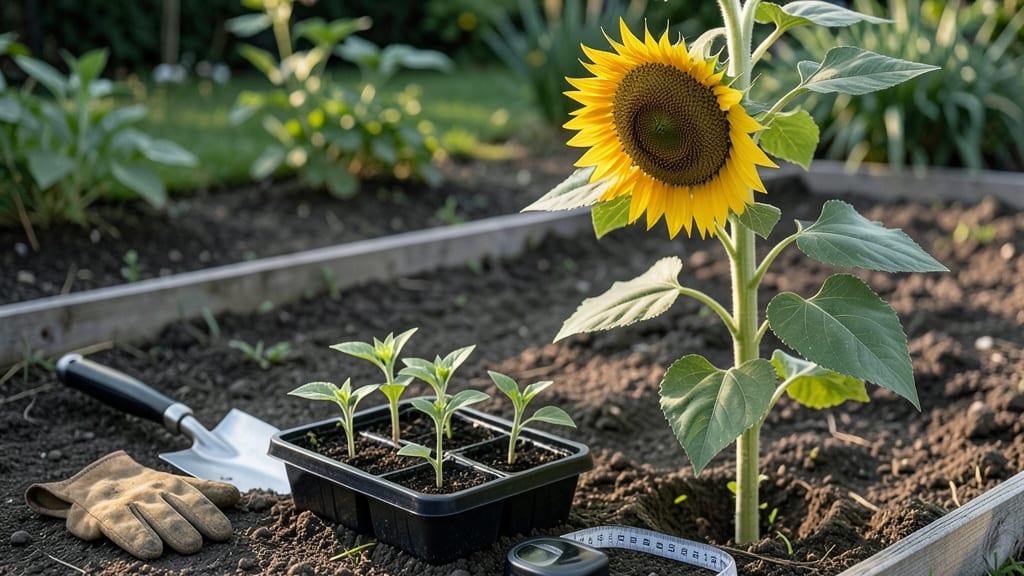
Planting sunflowers how far apart should sunflowers be planted might seem like a minor detail, but it’s the fastest way to turn your towering 🌻 dreams into leggy, underwhelming stalks.
The right spacing—whether you’re growing dwarf varieties or sky-scraping giants—determines how tall they’ll grow, how vibrant their blooms will be, and even whether they’ll stand up straight in wind or wilt from competition.
I’ve learned the hard way that cramming sunflowers together doesn’t just limit their height—it invites pests, spreads disease, and steals nutrients from each other.
But get the spacing right, and you’ll unlock sunflowers that reach their full potential, from 3-foot dwarfs to 15-foot giants, all while blooming like they’re in a competition. Let’s break down the exact distances you need for each type and why they make such a difference.
Most gardeners overlook how soil type and sunlight play into spacing, but these factors can change the rules entirely. Sandy soil drains faster, so roots spread wider, while clay holds moisture longer, letting you plant a little closer.
And if your garden gets less than 6 hours of sun? That’s a whole other spacing strategy. I’ll walk you through how to adjust for your specific conditions so your sunflowers thrive, not just survive.
Ready to turn your sunflower patch into a showstopper? You’ll also discover 3 space-saving hacks for small gardens, plus how to pair sunflowers with companions that boost growth without stealing space. By the end, you’ll know exactly how far apart to plant—no guesswork, just sky-high success.
Optimal sunflower spacing by variety: dwarf vs. giant vs. standard
Sunflowers come in all shapes and sizes, but their spacing needs vary dramatically depending on the variety you choose. Planting them too close robs each plant of sunlight, nutrients, and air circulation—leading to stunted growth or even disease.
But get the spacing right, and you’ll grow sunflowers that reach their full potential, with vibrant blooms and sturdy stalks. Let’s break down the exact spacing guidelines for dwarf, standard, and giant varieties.
First, consider your sunflower variety. Dwarf varieties like 'Teddy Bear' or 'Moulin Rouge' stay compact (1–3 feet tall), while giants like 'Russian Giant' or 'Mammoth' can tower over 12 feet. Each type needs different spacing to thrive.
Overcrowding dwarfs won’t kill them, but it’ll make them leggy and weak. For giants, poor spacing can mean top-heavy stalks that flop under their own weight.
Here’s the golden rule: bigger sunflowers need more space. This isn’t just about aesthetics—it’s about root competition, airflow for disease prevention, and even pollinator access. A crowded sunflower patch might look lush, but it’s a recipe for blight, powdery mildew, and underwhelming blooms.
Let’s dive into the specifics so you can plan your garden like a pro.
| Sunflower Type | Mature Height | Spacing (Inches) | Rows Apart (Feet) | Best For |
|---|---|---|---|---|
| Dwarf (1–3 ft) | 1–3 ft | 6–12" | 1.5–2 ft | 'Teddy Bear', 'Moulin Rouge', containers |
| Standard (6–8 ft) | 6–8 ft | 12–18" | 2–3 ft | 'Autumn Beauty', 'ProCut', cut flowers |
| Giant (10–15 ft) | 10–15 ft | 18–24" | 3–4 ft | 'Russian Giant', 'Mammoth', statement plants |
🌻 Pro Tip: For windy areas, increase spacing by 25% to prevent stalks from leaning or breaking.
Why does spacing matter so much for dwarf sunflowers? Even though they’re small, they still need room to access sunlight and develop strong roots. Planting them 6–12 inches apart ensures they get enough air circulation to prevent fungal diseases.
Plus, dwarf varieties are often grown in containers or borders, where space is limited—but even there, proper spacing keeps them compact and bushy.
Standard sunflowers, like 'Autumn Beauty', are the workhorses of the garden. They’re tall enough for cut flowers but not so massive they need giant plots. The 12–18 inch spacing gives them enough room to develop sturdy stems without competing for nutrients.
This is also the sweet spot for pollinators, like bees and butterflies, who love the abundant blooms but need clear paths to access them.
Now, let’s talk giant sunflowers—the showstoppers of the garden. Varieties like 'Russian Giant' can grow 12–15 feet tall, and their heavy seed heads need wide spacing to avoid toppling.
Planting them 18–24 inches apart (and 3–4 feet between rows) gives their deep taproots room to anchor into the soil. Without this space, you’ll end up with leaning stalks or even broken stems—definitely not the dramatic focal point you’re aiming for.
One common mistake I see is treating all sunflowers the same. A giant sunflower planted too close to a dwarf variety will overshadow and stunt its smaller neighbor. Instead, group like varieties together in your garden plan.
This not only makes spacing easier to manage but also creates a visually cohesive look. For example, dedicate one section of your garden to dwarf sunflowers for borders, another to standard varieties for cut flowers, and a back corner for your giants.
Don’t forget about soil health when planning spacing. Sunflowers are heavy feeders, and crowded plants deplete nutrients faster. If you’re growing multiple rows, consider rotating crops or adding compost between rows to replenish the soil.
This is especially important for giant varieties, which need rich, well-draining soil to support their massive growth. A little extra prep now means bigger blooms and fewer problems later.
Finally, think about harvest goals. If you’re growing sunflowers for seeds or bird feed, you’ll want even spacing to ensure all plants get enough sunlight to develop fully. For cut
How sunflower spacing affects growth: science-backed secrets for bigger blooms
When I first planted sunflowers too close together, I expected vibrant blooms—but instead, I got leggy stems and weak stalks that wobbled in the breeze. The issue? Root competition stole nutrients and sunlight, leaving my sunflowers struggling to reach their full height.
Proper spacing isn’t just about fitting more plants in; it’s about giving each one the room to thrive and access the resources it needs to grow taller and stronger.
The science behind sunflower growth reveals that overcrowding triggers stress responses in plants. When roots tangle, they compete for water and nutrients, forcing sunflowers to stretch upward in search of light—a phenomenon called etiolation.
This results in thin, weak stems that can’t support heavy blooms. Meanwhile, proper spacing ensures each plant gets enough sunlight for photosynthesis and soil nutrients for robust root development.
3 Critical Growth Factors Tied to Spacing
- 🌱 Nutrient Access: Proper spacing ensures roots spread without competing, allowing each plant to absorb phosphorus and nitrogen for strong stems and blooms.
- ☀️ Sunlight Exposure: Sunflowers need 6+ hours of direct sun. Crowding blocks light, causing leggy growth and smaller blooms.
- 💧 Water Distribution: Overcrowded plants compete for moisture, leading to drought stress and weak stalks. Spacing improves water uptake.
Another key factor is soil type. In sandy soil, roots spread wider, so you can plant sunflowers slightly closer together. In clay soil, moisture lingers, allowing roots to grow deeper, so spacing can be tighter.
I’ve found that amending soil with compost before planting improves drainage and nutrient availability, letting me adjust spacing based on my garden’s conditions.
Wind exposure also plays a role. Sunflowers planted too closely in windy areas will lean or break under pressure. Spacing them 18–24 inches apart gives them stability, while also allowing air to circulate and reduce disease risk.
I’ve noticed that giant varieties benefit most from wider spacing, as their heavy heads need extra support.
If you’re growing sunflowers in containers or small gardens, spacing becomes even more critical. Without deep soil, roots can’t spread as much, so I recommend planting dwarf varieties 6–12 inches apart and using support stakes to prevent leaning.
For in-ground planting, I’ve had the best success with standard varieties spaced 12–18 inches apart, striking a balance between yield and plant health.
Remember, the goal isn’t just to fit more sunflowers into your garden—it’s to create an environment where each plant can reach its full potential.
With the right spacing, you’ll enjoy taller stalks, larger blooms, and a garden that’s not just beautiful but also healthy and resilient. 🌻