
Flowers
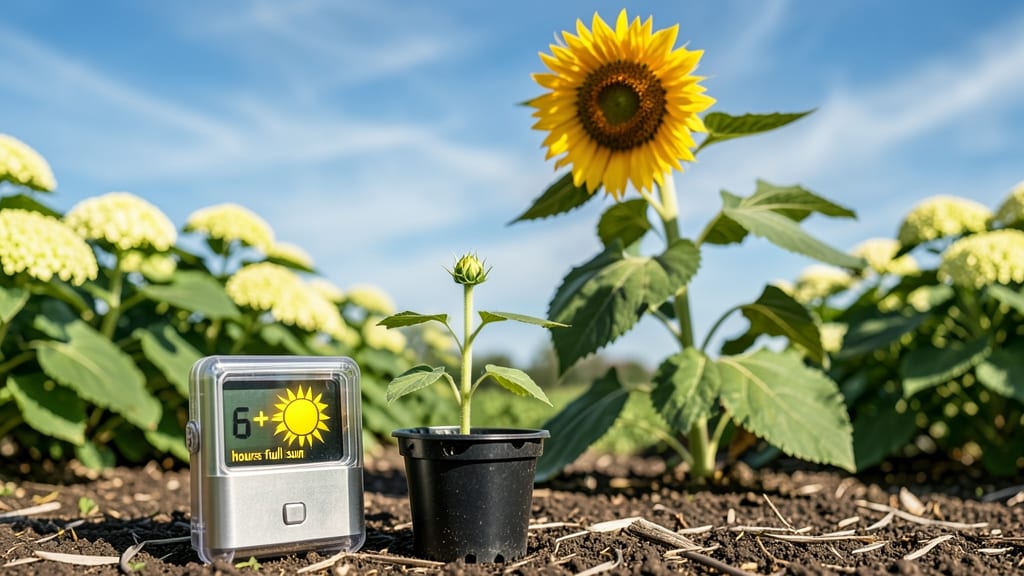
Want to know how much sun do sunflowers need to grow tall and vibrant? The secret isn’t just water or soil—it’s sunlight. These towering beauties need 6 to 8+ hours of direct sun daily to thrive, but many gardeners accidentally starve them of light without realizing it.
Too little sun, and your sunflowers will stretch weak stems or produce small, pale blooms. Too much, and they can scorch. I’ll show you exactly how to balance sunlight for peak growth, from adjusting planting spots to recognizing signs of stress.
Whether you’re in a sunny Zone 6a garden or a slightly shadier spot, these tips will help your sunflowers reach their full potential. Let’s get those stems strong and those blooms bright!
Ready to unlock the key to sunflower success? Here’s how to give them the perfect light dose—no guesswork needed.

Optimal sunlight hours for sunflowers: the golden rule
Sunflowers thrive under full sun exposure, but not all varieties have the same needs. Giant sunflowers like 'Mammoth' varieties demand 8+ hours of direct sunlight daily, while dwarf types such as 'Teddy Bear' can tolerate 6-7 hours.
Understanding these differences ensures your sunflowers grow tall, vibrant, and productive. Let’s break down the sunlight intensity scale and how it impacts each growth stage.
Most gardeners assume full sun means all-day sunlight, but the sunlight intensity scale clarifies this. Full sun is defined as 6-8+ hours of direct sunlight, while partial sun is 3-6 hours. Sunflowers in partial sun may still grow, but they’ll produce smaller blooms and weaker stems.
For optimal results, place them in the sunniest spot in your garden, ideally facing south in the Northern Hemisphere.
Here’s how sunlight deprivation affects sunflowers at each stage: - Seedling stage: Stunted growth, pale leaves - Flowering stage: Delayed blooms, smaller petals - Seed production: Fewer seeds, poor yield Sunflowers are heliotropic, meaning they follow the sun’s movement.
Without enough light, they’ll grow lanky and weak, making them prone to lodging (falling over).
🌻
| Sunflower Type | Optimal Sunlight | Minimum Sunlight | Growth Impact |
|---|---|---|---|
| Giant (e.g., 'Russian Giant') | 8-10+ hours | 6 hours (minimum) | Tallest stems, largest blooms |
| Standard (e.g., 'Autumn Beauty') | 6-8 hours | 5 hours (minimum) | Vibrant colors, moderate height |
| Dwarf (e.g., 'Teddy Bear') | 5-6 hours | 4 hours (minimum) | Compact growth, smaller blooms |
| All Types (Seedling Stage) | 4-6 hours | 3 hours (minimum) | Slower germination, weak roots |
Seasonal sunlight changes can trick sunflowers into thinking it’s time to bolt (flower prematurely) or stagnate. In summer, when days are long, sunflowers thrive with 10+ hours of light. However, in spring or fall, when sunlight is shorter, they may need supplemental light to maintain growth.
If you notice bleached or yellowing leaves, it’s a sign of sun stress, while pale stems indicate insufficient light.
To measure sunlight accurately, use a sunlight tracker or observe your garden’s sun patterns. Place a white board in potential spots for a week—if it’s fully dry by midday, it’s full sun.
If only partially dry, it’s partial sun. For container-grown sunflowers, rotate pots every few days to ensure even exposure, as they’ll naturally lean toward the light.
Did you know? Sunflowers can increase their yield by 30% with just 2 extra hours of sunlight per day. This is why giant varieties often require staking or trellising—not just for support, but to position their flower heads higher for better light absorption.
Even dwarf varieties benefit from elevated planting in raised beds or hanging baskets to maximize exposure.
If your sunflowers are in partial shade, focus on spacing them 12-18 inches apart to reduce competition. Pair them with low-growing companions like basil or marigolds, which won’t block sunlight.
Avoid planting near tall trees or structures, as even dappled shade can reduce bloom size by up to 40%. For urban gardens with limited space, consider vertical gardening—train sunflowers to grow along trellises or fences to capture more light.
🌿
One common mistake is assuming morning sun is enough. While morning light is gentler, sunflowers need intense midday sun (between 10 AM and 4 PM) to photosynthesize efficiently.
If your garden only gets morning sun, supplement with a reflective surface like a white wall or mirror to bounce light onto the plants. For indoor sunflowers, place them under a grow light for 12-14 hours daily to
How to adjust sunflower care for different sunlight conditions
Not all gardens get the perfect 6-8 hours of full sun sunflowers crave. If your space is shadier than a forest canopy, don’t toss those seeds just yet!
With smart adjustments, you can still grow healthy sunflowers—even in partial shade. The key lies in spacing techniques, companion plants, and creative light solutions.
Sunflowers are sun-hungry giants, but their needs shift through the seasons. Morning sun might feel gentle, while afternoon rays can scorch. I’ll show you how to balance light exposure so your sunflowers grow strong, not stretchy.
Let’s tackle shade first—because even 4-6 hours of sun can work with the right tricks.
⚠️ Sunflower Sunlight Warning
Minimum sunlight needs: 4-6 hours of direct sun for dwarf varieties; 6-8+ hours for standard/giant types. Below 4 hours, growth slows dramatically, stems weaken, and blooms pale or fail entirely. Morning sun is gentler—save afternoon sun for heat-tolerant varieties like 'Autumn Beauty'.
🌱 Signs of sun stress: Yellowing leaves, leggy stems, small buds that never open.
Start by choosing the right sunflower variety for your light. Dwarf types like 'Teddy Bear' thrive in partial shade, while giants like 'Mammoth' need full sun. Plant them closer together—about 12-18 inches apart—to create a micro-climate that reflects light deeper into the patch.
Tall sunflowers cast shadows; use this to your advantage by planting shorter companions like marigolds or cosmos nearby.
For supplemental light, try reflective surfaces. Place a white garden mirror or even a sheet of aluminum foil behind your sunflowers to bounce extra light onto their leaves.
In containers, a grow light on a timer (12-14 hours/day) can make up the difference. Just avoid hot spots—sunflowers hate sudden temperature swings from artificial light.
Watch for sunburnt petals or bleached leaves—these mean too much direct sun. If your sunflowers are leaning toward light, they’re stretching for more. Rotate pots or transplant seedlings to a more balanced spot.
Mulch with straw to keep roots cool and retain moisture, which helps stressed plants recover faster.
Even in shade, water deeply in the morning to encourage strong roots. Avoid overhead watering, which can weaken stems further. With these tweaks, your sunflowers will bloom brighter, even if your garden isn’t basking in full sun all day. 🌻