
Flowers
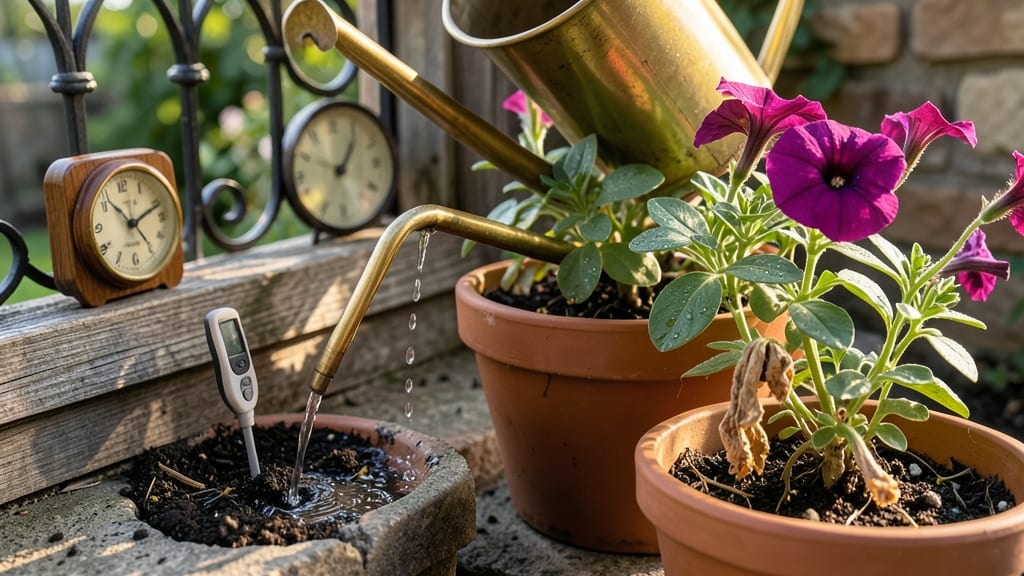
To water flowers in pots the right way, you're probably guessing more than you should—because that's how most gardeners end up drowning their plants or letting them wilt.
The truth is, a simple soil check can tell you exactly when your 🌸 need hydration, saving you time and keeping them thriving.
I've learned the hard way that one-size-fits-all watering schedules don't work—your pot size, the type of flower, and even your local climate all play a role. What works for a thirsty geranium in a small pot won't cut it for a fern in a large container.
Let me show you how to adjust your approach based on these key factors.
You'll discover the 3-step method I use to check soil moisture without overcomplicating things. No fancy tools needed—just your fingers and a little observation. We'll also cover how to tweak your watering routine for different seasons, so your potted flowers stay happy year-round.
Whether you're a beginner or a seasoned gardener, these tips will help you avoid the most common watering mistakes. Let's get your potted flowers looking their best with the perfect balance of moisture—no more guesswork, just beautiful blooms.
The 3-Step soil check method to water potted flowers perfectly
Guessing when to water your potted flowers can turn vibrant blooms into sad, wilted stems overnight. Instead of relying on memory, I use a 3-step soil check method that works for every pot size, material, and flower type.
This technique combines finger depth testing, weight assessment, and visual inspection to give you precise watering cues—no more overwatering or underwatering!
Why does this method work? Because potted plants have limited root zones compared to in-ground plants, meaning their soil dries out faster. The key is checking moisture at the root level (not just the surface) and adjusting for your pot’s material—clay dries quicker than ceramic, while plastic retains moisture longer.
Let’s dive into the foolproof steps.
🌱 The 3-Step Soil Check Method
- Step 1: Finger Depth Test
Stick your finger 1-2 inches deep into the soil (deeper for larger pots). If it feels dry and crumbly, it’s time to water. For succulents or cacti, wait until it’s bone-dry at 3 inches down. - Step 2: Weight Test
Lift the pot—dry soil feels light, while moist soil makes the pot heavier. A 5-gallon pot should feel noticeably lighter when dry. Pro tip: Track your pot’s weight over time to spot patterns. - Step 3: Visual Inspection
Check for shriveled leaves (underwatering) or yellowing foliage (overwatering). For petunias or geraniums, drooping stems by noon mean they’re thirsty—water immediately.
Let’s break down how to apply these steps to different pot materials. Terracotta pots dry out fastest because they’re porous—check soil every 1-2 days in summer. Plastic pots, on the other hand, trap moisture longer, so you might only need to water every 3-4 days.
For self-watering containers, rely more on the weight test since the reservoir hides soil moisture.
Seasonal adjustments are critical. In summer heat, I water my potted geraniums every morning because evaporation speeds up. During winter dormancy, I cut back to once a week, even for tropical flowers like orchids, since their growth slows.
Always water in the early morning to prevent fungal diseases from overnight moisture.
For new gardeners, I recommend keeping a watering journal for your pots. Note the date, how deep the soil was when dry, and how much water you added. Over time, you’ll spot patterns—like your basil needing water every 2 days in July but only every 5 days in May.
This eliminates guesswork and builds confidence in your watering routine.
What about drainage holes? If your pot lacks them, water sparingly—20-30% less than a well-drained container—to avoid root rot. For pots with holes, always water until you see water draining from the bottom.
This ensures the entire root zone gets hydrated, not just the top inch of soil.
Here’s a pro tip for mixed flower arrangements: Group plants with similar water needs together. For example, pair succulents (drought-tolerant) with lavender in one pot, and impatiens (moisture-loving) with coleus in another.
This way, you can water each group on the same schedule without over- or under-watering any single plant.
Finally, don’t ignore the weather forecast. If rain is predicted, hold off on watering for 24-48 hours. Outdoor pots get a natural drink from rainfall, while indoor plants might only need a light misting.
Always err on the side of underwatering—most potted flowers bounce back faster from thirst than from soggy roots.
With this 3-step method, your potted flowers will thrive year-round. Start today by checking one pot’s soil depth, lifting it to test weight, and inspecting the leaves. Your plants will thank you with healthier roots, more blooms, and fewer wilting surprises! 🌿
Watering frequency chart: how often to water 15 common potted flowers
Mastering the watering schedule for your potted flowers isn't about guessing—it's about understanding their unique needs. Different flowers thrive on varying moisture levels, and pot size, location (indoor vs. outdoor), and season all play critical roles.
For example, succulents need infrequent watering, while petunias prefer consistent dampness. Let's break down the science-backed intervals for 15 popular potted flowers to keep them blooming beautifully.
Your pot material also matters: terracotta dries faster than ceramic, while plastic retains moisture longer. Outdoor pots dry out quicker in full sun than shaded spots, and indoor plants often need less frequent watering due to stable humidity.
Always check the top 1-2 inches of soil—if it's dry, it's time to water. Below, we've organized the most common potted flowers by their watering needs, including adjustments for different seasons.