
Flowers
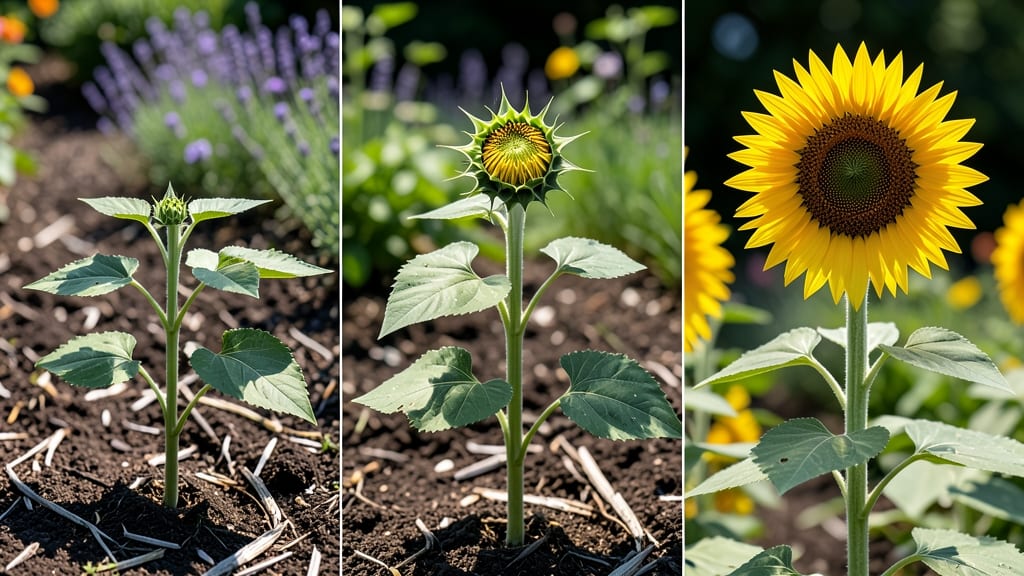
If you’ve ever planted a sunflower seed and wondered how quickly sunflowers grow, you’re about to be amazed. These cheerful giants grow faster than most garden plants—some varieties even bloom in just 50 days under ideal conditions!
From the moment you tuck that seed into warm soil, the race to maturity begins. Within 3-10 days, your first green shoots will crack through the earth, and by April to May in USDA Zone 6a, you’ll see rapid growth as stems stretch toward sunlight.
But speed isn’t just about time—it’s about the right conditions, from soil warmth to sunlight exposure.
Curious about how tall your sunflowers will be in a month? Or which varieties grow the fastest? I’ll break down the science behind their explosive growth, plus practical tips to help your sunflowers reach their full potential—whether you’re a beginner gardener or a seasoned green thumb.
Get ready to watch your garden transform in record time, because sunflowers don’t just grow—they thrive when you give them the right care. Let’s dive into the timeline and secrets behind their incredible speed!


Sunflower growth timeline: seed to full bloom in 80 days
If you've ever dreamed of watching a sunflower bloom from a tiny seed in just a few months, you're in for a surprise—these giants grow faster than you think!
From the first green sprout breaking through the soil to a towering 10-foot bloom, sunflowers complete their life cycle in about 80 days under ideal conditions. Understanding each growth stage helps you provide the right care at the perfect time, ensuring your sunflowers reach their full potential.
Sunflowers are one of the fastest-growing annual flowers, making them perfect for beginners and experienced gardeners alike. Their growth can be divided into distinct stages, each with unique visual cues and care requirements.
By tracking these milestones, you can anticipate when your sunflowers will need extra water, nutrients, or protection from pests. Let’s break down the journey from seed to bloom, day by day.
During the germination stage (days 3-10), your sunflower seeds will sprout when soil temperatures reach at least 55°F. The key here is consistency—keep the soil moist but not waterlogged, as excessive moisture can cause rot.
If you plant in cooler climates, consider using black plastic mulch to warm the soil faster and speed up germination by 2-3 days. Once sprouts appear, thin them to avoid overcrowding, which can stunt growth.
In the seedling stage (days 7-14), your sunflowers will develop their first true leaves, which look different from the initial cotyledons. This is when they become more vulnerable to pests like cutworms or aphids.
To protect them, use row covers or apply neem oil if you spot early signs of infestation. Ensure they receive at least 6-8 hours of sunlight daily, as insufficient light will slow their growth significantly.
The vegetative growth phase (days 21-30) is where the magic happens—your sunflowers can grow up to 3 inches per day under ideal conditions! This rapid elongation requires adequate nutrients, so apply a balanced fertilizer every 4-6 weeks to support stem strength.
If your sunflowers are tall varieties like 'Russian Giant,' consider staking them early to prevent toppling from wind or rain. During this stage, you’ll notice the bud forming at the top of the stem, signaling the next phase.
When your sunflower enters the bud formation stage (days 14-21), the bud will swell and develop a yellow center. This is a critical time to monitor watering—too much moisture can cause the bud to split or rot, while too little can stress the plant.
Reduce watering slightly to encourage stronger stem development. If you’re growing sunflowers in containers, ensure the pot is large enough (at least 12 inches deep) to support the root system during this rapid growth spurt.
The flowering stage (days 7-10) is the most rewarding part of the journey, where your sunflowers finally open their vibrant petals to face the sun. This stage typically occurs 60-80 days after planting, depending on the variety and growing conditions.
Once the petals fully open, your sunflowers will track the sun’s movement (a phenomenon called heliotropism) until they mature. To prolong blooming, deadhead spent flowers by cutting the stem just below the bloom—this encourages the plant to produce more flowers.
Finally, the seed maturity stage (days 14-21) marks the end of the cycle, where the petals wilt and the seed head turns brown. This is the perfect time to harvest seeds for next year’s garden or enjoy the sunflower as a cut flower.
To harvest seeds, cut the head when the back turns completely brown and the seeds rattle when shaken. Dry the heads in a well-ventilated area for 1-2 weeks before storing in a cool, dry place.
With the right care, your sunflowers can grow from seed to towering bloom in just 80 days—a true testament to nature’s speed!
5 Factors that speed up or slow down sunflower growth
Sunflowers are nature’s speed demons—some varieties can shoot from seed to 5-foot-tall blooms in just 50 days! But their growth speed isn’t just luck. Five key factors determine whether your sunflowers will race toward the sky or lag behind like a sleepy slug.
Understanding these will help you double their growth rate or troubleshoot slow starts.
Let’s break down the science behind what makes sunflowers bolt into action or stumble in their tracks. From sunlight to soil temperature, each factor plays a starring role in your sunflowers’ growth drama. Ready to become the director of your garden’s fastest-growing stars?
Minimum 6-8 hours of direct sun daily; partial shade cuts growth by 10-20%.
Optimal germination at 70-75°F; below 55°F slows growth by 50%.
Deep watering every 2-3 days in dry spells; overwatering rots roots.
Ideal daytime temps: 75-85°F; nights below 50°F stall growth.
Dwarf varieties bloom faster (45-50 days); giants take 90-120 days.
First up, sunlight exposure is non-negotiable. Sunflowers are sun-worshippers, and they’ll stretch toward light like teenagers reaching for a snack. Plant them in a spot with at least 6-8 hours of direct sun daily.
If you’re dealing with shade, consider reflective mulch or a nearby mirror to trick your sunflowers into thinking they’re basking in full glory. Even partial shade can delay growth by 10-20%, turning your speedy giants into slowpokes.
Next, soil temperature is the silent speed controller. Sunflower seeds need soil that’s at least 55°F to germinate, but they’ll explode into action at 70-75°F. If your spring soil is still chilly, use black plastic mulch to warm it faster.
Cold soil can halve your growth rate, leaving your sunflowers playing catch-up all season. Pro tip: Test your soil with a thermometer—consistency is key.
Watering might seem simple, but frequency and depth matter. Sunflowers need deep watering every 2-3 days during dry spells, especially when they’re young and establishing roots. Overwatering is just as bad as underwatering—it drowns roots and invites fungus.
Aim for 1-2 gallons per plant in the morning to let the soil dry slightly between waterings. Think of it like giving your sunflowers a hydration boost without the soggy aftermath.
Temperature isn’t just about soil—daytime and nighttime temps both count. Sunflowers thrive in daytime highs of 75-85°F, but if nights dip below 50°F, growth can grind to a halt.
This is why late-summer plantings often slow down as cooler weather rolls in. If you’re in a cooler climate, opt for early-spring or late-May plantings to avoid the temperature growth killers.
Finally, variety selection is your secret weapon. Not all sunflowers grow at the same speed—dwarf varieties like 'Teddy Bear' bloom in just 45-50 days, while giants like 'Russian Mammoth' take 90-120 days. If you’re after quick blooms for cut flowers, go for short-season varieties.
For tall, dramatic stalks, be patient and choose a longer-maturing type. Always check the days-to-maturity label on your seed packet—it’s your roadmap to success.
Now