
Flowers
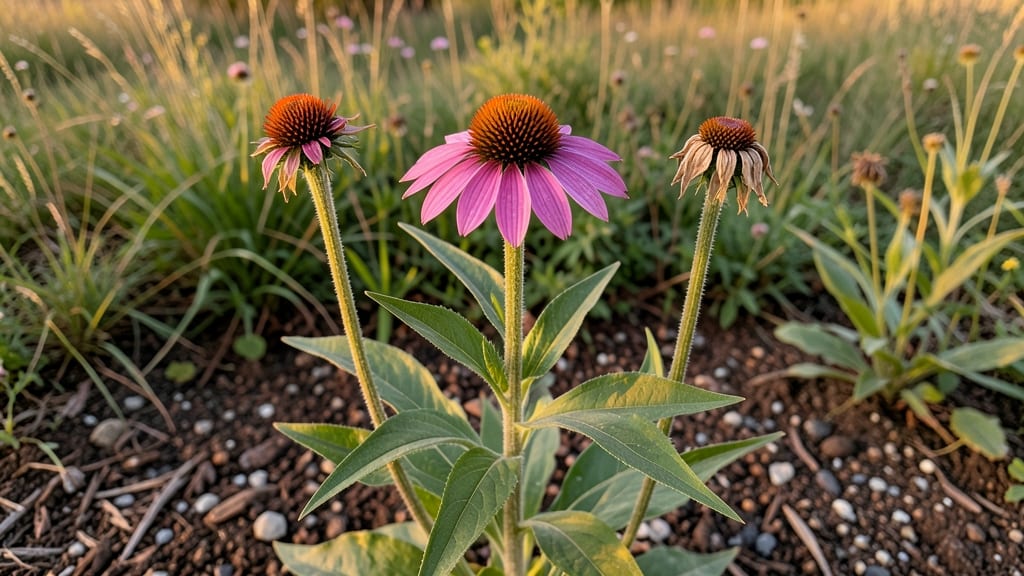
If you're planning your garden layout, knowing how tall cone flowers grow could make all the difference between a crowded mess and a stunning, well-balanced display. These 🌼 beauties aren't one-size-fits-all—they range from petite varieties that barely peek over your knees to towering giants that reach your shoulders.
For gardeners in Zone 6a, choosing the right height means considering everything from your border's front edge to the back row.
Dwarf types like 'White Swan' stay compact at just 1-2 feet, perfect for edging or containers, while standard varieties like 'Magnus' can stretch up to 5 feet, making them ideal back-of-the-border stars.
But height isn't just about looks—it affects pollinators too. Taller varieties create vertical highways for bees and butterflies, while shorter ones provide easy landing pads. The key is balancing heights for both aesthetics and ecosystem benefits, which I'll show you how to do effortlessly.
Ready to transform your garden? Let's dive into the exact heights you need to know for spacing, companion planting, and creating that perfect pollinator paradise—without the guesswork.


Cone flower height by variety: from compact to towering options
If you’re planning your garden layout or dreaming of a vibrant pollinator-friendly space, knowing how tall cone flowers grow is key to maximizing their impact—without overcrowding your other plants. Echinacea varieties range from dwarf options perfect for containers to towering varieties that create dramatic backdrops.
The right height choice can transform your garden design, whether you're working with a small patio or a sprawling landscape.
Cone flowers are perennial favorites for their long-lasting blooms and low-maintenance nature, but their height varies dramatically. Some varieties barely reach your knee, while others can rival your shoulder height. Understanding these differences helps you create visual balance and functional spacing that supports both aesthetics and pollinators.
Below is a detailed breakdown of cone flower height by variety, categorized into dwarf, mid-size, and tall-growing options. This guide will help you select the perfect fit for your garden's layout, whether you're aiming for a front-of-border display or a back-row focal point.
When selecting cone flower varieties, consider not just height but also bloom color and seasonal interest.
For example, 'Magnus' with its 36-48 inch height is perfect for creating a dramatic backdrop, while 'White Swan' at just 12-18 inches thrives in containers or window boxes. Taller varieties like 'Sunrise' add vertical interest and provide late-season blooms that keep your garden vibrant into fall.
Height also affects pollinator attraction. Taller varieties like 'Magnus' and 'Sunrise' create landing platforms for butterflies and bees, while shorter varieties like 'Green Envy' are easier for hummingbirds to access. Combining different heights in your garden creates a multi-level pollinator buffet, ensuring visitors have options throughout the day.
For small gardens, opt for dwarf varieties like 'White Swan' or 'Jelly Bean' to avoid overcrowding. In large landscapes, use tall varieties like 'Sunrise' as focal points or screening plants. Always leave 18-24 inches of space around each plant for airflow and preventing disease.
Pro tip: Stake taller varieties like 'Magnus' in early spring to support their top-heavy blooms and prevent flopping. This is especially important in windy locations or when planting near walkways where accidental brushing could damage stems.
Remember that cone flower height can vary slightly based on
Best cone flower heights for small gardens vs. large landscapes
Choosing the right cone flower height can transform your garden from cluttered to curated. In small gardens, dwarf varieties create stunning borders, while large landscapes benefit from tall varieties as dramatic backdrops. The key is matching the plant height to your space and design goals.
For small gardens, I recommend dwarf cone flowers like 'White Swan' (18-24 inches) or 'Green Envy' (12-18 inches). These fit perfectly in front-of-border plantings or container gardens. In large landscapes, taller varieties like 'Magnus' (4-5 feet) or 'Hot Papaya' (3-4 feet) create focal points that draw the eye.
- Dwarf Varieties (12-24 inches) - Ideal for small gardens, container gardens, or front-of-border plantings. Perfect for pollinators who prefer shorter heights.
- Mid-Height Varieties (24-36 inches) - Great for mid-border accents or mixed flower beds. Balances height with other perennials like black-eyed Susans.
- Tall Varieties (36-54 inches) - Best for back-of-border focal points or large landscape plantings. Creates vertical interest and attracts butterflies from a distance.
- Spacing Tip: Allow 18-24 inches of space between dwarf varieties, 24-36 inches for mid-height, and 36-48 inches for tall varieties to prevent overcrowding.
When planning your garden layout, consider the mature height of your cone flowers. In small gardens, I often mix dwarf varieties with other short perennials like shasta daisies or catmint to create layered interest without overwhelming the space.
For large landscapes, I place taller varieties behind shrubs or ornamental grasses to create depth.
Don’t forget about sunlight exposure—cone flowers thrive in full sun, so place taller varieties where they won’t cast too much shade on smaller plants.
In small gardens, I sometimes use reflective surfaces like light-colored mulch to make the space feel larger and highlight the vertical growth of cone flowers.
For a pollinator-friendly garden, taller varieties attract more butterflies and bees, so place them where you can enjoy their visits from a distance. In small gardens, even dwarf varieties will support pollinators, but their shorter stature keeps the space feeling open and airy.
Experiment with height variations to create visual interest. A mix of tall, mid-height, and dwarf cone flowers in the same bed adds dimension and keeps your garden dynamic throughout the seasons. Start with one or two varieties, observe how they perform, and adjust your layout as needed.