
Flowers
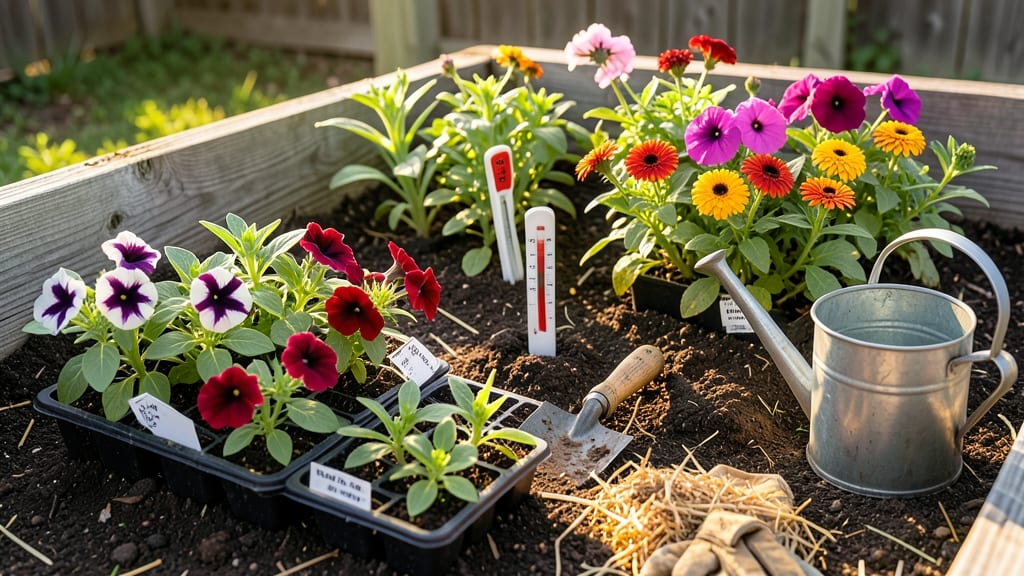
Knowing when it is safe to plant flowers in Ohio can turn your garden from a risky gamble into a lush, summer-long masterpiece.
The average last frost date hovers around April 15, but that’s just the starting point—your exact timing depends on whether you’re in Zone 6a or a warmer microclimate near Columbus.
Here’s the catch: even after the frost danger passes, soil temperature and nighttime lows still matter. Planting too soon can shock tender roots, while waiting too long might cut your blooming season short.
I’ll break down the ideal window—when soil hits 50°F and nights stay above 50°F—so you can time it perfectly for summer-long color.
Ohio’s unpredictable spring weather adds another layer. Some years, late frosts linger into May, while others see early warm spells. I’ll share how to adjust your schedule based on your county, whether you’re in Northeast Ohio or the milder southern regions, so you’re never caught off guard.
Ready to transform your garden into a blooming paradise? Let’s dive into the exact dates, flower types, and pro tips to make your planting season stress-free—and your summer garden stunning.
Ohio’s last frost dates by county: when to plant flowers safely
Ohio’s diverse climate means your last frost date can vary by 10 days or more depending on where you live. In Northeast Ohio, like Cuyahoga County, frost lingers until April 25th on average, while Southwest Ohio, such as Hamilton County, sees its last frost by April 10th.
These differences matter because planting annual flowers too early risks frost damage, while waiting too long cuts your blooming season short.
To pinpoint your exact safe planting window, cross-reference Ohio’s USDA Plant Hardiness Zones (5a-6b) with your county’s frost data. For example, Zone 5b counties like Lorain or Geauga need a 2-week buffer after the average last frost, while Zone 6a areas like Montgomery or Butler can plant sooner.
Microclimates also play a role—urban areas (like Columbus) warm up faster than rural farmland.
Here’s how to use this data: Check your county’s last frost date below, then add 7–14 days as a safety margin. For perennials, you can plant 2 weeks earlier since they’re hardier, but tender annuals like marigolds or zinnias need to wait until after the last frost.
Always monitor nighttime temperatures—if they dip below 50°F, cover young plants with frost cloth.
For annual flowers, like petunias or geraniums, wait until after the last frost date and ensure soil temperatures are above 55°F.
Test this with a soil thermometer—cool soil slows germination. Perennials, such as coneflowers or black-eyed Susans, can handle cooler soil and can be planted 2–3 weeks earlier in Zone 6a areas.
If you’re in a high-risk county like Ashtabula or Lorain, consider starting heat-loving flowers (e.g., cosmos, sunflowers) indoors in March and transplant after May 1st.
For cool-season flowers like pansies or snapdragons, you can even sow seeds in early April in Zone 6a—they’ll bloom before summer heat arrives.
Pro tip: Use the USDA Plant Hardiness Zone Map to find your exact zone, then adjust planting dates by 1 week per zone. For example, if you’re in Zone 5b, add 7 days to the Zone 6a planting window.
Always check local weather forecasts in late April—a late frost can still sneak in, especially in valleys or northern Ohio.
For container gardening, you have more flexibility. Pots warm up faster, so you can plant tender annuals 1–2 weeks earlier than in-ground. Just move containers to a protected spot (like near a
How to adjust planting dates for Ohio’s unpredictable spring weather
Ohio’s spring weather is famously fickle, with late frosts striking even after the official last frost date. In Northeast Ohio, where I garden, a 10-day buffer after the average April 15 date is non-negotiable.
For example, in Cuyahoga County, I’ve seen frost linger until May 1—so I wait until early May to plant tender annuals like petunias or marigolds. This extra caution ensures my $150 annual flower investment doesn’t go to waste.
But adjusting planting dates isn’t just about waiting longer—it’s about strategic planning. I’ve learned to categorize my flowers into cold-hardy champions (like pansies and sweet alyssum) and tender divas (like impatiens and geraniums).
The former can handle light frosts down to 25°F, while the latter need consistent 50°F+ nights. This distinction lets me start planting some varieties weeks earlier than others.
Here’s my proven system for navigating Ohio’s unpredictable spring, broken into clear steps to help you avoid frost damage and maximize your blooms:
- 📅 Check your county’s last frost date (use Almanac’s Ohio frost calculator) and add a 10-day buffer for high-risk areas like Northeast Ohio.
- 🌡️ Test soil temperature—wait until it hits 50°F+ at 4” depth using a soil thermometer (I use mine every morning at 7 AM).
- 🛡️ Use frost cloth for 2-3 weeks post-last-frost if planting tender flowers early (e.g., calendula or nasturtiums).
- 🌱 Prioritize cold-hardy flowers like pansies or sweet alyssum—they thrive in 35-40°F and can be planted 4-6 weeks before the last frost.
- 📝 Prepare flower beds post-last-frost: loosen soil, add compost, and mulch with straw to retain warmth.
- 🌿 Monitor forecasts—sign up for NOAA’s local alerts to get frost warnings via email or app.
For Northeast Ohio, where I live, I also follow the “snow-on-the-ground rule”: if there’s still snow in early April, I delay planting until the ground is completely thawed and dry. This prevents root rot in saturated soil, which is just as damaging as frost.
I’ve lost entire rows of cosmos because I ignored this rule—now I mark my calendar for April 25 as my absolute earliest planting date.
Another trick I swear by is the “5-4-3-2-1” frost rule: when the high temperature is 50°F for 5 days, 40°F at night for 4 nights, 30°F for 3 nights, 20°F for 2 nights, and 10°F for 1 night, I know the worst is over.
This method has saved my $80 geraniums twice in the last three years. Pair this with a frost clock (available at garden centers for ~$15), and you’ll never guess wrong again.
Finally, don’t forget to prep your soil while you wait. I use this 10-minute post-frost checklist:
- Rake away debris and old mulch.
- Spread 2 inches of compost and lightly till.
- Water deeply to settle the soil. 4.
Apply mulch to lock in warmth. This ensures your flowers hit the ground running once the timing is right. With these strategies, even Ohio’s unpredictable spring becomes manageable—and your garden will thank you with vibrant, frost-free blooms all summer long. 🌸