
Vegetables
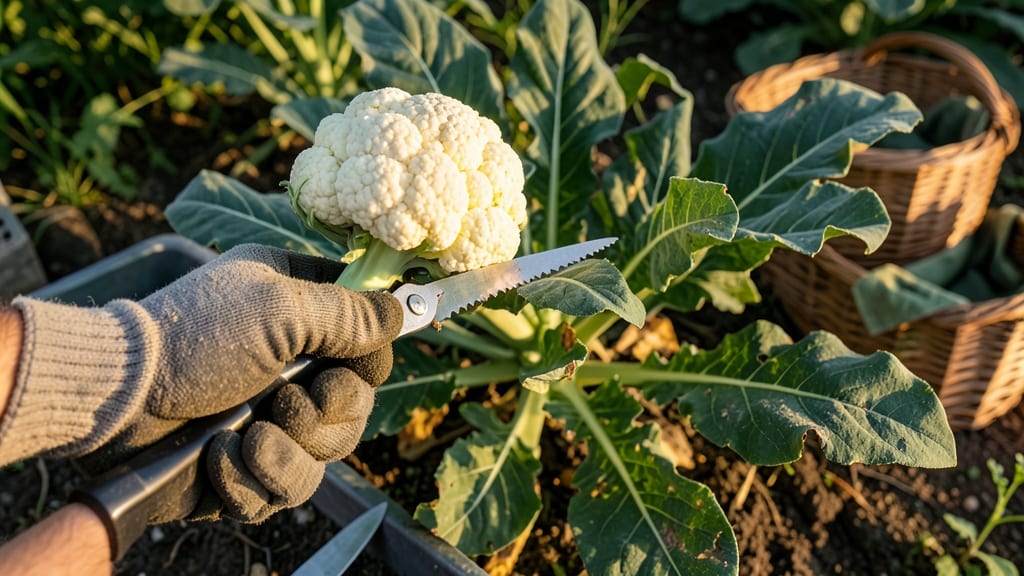
Picking your 🥬 cauliflower at the wrong moment means sacrificing sweetness for bitterness—here’s the exact moment to harvest for restaurant-quality flavor and texture.
Most gardeners wait until the heads look perfect, but timing is everything. If you harvest too early, your curds stay small and underdeveloped; too late, and they turn woody or split open.
The sweet spot? When the heads reach 6-8 inches in diameter and the leaves start yellowing slightly—a sign the plant is ready to share its harvest.
Your climate zone plays a role too. In Zone 6a, where spring planting kicks off in March, expect harvests between July and August, but watch for temperature drops. Cooler weather slows ripening, while heat can speed it up—so check your curds daily during peak season.
Once you spot those tight, compact heads with a firm snap when bent, it’s time to act. I’ll walk you through the best cutting techniques and how to store your harvest to keep it fresh for days—no wasted effort here.


How to identify perfectly ripe cauliflower curds for harvesting
Timing your cauliflower harvest perfectly ensures sweet, tender curds instead of bitter, woody florets. The key lies in watching for three critical visual cues: head size, color, and compactness. Each variety—whether white, purple, or orange—has slight variations, but the principles remain the same.
I’ve learned that ignoring these signs can mean the difference between restaurant-quality heads and disappointing garden rejects.
First, check the head diameter, which should reach 6-8 inches for most varieties. Smaller heads often mean underripe cauliflower, while oversized ones may have loose florets. Next, examine the curd tightness—your fingers should meet resistance when gently pressed, not find gaps between florets.
Finally, look for the stem color, which often turns yellowish at maturity, signaling readiness.
Here’s a quick reference to help you spot the perfect moment:
| Cue | Ready for Harvest | Not Ready |
|---|---|---|
| Head Size | 6-8 inches diameter | Smaller than 6 inches |
| Curd Tightness | Firm, compact florets | Loose or spreading florets |
| Stem Color | Yellowish base (varies by type) | Green or uneven color |
| Leaf Condition | Slight yellowing, dying back | Dark green, healthy leaves |
Weather plays a surprising role in ripening speed. Cooler temperatures (60-70°F) slow down maturation, giving you more time to monitor progress, while hot, dry conditions can rush the process, leading to premature bolting or loose heads.
In my Zone 6a garden, I’ve noticed that purple varieties often mature faster in heat, while white cauliflower thrives in cooler spring or fall seasons.
Don’t rely solely on days-to-maturity estimates—those are averages. Instead, perform the stem snap test: gently bend the stem near the base. If it snaps cleanly, the head is ready.
This tactile check is my fail-safe method when visual cues are ambiguous. I’ve saved more than a few harvests by trusting this simple test over guesswork.
One common mistake I see is waiting until the florets start opening. By then, the curds become tough and bitter. The ideal window is just before this happens—when the head is still tight and closed.
For orange or purple varieties, this might mean harvesting slightly earlier than white types, as their colors deepen as they mature.
If your cauliflower is slow to form heads, it could be due to inconsistent moisture or insufficient sunlight. I’ve found that daily morning watering and mulching help maintain steady growth.
In contrast, overhead watering at night can lead to fungal issues, delaying ripening. Always water at the base to keep conditions optimal.
For container-grown cauliflower, check for readiness more frequently since space constraints can accelerate growth. In pots, I’ve seen heads mature in as little as 60 days compared to the typical 70-100 days for in-ground plants. The same visual cues apply, but the timeline is tighter, so stay vigilant.
Once you’ve confirmed ripeness, harvest within 24 hours to preserve flavor and texture. Use a sharp knife to cut the stem about 1 inch below the base of the head.
Leaving a small portion of the stem helps the plant redirect energy to any side shoots that may develop—though these are rarely as large as the main head.
Finally, store harvested cauliflower in a perforated plastic bag in the fridge for up to 5 days. For longer storage, blanch and freeze. Proper timing now means fewer disappointments later—trust your eyes, your fingers, and the weather forecast to nail that perfect harvest every time. 🌱
Common harvesting mistakes that ruin your cauliflower’s flavor
Even experienced gardeners make harvesting blunders that turn sweet cauliflower into tough, bitter disappointment. The most common mistake? Waiting until the florets start opening—by then, the texture is ruined.
I’ve seen gardeners harvest heads that were already 3-5 days past prime, resulting in a meal that tasted more like cardboard than fresh produce.
Another frequent error is cutting too late in the day. Harvesting after 4 PM can cause stress to the plant, especially in hot climates. The heat builds up in the heads, accelerating spoilage.
For the crispest flavor, aim to harvest in the morning hours when temperatures are cooler and the plant is hydrated.
Here’s what you’re doing wrong—and how to fix it:
Don’t wait until the head looks perfect—act when it’s 90% ready. Overripe cauliflower develops woody fibers and bitter compounds that ruin flavor. The ideal moment is when heads reach 6-8 inches with tight florets and a yellowing stem base. If you miss this window, even by a day, the texture suffers.
💡 Pro Tip: Use the stem snap test—if it snaps cleanly, harvest immediately. If it bends without breaking, wait 1-2 days.
Ignoring environmental stress signals is another silent killer of flavor. If your cauliflower leaves yellow rapidly or the heads split open, it’s often a sign of nutrient deficiency or water stress.
I’ve seen heads crack open in sudden heatwaves or after uneven watering. To prevent this, maintain consistent soil moisture and mulch to stabilize temperatures.
One mistake I see often is using dull tools for harvesting. A sharp knife ensures clean cuts that heal faster, while a dull blade crushes stems and invites disease.
Always use a sterilized knife and cut 1 inch below the head to avoid damaging the plant’s energy flow to side shoots.
Finally, storing harvested cauliflower incorrectly can accelerate spoilage. Many gardeners wrap heads in plastic wrap, trapping moisture and causing rot. Instead, store in a perforated bag in the fridge for up to 5 days. For longer storage, blanch and freeze—this preserves sweetness and texture for months.
By avoiding these mistakes, you’ll harvest cauliflower that’s sweeter, firmer, and more flavorful—every single time. Trust your senses, watch the weather, and act decisively when the signs are right. Your taste buds (and dinner guests) will thank you. 🥬