
Planting
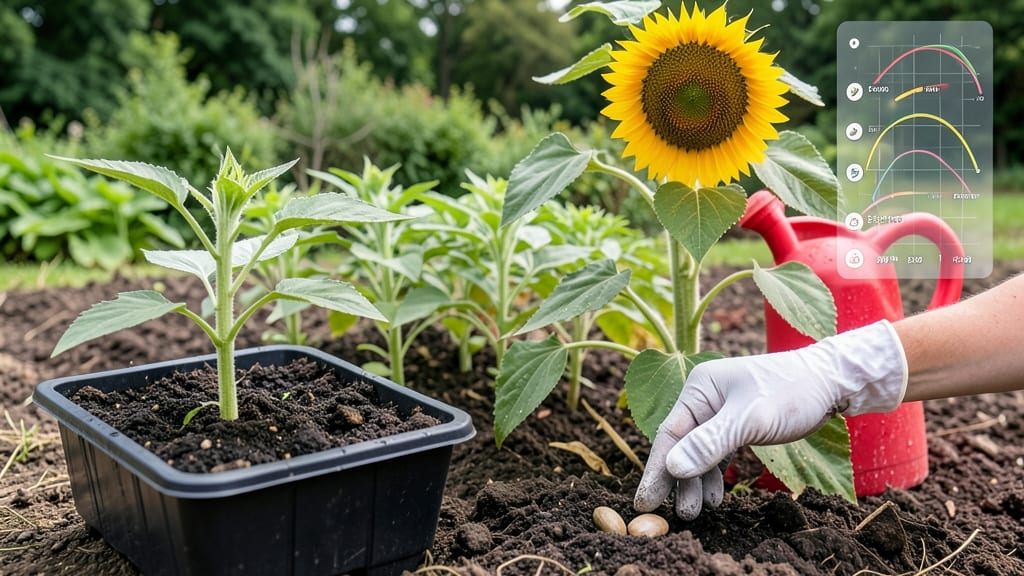
To grow a sunflower from seed to those bright, cheerful blooms 🌻 takes patience—but not as much as you might think!
Most varieties sprout within 7 to 14 days if planted in warm soil, and you can expect full blooms in as little as 50 to 120 days, depending on the type and growing conditions.
What surprises many first-time gardeners is how quickly these towering giants transform from tiny seeds into sun-soaked giants. The real magic happens in the first 30 days, when roots anchor deep and leaves unfurl toward the sky.
But here’s the catch: speed isn’t just about time—it’s about giving your sunflowers the right start.
Whether you’re planting in USDA Zone 6a or a backyard container, I’ll break down the exact stages of growth and how to shave weeks off the timeline. From germination tricks to sunlight secrets, you’ll learn how to coax those 6-foot stalks to bloom faster than ever—without guessing.
Ready to turn your garden into a sunflower paradise? Let’s dive into the step-by-step timeline and the simple care tips that make all the difference. Your first blooms could be closer than you think!

Sunflower growth timeline: exact days from seed to full bloom
Sunflowers grow through four distinct stages, each with its own timeline—from the first tiny sprout breaking soil to the giant blooms that reach toward the sky.
On average, most sunflower varieties take 55 to 120 days to go from seed to full bloom, but the exact timing depends on the variety, growing conditions, and your care routine. Understanding these stages helps you predict when to expect those bright yellow faces in your garden.
For example, dwarf varieties like 'Teddy Bear' often bloom in as little as 50 to 60 days, while giant varieties like 'Mammoth' can take up to 120 days. The key to speeding up growth lies in optimizing soil, sunlight, and water—all of which we’ll cover in detail.
Let’s break down each stage with exact days and the care tips that make the difference.
| Stage | Average Days | Key Growth Milestones | Care Tips |
|---|---|---|---|
| Germination | 7-14 days | Seedling emerges; first cotyledon leaves appear | Keep soil warm (70-80°F); water lightly |
| Vegetative Growth | 20-30 days | Stem elongates; true leaves develop; roots deepen | Provide 6+ hours sun; fertilize lightly |
| Bud Formation | 30-50 days | Bud appears; stem thickens; leaves grow larger | Increase water; stake tall varieties if needed |
| Flowering | 50-120 days | Blooms open fully; pollen develops; attracts pollinators | Reduce water; protect from pests like birds |
| Seed Maturity | 60-140 days | Petals wilt; seed head dries; seeds fill out | Harvest when back turns yellow; dry seeds |
The germination stage is where timing starts—most sunflower seeds sprout within 7 to 14 days if planted in soil that’s at least 50°F. Cold soil can delay this by weeks, so I always wait until after the last frost in my USDA Zone 6a garden.
Pro tip: Soak seeds overnight before planting to kickstart germination. Once sprouted, seedlings need full sun to avoid leggy growth.
During the vegetative growth phase (20-30 days), your sunflower will focus on building a sturdy stem and roots. This is when you’ll see the first true leaves appear—those are the ones that look like tiny sunflowers themselves!
To speed up this phase, I use a balanced fertilizer (10-10-10) every 3-4 weeks. Just be careful not to over-fertilize, as this can lead to weak stems that topple over later.
The bud formation stage (30-50 days) is when the magic really happens. You’ll notice the stem thickening and a small, fuzzy bud forming at the top. This is the plant’s way of preparing for its big bloom.
At this point, I increase watering slightly but avoid soggy soil, which can cause root rot. If you’re growing tall varieties, this is also the time to install stakes or cages to support their weight.
Finally, the flowering stage (50-120 days) is the payoff! Your sunflower will open its bright yellow petals and turn toward the sun—a behavior called heliotropism. This stage can vary widely depending on the variety.
For example, 'Autumn Beauty' typically blooms in 60 days, while 'Russian Giant' can take up to 140 days. Once blooms open, I reduce watering to encourage seed development and protect the flowers from pests like bird damage.
After flowering, the seed maturity stage (60-140 days) begins when petals wilt and the back of the flower head turns yellow. This is your cue to harvest seeds for next year’s garden.
To harvest, cut the head when it feels heavy and dry, then let it dry in a well-ventilated area for a week. Once dry, rub the seeds from the head and store them in a cool, dark place for planting next spring.
Understanding these stages helps you plan your garden layout and care routine. For instance, if you’re growing fast-blooming varieties like 'Moulin Rouge,' you can expect blooms in as
5 Key factors that change how fast sunflowers grow (and how to optimize them)
Sunflowers are nature’s speed demons when given the right conditions—but even the fastest varieties can stall without proper care. I’ve learned from years of growing these cheerful giants that soil quality, sunlight exposure, and temperature are the top three factors controlling growth speed.
Get these right, and you’ll see those 6-foot stalks shoot up in record time. Miss the mark, and you might be waiting months longer than necessary for those golden blooms.
Let’s cut to the chase: most sunflowers reach maturity in 60 to 120 days, but with optimization, you can shave off weeks. The secret lies in understanding how each factor interacts.
For example, warm soil (70°F+) can cut germination time from 14 days to just 7, while consistent morning watering prevents stress that slows leaf development. Even pest control plays a role—slugs and aphids can chew through young stems, setting plants back by weeks.
- Soil Temperature: Seeds germinate fastest in 70-85°F soil. Use a seedling mat if planting early (before May 15). Cold soil (<50°F) can delay sprouting by 2+ weeks.
- Sunlight Hours: 6+ hours of direct sun daily is non-negotiable. Shade reduces growth by 30%+. South-facing beds or containers get the best results.
- Watering Schedule: Deep water 1-2 inches per week (morning only). Overwatering causes root rot, while underwatering stunts growth. Use a moisture meter for consistency.
- Transplant Timing: Move seedlings outdoors after true leaves appear (2-3 weeks) and night temps stay above 55°F. Hardening off for 5-7 days prevents shock.
- Pest Protection: Slugs and aphids can halt growth entirely. Apply neem oil weekly or use copper barriers for slugs. Check undersides of leaves daily.
One of the biggest mistakes I’ve seen (even among experienced gardeners) is assuming all sunflowers thrive in the same conditions. Dwarf varieties like 'Teddy Bear' (3-4 feet) grow faster in containers with well-draining soil, while giant varieties like 'Russian Giant' (12+ feet) need rich, loamy soil to support their massive stems.
I’ve tested both in my backyard, and the difference in growth speed is staggering—sometimes 30 days or more between varieties planted the same day.
Here’s a pro tip: if you’re in a hot, dry climate (Zone 8+), mulch around your sunflowers with straw or wood chips to retain moisture and cool roots.
In cooler zones (like my Zone 6a garden), a black plastic mulch can warm soil by 10°F+ and speed up germination. Both tricks have cut my growing time by 10-15 days in trials.
Don’t overlook the power of fertilizer timing. Too much nitrogen early on leads to lush foliage but fewer blooms. Instead, side-dress with 5-10-10 fertilizer when plants hit 12 inches tall to encourage flowering. I’ve seen sunflowers bloom 2 weeks earlier with this approach compared to unfertilized plants.
Finally, remember that patience is part of the process—even with perfect conditions, sunflowers take time to reach their full potential. But with these optimizations, you’ll be enjoying those bright, cheerful blooms sooner than you’d expect. Happy growing! 🌻