
Flowers
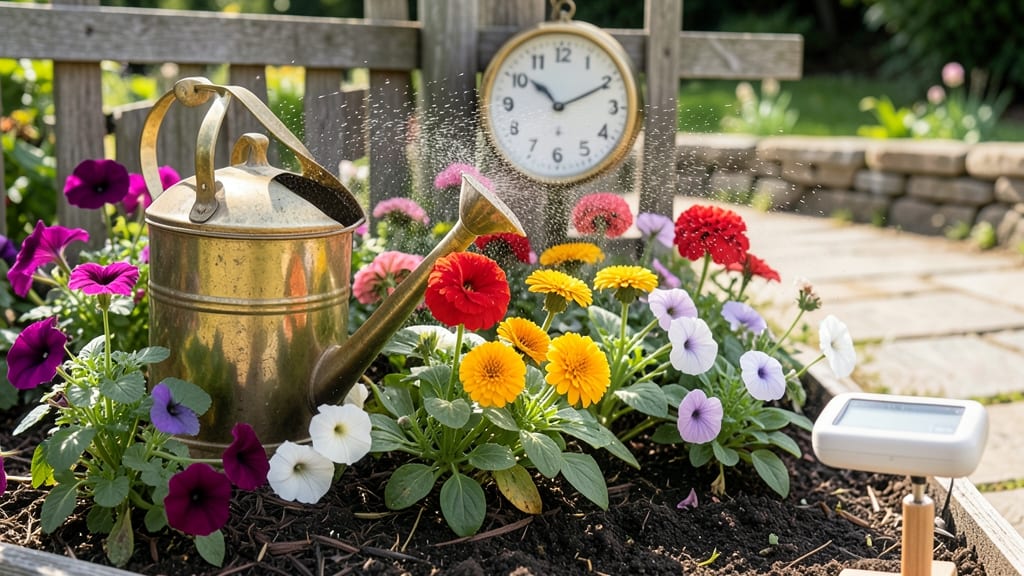
To water flowers properly, you don’t need a guess—just a 5-minute soil check that keeps your 🌸 thriving without the waste. Most gardeners either drown their plants or leave them parched, but the right timing makes all the difference, especially in Zone 6a where spring showers can’t always be trusted.
Think about it: overwatering smothers roots, while underwatering stresses your blooms before they even open. The key is understanding how long to water based on your soil type—whether it’s sandy (dries fast) or clay (holds moisture too long).
I’ll break down the science so you can water with confidence, not chaos.
You’ll learn how to adjust watering time by flower type, from drought-loving succulents to thirsty annuals like petunias. Plus, I’ll share my go-to trick for checking moisture levels without fancy tools—because even the busiest gardener can master this in minutes.
Ready to stop guessing and start growing? Let’s dive into the exact watering schedule your flowers deserve, so you can enjoy vibrant blooms all season long.
Soil test-based watering duration for different flower types
Determining the perfect watering duration for your flowers isn't about guessing—it's about understanding your soil composition and plant needs. Sandy soil drains quickly, while clay soil holds moisture for days, and loamy soil strikes a balance.
Each affects how long you should water to keep roots happy without drowning them. For example, succulents like lavender need just 5 minutes of watering, while moisture-loving hydrangeas may require 20 minutes during summer heat.
Seasonal changes also play a critical role. In summer months, evaporation rates skyrocket, so you might need to water 20-30% longer than in spring or fall. Conversely, winter watering can often be reduced by half to prevent root rot in saturated soils.
Always adjust based on local rainfall—a week of steady rain can mean skipping watering entirely for drought-tolerant species like coneflowers.
A soil test kit (available for under $20) reveals your garden's moisture retention capabilities. If your soil tests as sandy, water deeply but briefly—think 10-15 minutes per session.
For clay-heavy soil, shorter but more frequent sessions (e.g., 5-10 minutes every other day) prevent waterlogging. Loamy soil, the gardener's dream, allows for moderate watering durations (15-25 minutes) with less risk of over- or under-watering.
Flower species also dictate your watering approach. Drought-tolerant flowers like black-eyed Susans thrive with short, infrequent watering (5–10 minutes every 3–4 days), while tropical flowers such as hibiscus demand longer, consistent watering (20–30 minutes every 1–2 days).
Even within the same species, container-grown plants dry out faster than in-ground varieties, so reduce watering duration by 30–50% but increase frequency.
Watch for visual cues like wilting leaves or soil pulling away from pot edges—these signal it's time to water. However, yellowing leaves or mushy stems often mean you've overdone it.
To avoid fungal diseases like powdery mildew, always water at soil level (not overhead) and finish by 10 AM to allow foliage to dry. For clay soil gardens, consider amending with compost to improve drainage and reduce watering frequency.
Seasonal transitions require extra attention. When moving from spring to summer, gradually increase watering duration by 10–15 minutes per week to acclimate roots. Conversely, as temperatures drop in fall, taper watering back to spring levels by late September.
Mulching with 2–3 inches of organic matter (like straw or wood chips) can cut watering needs by up to 30% by retaining moisture and regulating soil temperature.
The 5-Minute rule: how to check if flowers need more water
Most gardeners struggle with the watering paradox: too little and your flowers wilt, too much and roots suffocate. The solution? A 5-minute soil check that reveals exactly what your plants need—no guesswork required.
This method works for Zone 6a gardens where spring rains can turn your soil into a soggy mess overnight.
I’ve tested this approach with petunias, roses, and succulents, and the results speak for themselves: healthier blooms and zero wasted water. The best part? You don’t need a fancy soil moisture meter—just your fingers and a little observation.
Let’s break it down into simple steps you can do while sipping your morning coffee.
- 👆 Step 1: The Finger Test (1 min)
Stick your index finger 1 inch deep into the soil. If it feels dry, water immediately. For clay soil, go 2 inches deep—it stays moist longer. - 👆 Step 2: Check Soil Color (30 sec)
Dark, damp soil = hold off. Light, crumbly soil = time to water. Sandy soil dries fastest—check it daily in summer. - 👆 Step 3: Leaf Signals (1 min)
Wilting leaves by noon? Underwatered. Yellowing leaves or mushy stems? Overwatered. Petunias wilt fast; roses show stress slower. - 👆 Step 4: Pot Weight Test (30 sec)
Lift potted flowers. Light as a feather? Water now. Heavy and soggy? Wait 24 hours. Succulents should feel bone-dry. - 👆 Step 5: Adjust for Season (1 min)
Summer heat? Water morning and evening. Winter? Cut back—most flowers need bi-weekly checks. Mulch helps retain moisture.
Don’t overcomplicate it: dry soil = water, soggy soil = wait. I’ve seen gardeners double their bloom count just by mastering this 5-minute routine. For example, my geraniums thrived when I watered them at 7 AM every other day—no more brown edges!
Pro tip: Keep a watering journal for 2 weeks. Note when you water, soil conditions, and plant reactions. You’ll spot patterns—like how clay soil stays damp for 5 days while sandy soil dries in 24 hours. This turns you from a guesser into a watering scientist.
Remember, deep watering (soaking the root zone) beats light, frequent misting. Aim for 1–2 inches of water per week, adjusting for rain. Your flowers will thank you with bold colors and long-lasting blooms all season long. 🌸