
Flowers
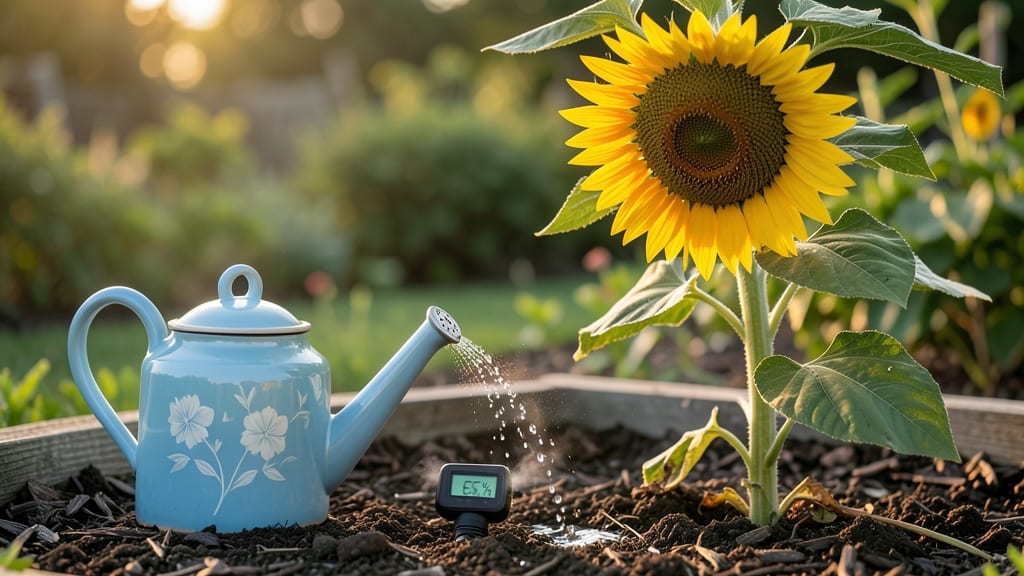
To keep your towering 🌻 sunflowers thriving, how often should sunflowers be watered isn’t just about frequency—it’s about timing, depth, and knowing when to let the roots stretch for resilience.
These sun-loving giants might seem drought-tolerant, but their early growth stages demand consistency, or you’ll risk stunted stems and drooping blooms before they ever reach their full height.
Most gardeners make one critical mistake: shallow, frequent watering that keeps soil damp at the surface while leaving roots parched below. The key is deep, infrequent soaks that encourage strong root systems capable of withstanding dry spells once established.
I’ll break down exactly how often to water based on your sunflower’s age, your local climate, and the telltale signs of over- or under-watering.
Whether you’re battling USDA Zone 6a heatwaves or coastal humidity, this guide cuts through the guesswork. You’ll learn when to adjust your watering schedule—like switching to daily soaks in July or scaling back in September—and how to spot the subtle differences between thirsty plants and those drowning in excess moisture.
By the end, you’ll have a foolproof routine that saves time, prevents wilting, and ensures your sunflowers grow taller and stronger than ever. Let’s dive into the science-backed method that works for both beginners and seasoned gardeners alike.
Sunflower watering schedule by growth stage: seedling to bloom
Sunflowers thrive on consistency, but their water needs change dramatically from tiny seedlings to towering blooms. Too much water drowns their roots, while too little stunts their growth. The key is understanding their three distinct growth phases—each with unique moisture requirements.
Let’s break down exactly how often to water sunflowers at every stage, so you can nurture them from seed to stunning 10-foot giants.
Newly sprouted sunflowers are the most delicate. Their shallow root systems can’t reach deep for moisture, making them prone to drying out in just 24 hours on hot days. During the seedling stage (weeks 1-3), aim to keep the top 1-2 inches of soil consistently moist.
This means watering every 1-2 days in warm climates or daily if temperatures exceed 85°F. Overwatering here risks damping off, a fungal disease that kills young plants.
Once your sunflowers reach the vegetative stage (weeks 4-8), their roots deepen rapidly, allowing them to store moisture. This is when you can ease up slightly—watering every 3-4 days—but the goal shifts to deep, infrequent soaks. Push water 6-8 inches deep to encourage strong taproots.
In sandy soil, you may need to water more frequently, while clay holds moisture longer. Always check soil moisture by sticking your finger 2 inches down; if it’s dry, it’s time to water.
| Growth Stage | Watering Frequency | Soil Moisture Target | Drought Tolerance | Key Tips |
|---|---|---|---|---|
| Seedling (Weeks 1-3) | Every 1-2 days | Top 1-2" moist | Low | Use misting spray; avoid overhead watering |
| Vegetative (Weeks 4-8) | Every 3-4 days | 6-8" deep moisture | Moderate | Water at soil level; mulch to retain moisture |
| Flowering (Weeks 9-12) | Every 5-7 days | 8-12" deep moisture | High | Reduce watering as buds form; avoid wetting flowers |
| Maturity (Weeks 13+) | Every 7-10 days | Deep roots; minimal surface moisture | Very High | Stop watering 1-2 weeks before harvest to dry seeds |
The flowering stage (weeks 9-12) is where sunflowers become surprisingly drought-tolerant. By now, their roots extend 3-5 feet deep, accessing water reserves underground. Cut back to watering every 5-7 days, focusing on deep soaks that reach 8-12 inches down.
Overwatering now can cause buds to split or rot. If your area experiences 90°F+ temperatures, you might need to water every 4-5 days instead.
Once sunflowers reach maturity (weeks 13+), their water needs drop dramatically. At this point, they’re essentially self-sufficient, with roots capable of accessing moisture from deep soil layers. Water every 7-10 days unless your region experiences extreme drought.
The key is to stop watering 1-2 weeks before harvest to allow seeds to dry properly. Overwatering mature plants can lead to root rot or splitting seed heads, ruining your harvest.
Sunflowers show clear signs when their watering routine is off. Wilting leaves during the day that recover at night indicate underwatering. If leaves turn yellow or mushy, you’re overwatering.
For container-grown sunflowers, water every 2-3 days since pots dry out faster. Always water at the base of the plant in the morning to reduce fungal risks and maximize absorption.
Mulching is a game-changer for sunflower watering. Apply a 2-3 inch layer of organic mulch (like straw or wood chips) around the base to lock in moisture and regulate soil temperature.
This reduces evaporation by up to 30%, meaning you’ll water 20-30% less frequently once established. Just keep mulch 6 inches away from the stem to prevent rot.
Pro tip: Use a moisture meter or the "squeeze test" to check soil moisture. Gently squeeze a handful of soil—if it crumbles, water; if it stays clumped, wait. Adjust your schedule based
Deep-soil watering techniques to prevent sunflower root rot
Sunflowers might look like they can handle anything, but their delicate roots are far more sensitive than their towering stems suggest. The biggest mistake I see gardeners make is surface-level watering, which leaves deep roots thirsty while encouraging root rot from poor drainage.
Instead, focus on deep-soil hydration—watering until moisture reaches 6-8 inches deep—to build resilient roots that can withstand dry spells.
Timing matters just as much as depth. Watering in the early morning (before 10 AM) gives leaves time to dry, reducing fungal risks. Evening watering, on the other hand, leaves foliage damp overnight—a prime condition for blight and root rot.
I’ve seen sunflowers collapse mid-bloom because of this simple oversight, so let’s fix that now.
For established plants, drip irrigation is my top recommendation. It delivers water slowly at the soil line, mimicking natural rainfall and keeping moisture consistent.
Surface watering with a hose or sprinkler can lead to uneven moisture distribution, causing some roots to dry out while others sit in soggy soil—a recipe for rot.
🚨
⚠️ How Often Should Sunflowers Be Watered?
Seedlings: Water every 2-3 days (keep soil consistently moist).
Vegetative Stage: Deep water 3x/week (1-2 gallons per plant).
Flowering Stage: Daily deep soaks in heat (75°F+).
Mature Plants: Every 5-7 days (reduce as roots deepen).
Warning: Yellowing leaves + mushy stems = overwatering. Wilting by noon = underwatering.
Watch for overwatering symptoms like yellowing leaves, blackened stems, or a foul soil smell—these are red flags for root rot. Underwatered sunflowers, meanwhile, show stress by wilting by midday, even if the soil feels damp at the surface.
To test, stick your finger 2-3 inches deep; if it’s dry, it’s time to water.
Mulch plays a critical role in deep-soil watering. Apply 2-3 inches of organic mulch (straw or wood chips) around the base to retain moisture and regulate soil temperature. This simple step can reduce your watering frequency by 30% while keeping roots happy and healthy.
Pro tip: If you’re using containers, sunflowers dry out faster. Water every 2-3 days in pots, and always check the soil before watering—never let them sit in soggy soil. With these techniques, your sunflowers will grow taller, stronger, and disease-free all season long.