
Blooming
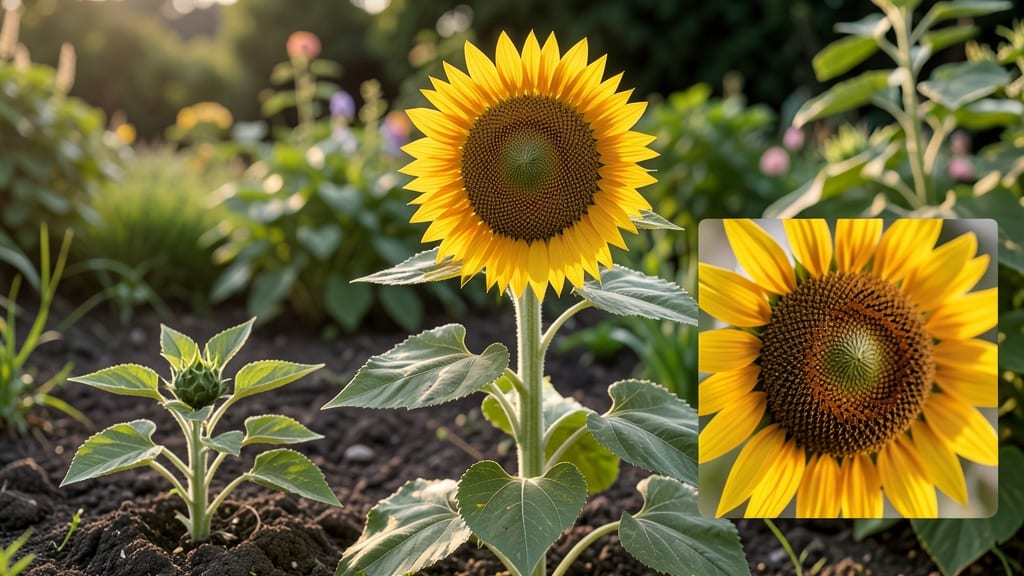
Wondering how many days for sunflowers to bloom can turn your patience into a race against time—especially when you've got 6-14 feet of towering 🌻 dreams at stake.
The truth? Some varieties burst into golden glory in as few as 50 days, while others take nearly four months to show off their cheerful faces.
If you've ever planted sunflower seeds in spring only to stare at stubborn green stems wondering, "Where's the flower?"—you're not alone.
The bloom timeline depends on more than just the calendar; it hinges on the variety you choose, your local climate, and even how much sunlight your garden soaks up daily.
Let me break down the exact timelines for popular sunflower types, from the speedy Sunspot (ready in 60 days) to the towering Mammoth (needing 100+ days).
You'll also discover how to tweak your growing conditions to coax those blooms along faster—because nobody wants to wait forever for their garden centerpiece.
Whether you're growing sunflowers for cut flowers, birdseed, or just summer joy, knowing these timelines helps you plan your planting schedule like a pro. Ready to turn those green sticks into golden sunshine? Let's dive in.
Sunflower bloom time by variety: fastest to slowest flowering species
Sunflowers are one of the fastest-growing plants in the garden, but their bloom time can vary dramatically depending on the variety. Some dwarf varieties will burst into color in as little as 45 days, while giant mammoth types may take 120 days or more.
Understanding these timelines helps you plan your garden layout and ensures you’ll enjoy those cheerful blooms at the perfect time.
Most sunflowers follow a predictable growth pattern: germination in 7-14 days, followed by rapid stem elongation. The key difference between varieties lies in their maturity timeline—when they transition from vegetative growth to flowering. Early-blooming varieties are ideal for cut flowers, while late-season types produce more seeds.
Let’s break down the fastest to slowest bloomers.
| Variety | Type | Bloom Time (Days) | Height | Best For |
|---|---|---|---|---|
| Sunspot | Dwarf | 45-55 | 1-3 ft | Containers, borders |
| Teddy Bear | Semi-Dwarf | 50-60 | 3-5 ft | Cut flowers, pollinators |
| ProCut | Standard | 60-70 | 6-8 ft | Floral arrangements |
| Moulin Rouge | Standard | 65-75 | 7-10 ft | Dried flowers |
| Mammoth | Giant | 100-120 | 10-14 ft | Seed production |
If you’re growing Sunspot sunflowers, you’ll see blooms in just 45-55 days—perfect for quick summer color. These dwarf varieties are also ideal for container gardening since they stay under 3 feet tall.
For cut flowers, Teddy Bear and ProCut varieties strike a balance, blooming in 50-70 days while reaching heights of 3-8 feet.
The Mammoth sunflower is the granddaddy of the bunch, requiring 100-120 days to reach
5 Key factors that speed up or delay sunflower blooming (and how to control them)
Sunflowers are the poster children of summer gardens, but their bloom timelines can feel like a mystery—especially when you're staring at 6-foot stems with no flowers in sight. The truth?
Your sunflowers' speed to bloom depends on five critical factors you can control. Let me show you how to optimize each one for faster, more reliable blooms.
From sunlight exposure to soil temperature, these factors act like a countdown clock for your sunflowers. Get them right, and you'll see those golden faces in record time.
Miss the mark, and you might be waiting months longer than necessary. Let's break down the science—and the secrets—to speeding up your sunflowers' journey from seed to bloom.
- 🌞 Sunlight Exposure: 6-8 hours daily = 50-60 days to bloom. Less light? Add 20-30 extra days to your timeline.
- 🌡️ Soil Temperature: 60°F+ speeds growth. Below 50°F? Expect 10-15 days delay per week of cool soil.
- 💧 Watering Frequency: Deep weekly watering = consistent 60-day bloom. Skipping water? Add 15-20 days to your wait.
- 📏 Plant Spacing: 6-12 inches apart = faster blooms. Crowded plants? Delay 10-20 days as they compete for nutrients.
- 🐛 Pest Prevention: Pest-free = on-time blooms. Aphid infestations? Add 2-4 weeks of recovery time to your timeline.
Let's start with the most powerful factor: sunlight exposure. Sunflowers are sun-worshippers, and they'll bloom 20-30% faster with full sun exposure (6-8 hours daily).
If your garden gets partial shade, consider moving your sunflowers to a sunnier spot or using reflective surfaces like white walls to bounce extra light onto their leaves. Even 1-2 extra hours of sunlight can shave 5-7 days off your bloom timeline.
Next up: soil temperature. Sunflowers love warm soil—aim for 60°F or higher to kickstart their growth. If you're planting in early spring, use black plastic mulch to warm the soil faster.
Pro tip: Plant seeds in containers first if your ground is still chilly, then transplant once soil temps rise. This trick can cut 10-15 days off your total bloom time.
Watering might seem simple, but inconsistent moisture is a silent bloom-killer. Sunflowers need 1-2 gallons of water per week, delivered deeply to encourage strong root growth. Water in the morning to prevent fungal diseases, and use drip irrigation to keep moisture consistent.
Overwatering? That's just as bad—it can delay blooms by 10-15 days while roots struggle in soggy soil.
Don't overlook plant spacing, either. Crowded sunflowers compete for nutrients, which can delay blooms by up to 20 days. Give them 6-12 inches of space (depending on the variety), and thin seedlings early if needed.
For giant varieties like Mammoth, space them 18-24 inches apart to avoid stunted growth. Proper spacing also improves airflow, reducing the risk of powdery mildew, another bloom-delaying pest.
Finally, pest prevention is your secret weapon for on-time blooms. Aphids, spider mites, and bird damage can set your sunflowers back weeks. Use neem oil or insecticidal soap as a preventive spray every 2 weeks, and cover young plants with row fabric if birds are a problem.
Healthy plants resist pests better, so focus on balanced fertilization (like a 5-10-10 NPK mix) to keep them strong and blooming right on schedule.